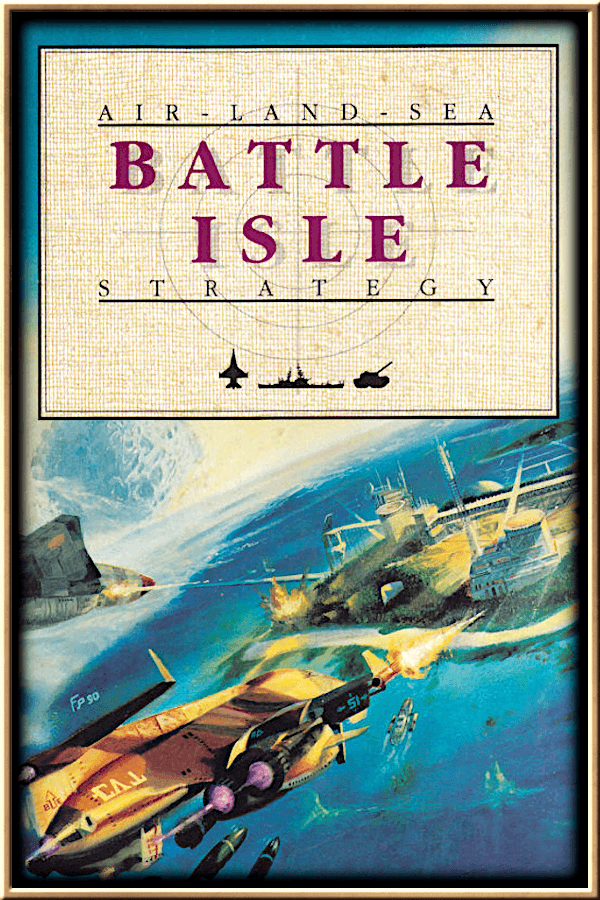

Battle Isle took the dry, spreadsheet-heavy world of early PC wargaming and smashed it into a split-screen tactical duel built on hexes and strict logistics. On the contested planet Chromos, winning meant managing ammo trucks and fuel lines just as carefully as your tank divisions.
Simultaneous turns keep both commanders on the clock in Battle Isle
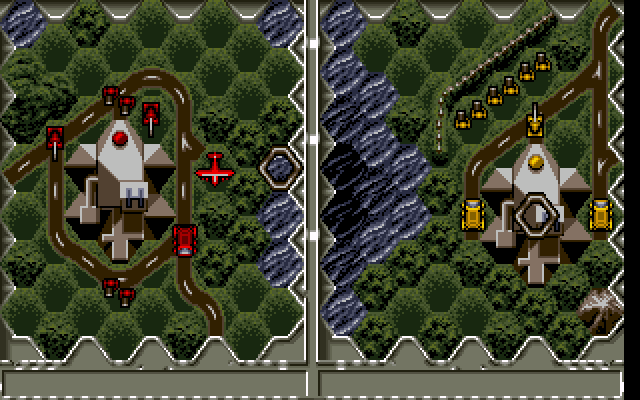
Most turn-based strategies of the era forced one player to sit on their hands while the other calculated movement paths. German developer Blue Byte shattered that downtime by splitting the monitor directly down the middle. While you were mapping out hex paths for your heavy tanks and scout buggies on your screen half, your opponent was spending those exact same seconds picking targets, initiating repair orders, or managing supply lines on theirs. Once both sides locked in their choices, the engine executed the combat phase simultaneously before swapping roles for the next turn.
That phase-swap system gives every firefight a distinct rhythmic tension. You might order a squadron of fighter jets to intercept a long-range bomber, only to realize during the execution phase that the enemy spent their movement slice pulling that bomber back into the defensive umbrella of stationary anti-air turrets. Because every unit consumes finite ammunition and diesel fuel with every move and engagement, reckless pushes leave heavy armor stranded in middle terrain as easy pickings for enemy infantry.
Logistics, experience, and the brutal arithmetic of hex grid warfare
You cannot take down enemy forces in this 1991 release by simply marching heavy artillery straight down the center of the grid. Units gain combat experience with every successful battle, turning green tank crews into deadly veterans capable of holding narrow mountain passes against far superior numbers. To keep those elite squads alive, you have to constantly shuttle fuel and ammo supply trucks behind the front line or pull wounded units back to friendly depots for repairs.
The campaign packs 32 distinct scenarios split evenly between a 16-mission single-player story and 16 two-player competitive maps. The single-player narrative places you in the boots of Earthling strategist Walter Harris, abducted by the alien Drullians after excelling at a computer simulation to lead their war effort against Skynet-Titan, a rogue artificial intelligence. Winning a map demands complete destruction of the opposing army or the direct infiltration and capture of their headquarters building, forcing a tight balance between aggressive assault and rear-guard defense.
A typical scenario forces tough decisions right from the first unit deployment:
- Deploying fast reconnaissance buggies early to seize neutral factories before enemy transport helicopters arrive.
- Routing armored supply trains along vulnerable railway tracks to keep heavy artillery stocked on distant fronts.
- Surrounding entrenched enemy turrets with combined infantry and air strikes to minimize veteran unit casualties.
- Guarding coastal waters with submarines to prevent naval bombardments from crushing your land production centers.
Where the early DOS version stumbles and where it excels
While Japanese console titles like Nectaris and Herzog Zwei inspired its core hexagonal design, bringing that action to home computers came with clear trade-offs. If you ran this strategy tactics classic on early hardware with pure keyboard inputs, navigating nested tile menus and cycling through logistics sub-windows felt stiff and clunky. Navigating cursor movements hex by hex with arrow keys tested a commander's patience almost as much as the computer AI's aggressive counter-attacks.
Get past the keyboard stiffness, however, and the presentation carried genuine punch. Hearing rich explosion effects and digitized audio tracks through an AdLib or Sound Blaster card gave every skirmish weight that standard PC speaker bleeps could never match. Contemporary magazines praised that polished audio-visual punch, with Amiga Format handing down a 90% score for its tactical depth, while The One rated it 88%, highlighting an interface that strategy newcomers could wrap their heads around in fifteen minutes.
Why you should play Battle Isle in your browser today
The core mechanics hold up surprisingly well because the game relies on strict tactical rules rather than raw processing muscle. While the story lore, complete with novella-style manual entries detailing the war from the alien perspective, gives context to the campaign, the real draw remains the razor-sharp split-screen mechanics. A single supply line mistake will still cost you a forty-minute mission, making every tactical decision feel weighty and earned.
If you want to test your strategic chops on planet Chromos, you can play Battle Isle MS-DOS game setups directly in your browser. You can play Battle Isle online with zero setup hassle, diving straight into hex-based strategy warfare without tracking down vintage sound cards or fighting with retro system configs. Jump into the first scenario, keep your supply trucks tucked safely behind your armored columns, and see if your tactics can hold off the machine army.