

In Blade Warrior, designer Jason Kingsley rendered an entire fantasy world in stark black silhouettes, turning what could have been a standard side-scrolling hack-and-slash into a surreal hybrid of spell-crafting, trading, and aerial shooting.
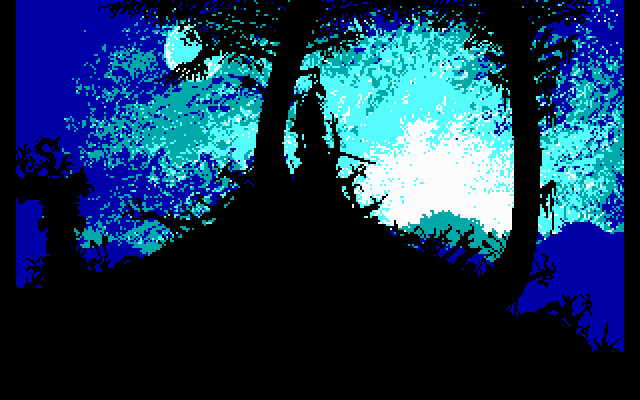
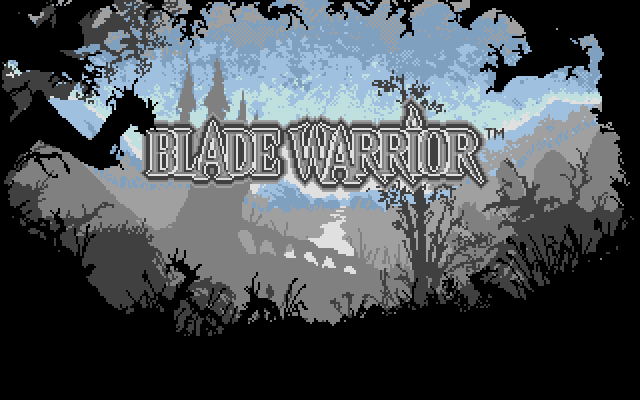
Every character, enemy, tree, and archway in Blade Warrior appears as a pitch-black outline. Color belongs exclusively to the glowing sky behind you, your spell effects, and the items you gather off the ground. When designer Jason Kingsley pitched the project under its original working title, Palladin - Lord of the Dancing Blade, the visual direction was a bold gamble for a 2D action title.
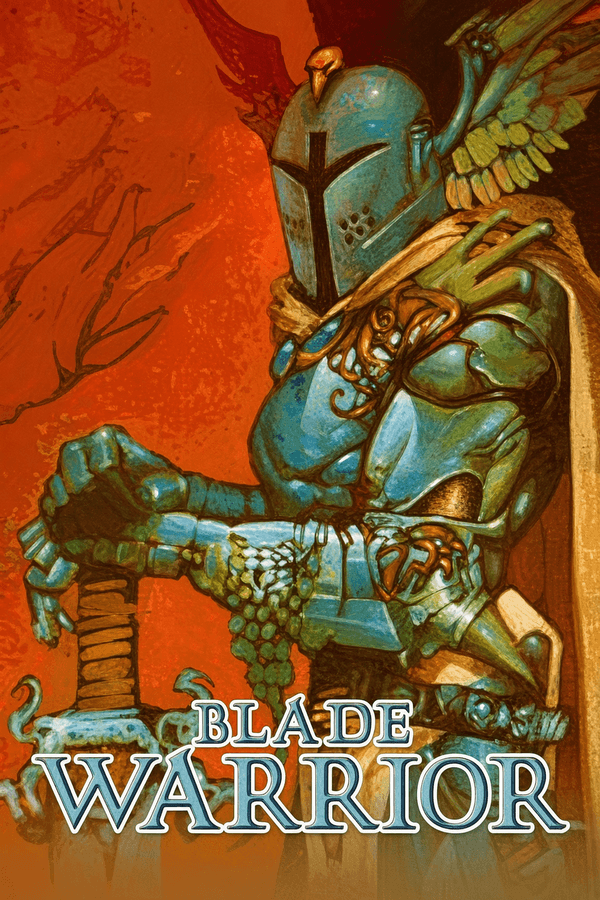
The high-contrast look changes how you read the screen during combat. Enemies like giant spiders and shadowy beasts vanish into foreground obstacles, forcing you to watch for movement in the dark rather than obvious sprite details. Comic artist Simon Bisley provided the cover illustration, setting up the grim tone before you even launch the game.
The 1991 action game landscape on PC was flooded with straightforward arcade conversions. By contrast, publisher Image Works delivered something that felt experimental. Programmer James C. Bowman, who left his name stamped in the executable text in August 1990, built a dark world that stood far apart from its peers.
Your goal across the land of Joy sounds simple on paper. You must stop an evil entity named Murk by collecting seven tablet fragments. These stone pieces are kept by seven distinct wizards locked away in their own towers across a massive map.
Getting those fragments takes work beyond swinging a sword. You spend much of your time harvesting ingredients scattered across the landscape to mix spells inside your home tower. The spellbook system is extensive for an action game. You can organize up to 16 spells across 12 function-key slots, using them to heal, defend, or blast through tough monster encounters.
Trading drives the core quest structure. You collect ancient artifacts out in the wild and bring them to the wizards. In exchange, they hand over tablet pieces and clues about where to look next. If you jump into this expecting a brainless brawler, you will hit a wall within ten minutes.
The main villain, Murk, does not wait around in a final room for you to show up. He stalks the land, periodically manifesting and growing stronger every time you manage to defeat him. You always know when he is getting close because the weather degrades and the sky shifts to a deep, ominous red.
Whenever you finish business with a wizard, the game shifts genres entirely. You mount a dragon for the return journey back to your tower, turning the action into a side-scrolling shoot 'em up where you blast incoming harpies out of the sky. It is a sudden gear shift that keeps you on your toes.
These flight segments add real risk to your overall progress. Crashing your dragon or getting overwhelmed by flying beasts can ruin a run completely. Combined with the ground exploration, it creates a rhythm unlike almost anything else from 1991.
For all its clever ideas, this Image Works release suffers from severe mechanical friction. Contemporary reviewers were divided for good reason. While publications like CU Amiga praised the presentation with an 84 percent rating, reviewer Ben Caudell in Zero noted a major issue. Foreground trees constantly block your view of your silhouette hero, leaving you vulnerable to attacks you cannot see coming.
Amiga Power famously handed the game two vastly different scores across its life. Mark Ramshaw gave it 70 percent, calling it full of style with just enough substance. Later, reviewer Jonathan Nash slapped it with a brutal 8 percent rating, dismissing it as gimmicky and dull. The extreme contrast highlights just how polarising the experience was back then.
The control scheme remains the biggest hurdle for modern players. Movement feels stiff and imprecise, turning basic sword swings into tricky guesswork against fast enemies. Worse still, the game is fiercely unforgiving. If you miss a crucial item sequence or crash during a dragon section, you can lock yourself out of progress entirely. Restarting the entire journey from scratch was a common outcome for unprepared players.
If you want to experience an ambitious piece of British design history, this title is worth your time. Jason Kingsley would later acquire 2000 AD, the comic publisher where artist Simon Bisley made his name on Judge Dredd and Sláine. Looking back, you can see that dark comic book sensibility stamped across every frame of this project.
The visual presentation holds up astonishingly well because simple, strong shapes do not age the way low-polygon 3D or messy early VGA sprites do. The game demands patience, a bit of trial and error, and a willingness to consult a manual or guide when the quest logic gets cryptic. Yet the atmospheric atmosphere still carries a unique charm that few games from the era managed to replicate.
You can play Blade Warrior online right now for free in your browser. There is nothing to download or configure, allowing you to experience this moody piece of dark fantasy immediately. Grab your sword, keep an eye on the red sky, and see if you can survive Murk's shadow world on your very first run.
In Blade Warrior, designer Jason Kingsley rendered an entire fantasy world in stark black silhouettes, turning what could have been a standard side-scrolling hack-and-slash into a surreal hybrid of spell-crafting, trading, and aerial shooting.
Every character, enemy, tree, and archway in Blade Warrior appears as a pitch-black outline. Color belongs exclusively to the glowing sky behind you, your spell effects, and the items you gather off the ground. When designer Jason Kingsley pitched the project under its original working title, Palladin - Lord of the Dancing Blade, the visual direction was a bold gamble for a 2D action title.
The high-contrast look changes how you read the screen during combat. Enemies like giant spiders and shadowy beasts vanish into foreground obstacles, forcing you to watch for movement in the dark rather than obvious sprite details. Comic artist Simon Bisley provided the cover illustration, setting up the grim tone before you even launch the game.
The 1991 action game landscape on PC was flooded with straightforward arcade conversions. By contrast, publisher Image Works delivered something that felt experimental. Programmer James C. Bowman, who left his name stamped in the executable text in August 1990, built a dark world that stood far apart from its peers.
Your goal across the land of Joy sounds simple on paper. You must stop an evil entity named Murk by collecting seven tablet fragments. These stone pieces are kept by seven distinct wizards locked away in their own towers across a massive map.
Getting those fragments takes work beyond swinging a sword. You spend much of your time harvesting ingredients scattered across the landscape to mix spells inside your home tower. The spellbook system is extensive for an action game. You can organize up to 16 spells across 12 function-key slots, using them to heal, defend, or blast through tough monster encounters.
Trading drives the core quest structure. You collect ancient artifacts out in the wild and bring them to the wizards. In exchange, they hand over tablet pieces and clues about where to look next. If you jump into this expecting a brainless brawler, you will hit a wall within ten minutes.
The main villain, Murk, does not wait around in a final room for you to show up. He stalks the land, periodically manifesting and growing stronger every time you manage to defeat him. You always know when he is getting close because the weather degrades and the sky shifts to a deep, ominous red.
Whenever you finish business with a wizard, the game shifts genres entirely. You mount a dragon for the return journey back to your tower, turning the action into a side-scrolling shoot 'em up where you blast incoming harpies out of the sky. It is a sudden gear shift that keeps you on your toes.
These flight segments add real risk to your overall progress. Crashing your dragon or getting overwhelmed by flying beasts can ruin a run completely. Combined with the ground exploration, it creates a rhythm unlike almost anything else from 1991.
For all its clever ideas, this Image Works release suffers from severe mechanical friction. Contemporary reviewers were divided for good reason. While publications like CU Amiga praised the presentation with an 84 percent rating, reviewer Ben Caudell in Zero noted a major issue. Foreground trees constantly block your view of your silhouette hero, leaving you vulnerable to attacks you cannot see coming.
Amiga Power famously handed the game two vastly different scores across its life. Mark Ramshaw gave it 70 percent, calling it full of style with just enough substance. Later, reviewer Jonathan Nash slapped it with a brutal 8 percent rating, dismissing it as gimmicky and dull. The extreme contrast highlights just how polarising the experience was back then.
The control scheme remains the biggest hurdle for modern players. Movement feels stiff and imprecise, turning basic sword swings into tricky guesswork against fast enemies. Worse still, the game is fiercely unforgiving. If you miss a crucial item sequence or crash during a dragon section, you can lock yourself out of progress entirely. Restarting the entire journey from scratch was a common outcome for unprepared players.
If you want to experience an ambitious piece of British design history, this title is worth your time. Jason Kingsley would later acquire 2000 AD, the comic publisher where artist Simon Bisley made his name on Judge Dredd and Sláine. Looking back, you can see that dark comic book sensibility stamped across every frame of this project.
The visual presentation holds up astonishingly well because simple, strong shapes do not age the way low-polygon 3D or messy early VGA sprites do. The game demands patience, a bit of trial and error, and a willingness to consult a manual or guide when the quest logic gets cryptic. Yet the atmospheric atmosphere still carries a unique charm that few games from the era managed to replicate.
You can play Blade Warrior online right now for free in your browser. There is nothing to download or configure, allowing you to experience this moody piece of dark fantasy immediately. Grab your sword, keep an eye on the red sky, and see if you can survive Murk's shadow world on your very first run.
How Blade Warrior is played — the keys the game listens to, grouped by what they do.
Highlighted keys are mapped — hover or tap one to see what it does.
Full gameplay controls are not fully detailed in the provided IBM PC setup documentation. Mouse control requires a driver pre-installed in DOS before launch.
The on-screen keyboard and gamepad mapping the browser player uses on a phone, a tablet or a controller, as opposed to the real keys above. $PRO members make their own in the player and share them here; anyone can pick one to play with.
Cheat codes, console commands and memory pokes for Blade Warrior — each one verified and attributed.
Sign in to submitaka Palladin: Lord of the Dancing Blades
How Blade Warrior is played — the keys the game listens to, grouped by what they do.
Highlighted keys are mapped — hover or tap one to see what it does.
Full gameplay controls are not fully detailed in the provided IBM PC setup documentation. Mouse control requires a driver pre-installed in DOS before launch.
The on-screen keyboard and gamepad mapping the browser player uses on a phone, a tablet or a controller, as opposed to the real keys above. $PRO members make their own in the player and share them here; anyone can pick one to play with.
Cheat codes, console commands and memory pokes for Blade Warrior — each one verified and attributed.
Sign in to submit