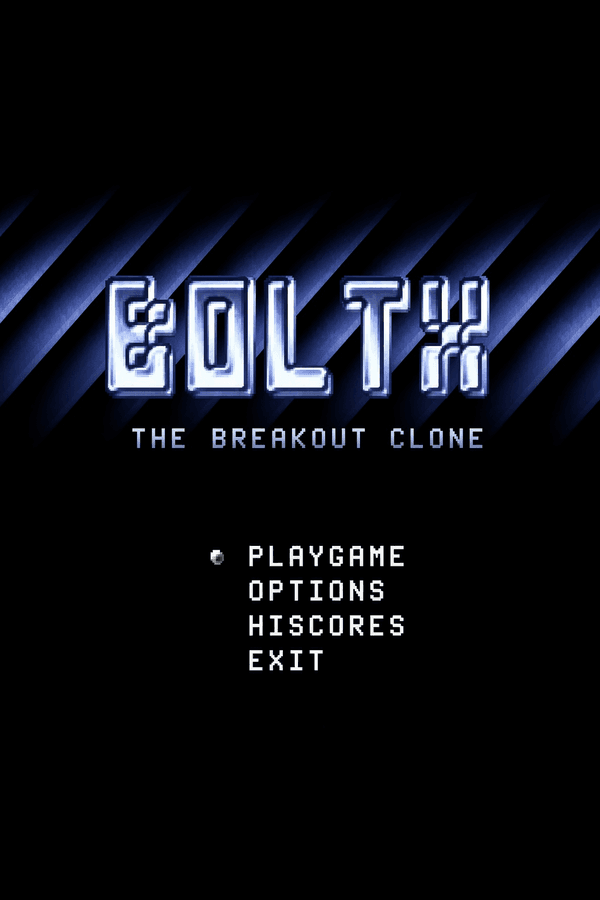
BOLTX
Rate this game
- Played
- Rarely
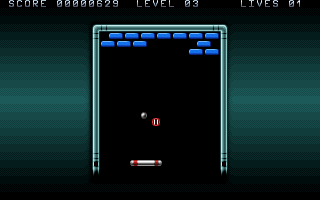
In BOLTX, you spend your time bouncing a ball off a sharp little paddle to shatter rows of bricks before they crawl down to crush your playfield.
Shattering walls in four distinct game modes
Most brick-breakers give you a static grid of blocks and ask for patience while you aim for that final pixel. This action game takes the standard Arkanoid setup and immediately changes the pressure depending on which mode you launch from the menu.
The standard layout is only the beginning here. You have four different ways to clear the screen, each altering how aggressive you need to be with your paddle positioning:
- Classic: The standard arcade setup where you clear fixed brick patterns to move to the next screen.
- Infinite: A mode where new lines of bricks constantly spawn at the top, pushing the whole structure down toward your death line.
- 2-Player: A simultaneous split-screen version of Infinite mode where two players battle their own falling walls side by side.
- Duel: A head-to-head survival mode where losing your ball forces a full field reset for both players until one breaks.
You can adjust the pace before taking a single shot. The menu features simple, normal, hard, and turbo difficulty settings. These options directly scale the initial speed of the ball. On turbo, you barely have time to read the angles before the sphere rebounds off the side walls.
A Hungarian demoparty runner-up built in 64 kilobytes
The origin of BOLTX is just as interesting as its gameplay modes. Created by developer Musk, also known as maxuser6000, it was released at the Function 2010 demoparty in Hungary. It competed in the game development category and earned second place overall.
The whole game sits inside a tiny 64k MS-DOS executable file. Demoscene coders in 2010 were still squeezing incredible tricks out of old environments. Someone on the scene even pointed out that it was written in Pascal, proving the language could produce fast arcade action when handled with care.
It also uses a clever dirty trick for saving your progress. Instead of creating a secondary config or saved data file, it writes high scores directly into the executable file itself. The game tracks the top eight scores for Classic mode, displaying a custom verbal evaluation right under the title screen for whoever holds first place.
Where the bounce works but the audio falls flat
When you launch the game, the visual presentation makes a great first impression. The levels use bright, distinct colours, and the paddle response feels crisp. The brick layouts are cleanly drawn, giving the action a sharp retro look that fits fixed-screen arcade design perfectly.
The real issue hits your ears the moment you start destroying blocks. Scene members rightly complained that the sound was sub-par for a release that looked this clean. You might expect AdLib FM synth tunes or punchy audio effects, but the game relies on basic system sound instead.
Hearing flat PC speaker chirps when a colourful chain reaction explodes across the screen is a letdown. A proper chip tune would have tied the visual polished effort together. Still, the underlying ball physics remain reliable enough to keep your focus on the paddle movement.
Why the survival duel makes it worth a look
While single-player brick smashing is fine for a quick round, the head-to-head modes give this release its real personality. Duel mode turns a simple single-player formula into a tense local battle. Because dropping your ball triggers a complete reset for both playfields, every single bounce carries real weight.
If you enjoy classic PC freeware projects from Freeware publishers, this small democraft project holds up as an entertaining piece of coding. It cuts out long intros and complex storylines in favour of raw reaction speed. You boot it up, pick a speed setting, and start clearing lines immediately.
Play the original BOLTX MS-DOS game directly in your browser
You can play BOLTX online for free right here in your browser with no extra steps required. If you want to sample this piece of demoscene history, jump straight into Infinite mode on normal speed to get a feel for how fast the falling bricks pressure your movement. The responsive controls mean you can focus on tracking the ball's trajectory, catching useful power-ups, and setting high scores without leaving this page.
Players' controls
Touch and gamepad controls
The on-screen keyboard and gamepad mapping the browser player uses on a phone, a tablet or a controller, as opposed to the real keys above. $PRO members make their own in the player and share them here; anyone can pick one to play with.
Make your own touch controlsPRO
- 1Open the editorSign in below, then pick what to make. The game starts with the editor open over it.
- 2Place your keysAdd keys and drag them where your thumbs rest, or map a controller's buttons. Test plays the game with them; Save keeps them, and you play with them from then on.
- 3Share themShare them right after saving in the game, or name and share them here. Players vote, and the best become this game's controls for everyone.
Go PROSee how it worksSign in+20 XP for sharing · +50 XP if yours become the game's own
- The game's own controlsNone yet: played with a real keyboard only.In use
2 screenshots
From the archive
No reviews yet
Tell the community what you think of BOLTX. Reviews are public and tied to your username.
No archived manuals for BOLTX yet
No manuals archived for this title yet. Sign in to upload the first scan.
Cheat codes, console commands and memory pokes for BOLTX — each one verified and attributed.
Sign in to submitNo cheats yet for this title
Know a working cheat, poke or trainer? Add it with the button above. Moderators check every entry before it goes live.
No archived soundtrack for BOLTX yet
No soundtrack archived for this title yet. Sign in to upload the first rip.
No save states for BOLTX yet
No save states for this title yet. Sign in to share one.
Discussions
Sign in to post- Threads0
- Total posts0
- Online now6
Community · BOLTX
Who's contributing, and what's new
- Reviews0
- Threads0
- Uploadsapproved0
- Contributors0
Recent activity
Nothing here yet
Reviews, discussion threads and approved uploads appear here as members add them.