Chronicles of Galia: The Shadow of Evil
aka Chronicles of Galia 2: The Shadow of Evil · Crónicas de Galia 2: La sombra del mal
In Chronicles of Galia: The Shadow of Evil, Juan Pablo Peloso returns to his QBasic fantasy universe to strap knight Jean-Pierre back into his armor for a low-res turn-based quest. It pairs vintage 320x200 visuals with quiet, battle-free early towns before dumping you into classic grid-based monster fights.
QBasic worldbuilding makes Chronicles of Galia: The Shadow of Evil a cozy throw-back
Building an entire custom role-playing game in Microsoft QuickBASIC long after the command prompt faded out takes a distinct kind of dedication. Solo creator Juan Pablo Peloso crafted this direct follow-up to his 2007 title Chronicles of Galia: The First Mission, maintaining the same underlying code base and visual language. You step right back into the boots of Jean-Pierre, a heroic knight tasked with unraveling an ominous force creeping across the land.
Instead of throwing you straight into combat, the adventure opens on a calm note. You wander through quiet settlement corridors, speaking with local townsfolk and setting up the central conflict without worrying about getting ambushed every three steps. Reviewer Darren Hewer pointed out on DOSGames.com that this deliberate lack of early random battles gives the setting room to breathe, allowing the narrative framework to take hold before the real dungeon crawling begins.
The entire production ties back to a broader universe Peloso established in his 2007 six-page digital comic, Chronicles of Galia: Jean-Pierre and Jacques. That background lore gives the minimalist text dialogues extra context, transforming what could have been generic fantasy banter into a clear personal passion project.
Skipping random encounters changes how you handle early exploration
Anyone who spent the nineties exploring top-down software knows the agony of trying to solve a maze while a invisible dice roll interrupts your movement every five seconds. This title tackles that frustration directly by giving players an explicit toggle option to disable random battle encounters while navigating maps. When you just want to trace a corridor to its end or double-check a town boundary, turning those interruptions off keeps the pacing squarely in your control.
Once you do step into combat, the game shifts to traditional menu-driven turn-based mechanics. You weigh your standard weapon strikes against items and tactical choices, balancing health pools against incoming damage from fantasy foes. The system is straightforward, relying on visible stats and standard turn orders rather than complex real-time active meters.
That clear separation between pure map traversal and structured combat makes exploring large dungeon layouts far less punishing. When you want to grind for levels or push through dangerous territory, you leave encounters active; when you need to map out a clear path, you turn them off and walk unhindered.
Recycling map assets from the original keeps things familiar
Because this project was developed as a freeware 2010 release, Peloso carried over significant chunks of graphics, tile sets, and early map structures from the first Chronicles of Galia. Returning players will recognize familiar wall textures, town layouts, and sprite proportions right out of the gate. While reusing assets might seem like a budget shortcut, here it gives the world a consistent visual identity that fits the low-resolution aesthetic.
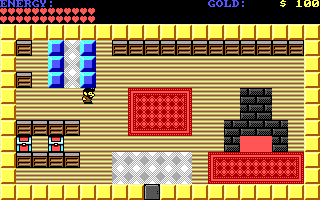
The display runs at a native 320x200 pixel resolution, designed specifically to operate within the limits of standard DOSBox emulation setups. The interface keeps everything essential right on screen:
- Top-down map view for navigating towns and dungeons
- Text boxes for reading dialogue and story clues
- Combat command menus for selecting attacks and managing items
- An updated map feature to track your position across larger environments
The lack of flashy graphical tricks or hardware-accelerated effects forces the game to rely strictly on its layout and progression. The combat menus react instantly to keypresses, and moving between map screens carries zero delay, making the moment-to-moment inputs feel nimble even on modest hardware.
Why Jean-Pierre's second quest is worth a run today
This Juan Pablo Peloso creation does not attempt to reinvent retro role-playing mechanics, but its focus on story setup and customizable encounter pacing makes it an easy play. If you enjoy discovering obscure indie projects built with basic tools, this late-era MS-DOS title delivers a genuine slice of homebrew design. The overall scope stays manageable, avoiding the bloated sixty-hour grind of commercial epics while keeping the focus on straightforward exploration and knightly heroism.
You can play Chronicles of Galia: The Shadow of Evil online, free in your browser right now with no setup needed. Launching this low-res adventure directly in your browser lets you feel the crisp response of QBasic movement keys firsthand, giving you an immediate sense of how smooth its toggleable encounter system makes map exploration.