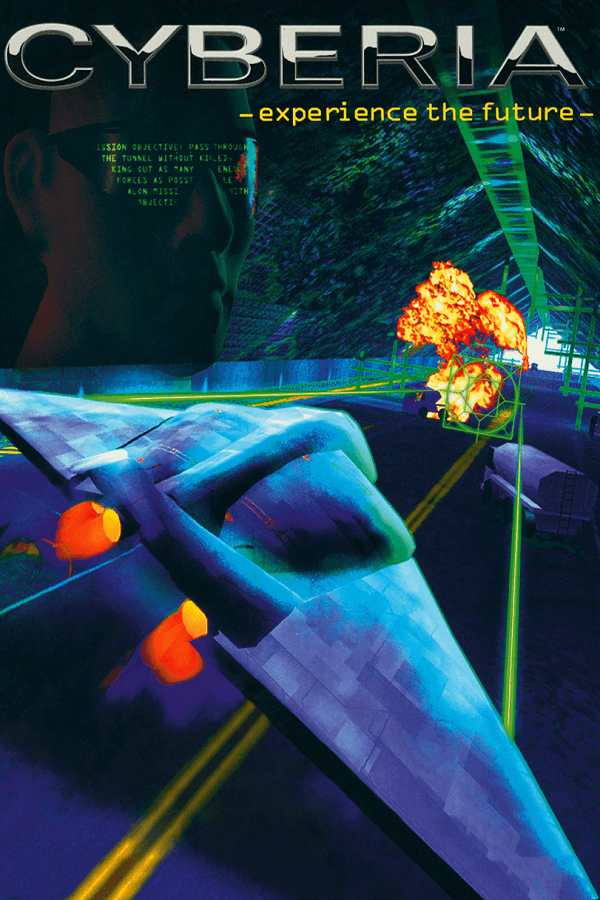

Cyberia trades freedom for pre-rendered cinematic style, trapping you in a maze of instant-death traps and strict rail-shooter sequences. You play as Zak, a cyber-hacker pulled out of a cell to sneak into a covert complex hidden deep in Siberia.
Every step in Cyberia hinges on pre-rendered 3D backdrops stored on a CD-ROM. Director Drew Markham and the team at Xatrix Entertainment banked heavily on movie-like presentation. Released in 1994 by Interplay Productions, Inc., the game arrived alongside other early optical disc experiments that pushed pre-rendered visuals over open-ended design.
Instead of freely walking around a room, you push a key to trigger a short, pre-rendered video clip of Zak moving. Once the animation finishes, you arrive at the next interaction node. The camera angles look sharp, but the strict movement leaves zero room to explore or dodge standard attacks on foot.
The audio adds to that cold, cinematic mood. The soundtrack was composed by Thomas Dolby alongside Mike Kapitan. Low synthesizers fill the background, interrupted only by the heavy hum of server racks, mechanical doors, and laser blasts.
The core storyline pits two global factions against each other in 2027. FWA leader William Devlin pulls Zak out of prison to infiltrate the Cyberia Complex. The Cartel has already taken over the facility, forcing you to deal with their security systems, hired mercenaries like Santos' group, and escaped biological mutants.
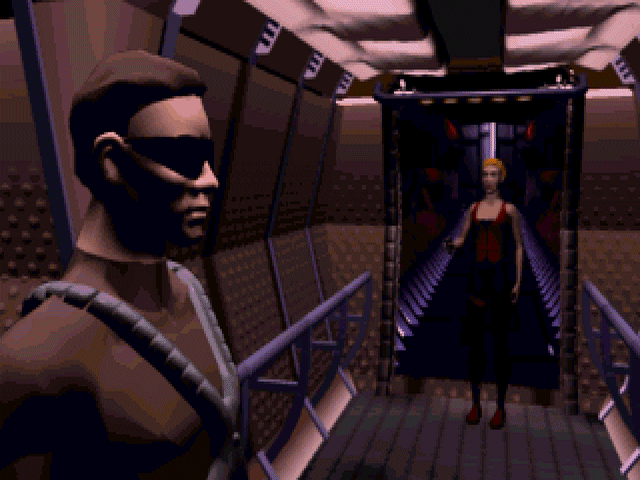
Exploration relies on Zak's BLADES visor. The device toggles between three visual modes to inspect your surroundings:
Puzzles demand absolute precision. In one famous section, you purify a virus vaccine using a bio-cleaner interface. You must trim the viral load past a dangerous threshold without destroying the active compound entirely. Making a single wrong selection sends a lethal shock or gas cloud through the room, killing Zak on the spot.
When Zak is not solving terminal puzzles, the perspective shifts into a first-person action game rail-shooter. You step into ship-mounted turrets or jump into vehicle cockpits like the TF-22 Transfighter jet. You also pilot smaller gadgets, including a nanotech virus cleaner and a remote decontamination bot named Charlie.
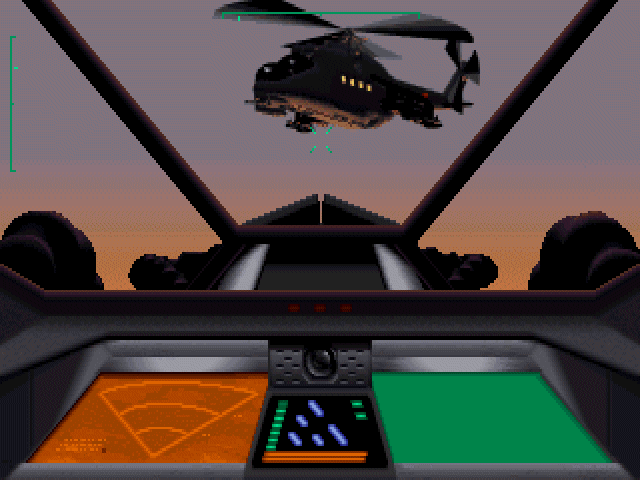
These flight phases test your reaction speed against strict timers and incoming laser fire. Your main weapon is an arm-mounted heat pulse generator when on foot, or heavy cannons when flying. The crosshair control on MS-DOS can feel overly twitchy, making small corrections frustratingly hard.
Dual-firing mechanics make some dogfights downright brutal. Enemy craft sweep across the screen in scripted loops. If you fail to memorize their spawn order, you die quickly. Trial and error is the primary way to learn every dogfight, which grates after your third straight restart.
Reviews from 1994 showed a real divide among critics. German magazine PC Games handed it a 90% score, loving how it put player-controlled action inside cinematic visuals. On the other hand, France's Génération 4 gave it a 64%, pointing out how little control the player actually has over Zak's path.
The DOS version of Cyberia sits right on the edge of two game design styles. It tried to bring laserdisc arcade reflexes into a dark sci-fi computer campaign. You can read more about its development history on its Wikipedia page.
What hurts the campaign today is not the age of the visuals, but the strict death conditions. Choosing the wrong doorway instantly kills Zak with zero warning. You spend half your time watching the exact same death animation before reloading your save.
Cyberia built its reputation on a volatile mix of pre-rendered graphics, brutal puzzle logic, and sharp vehicle shooting. It trades open exploration for fixed-perspective traps and fast reflex tests, delivering a harsh challenge if you want to push through to the end.
You can play Cyberia online right now, directly in your web browser. There is no setup required and nothing to download before you start. Launch the game, put on your BLADES visor, and see if you can dodge the instant-death traps waiting inside the complex.
Cyberia trades freedom for pre-rendered cinematic style, trapping you in a maze of instant-death traps and strict rail-shooter sequences. You play as Zak, a cyber-hacker pulled out of a cell to sneak into a covert complex hidden deep in Siberia.
Every step in Cyberia hinges on pre-rendered 3D backdrops stored on a CD-ROM. Director Drew Markham and the team at Xatrix Entertainment banked heavily on movie-like presentation. Released in 1994 by Interplay Productions, Inc., the game arrived alongside other early optical disc experiments that pushed pre-rendered visuals over open-ended design.
Instead of freely walking around a room, you push a key to trigger a short, pre-rendered video clip of Zak moving. Once the animation finishes, you arrive at the next interaction node. The camera angles look sharp, but the strict movement leaves zero room to explore or dodge standard attacks on foot.
The audio adds to that cold, cinematic mood. The soundtrack was composed by Thomas Dolby alongside Mike Kapitan. Low synthesizers fill the background, interrupted only by the heavy hum of server racks, mechanical doors, and laser blasts.
The core storyline pits two global factions against each other in 2027. FWA leader William Devlin pulls Zak out of prison to infiltrate the Cyberia Complex. The Cartel has already taken over the facility, forcing you to deal with their security systems, hired mercenaries like Santos' group, and escaped biological mutants.
Exploration relies on Zak's BLADES visor. The device toggles between three visual modes to inspect your surroundings:
Puzzles demand absolute precision. In one famous section, you purify a virus vaccine using a bio-cleaner interface. You must trim the viral load past a dangerous threshold without destroying the active compound entirely. Making a single wrong selection sends a lethal shock or gas cloud through the room, killing Zak on the spot.
When Zak is not solving terminal puzzles, the perspective shifts into a first-person action game rail-shooter. You step into ship-mounted turrets or jump into vehicle cockpits like the TF-22 Transfighter jet. You also pilot smaller gadgets, including a nanotech virus cleaner and a remote decontamination bot named Charlie.
These flight phases test your reaction speed against strict timers and incoming laser fire. Your main weapon is an arm-mounted heat pulse generator when on foot, or heavy cannons when flying. The crosshair control on MS-DOS can feel overly twitchy, making small corrections frustratingly hard.
Dual-firing mechanics make some dogfights downright brutal. Enemy craft sweep across the screen in scripted loops. If you fail to memorize their spawn order, you die quickly. Trial and error is the primary way to learn every dogfight, which grates after your third straight restart.
Reviews from 1994 showed a real divide among critics. German magazine PC Games handed it a 90% score, loving how it put player-controlled action inside cinematic visuals. On the other hand, France's Génération 4 gave it a 64%, pointing out how little control the player actually has over Zak's path.
The DOS version of Cyberia sits right on the edge of two game design styles. It tried to bring laserdisc arcade reflexes into a dark sci-fi computer campaign. You can read more about its development history on its Wikipedia page.
What hurts the campaign today is not the age of the visuals, but the strict death conditions. Choosing the wrong doorway instantly kills Zak with zero warning. You spend half your time watching the exact same death animation before reloading your save.
Cyberia built its reputation on a volatile mix of pre-rendered graphics, brutal puzzle logic, and sharp vehicle shooting. It trades open exploration for fixed-perspective traps and fast reflex tests, delivering a harsh challenge if you want to push through to the end.
You can play Cyberia online right now, directly in your web browser. There is no setup required and nothing to download before you start. Launch the game, put on your BLADES visor, and see if you can dodge the instant-death traps waiting inside the complex.
How Cyberia is played — the keys the game listens to, grouped by what they do.
Highlighted keys are mapped — hover or tap one to see what it does.
A mouse or joystick can be used for directional aim and navigation alongside keyboard controls.
The on-screen keyboard and gamepad mapping the browser player uses on a phone, a tablet or a controller, as opposed to the real keys above. $PRO members make their own in the player and share them here; anyone can pick one to play with.
Cheat codes, console commands and memory pokes for Cyberia — each one verified and attributed.
Sign in to submitHow Cyberia is played — the keys the game listens to, grouped by what they do.
Highlighted keys are mapped — hover or tap one to see what it does.
A mouse or joystick can be used for directional aim and navigation alongside keyboard controls.
The on-screen keyboard and gamepad mapping the browser player uses on a phone, a tablet or a controller, as opposed to the real keys above. $PRO members make their own in the player and share them here; anyone can pick one to play with.
Cheat codes, console commands and memory pokes for Cyberia — each one verified and attributed.
Sign in to submit