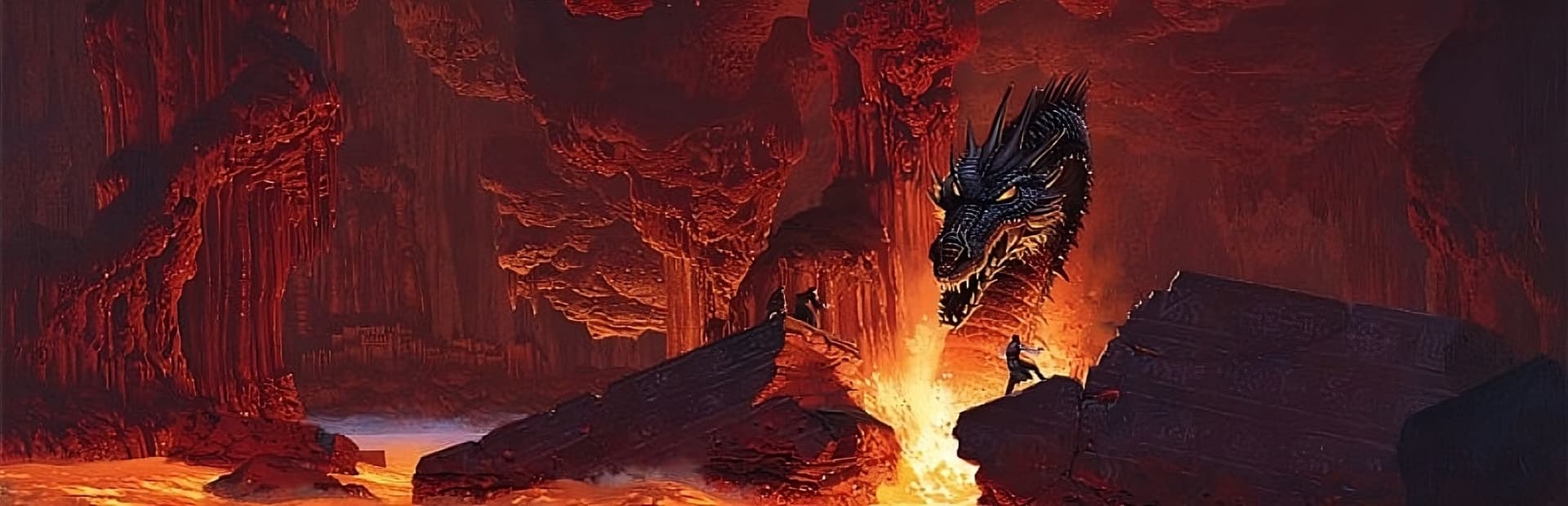
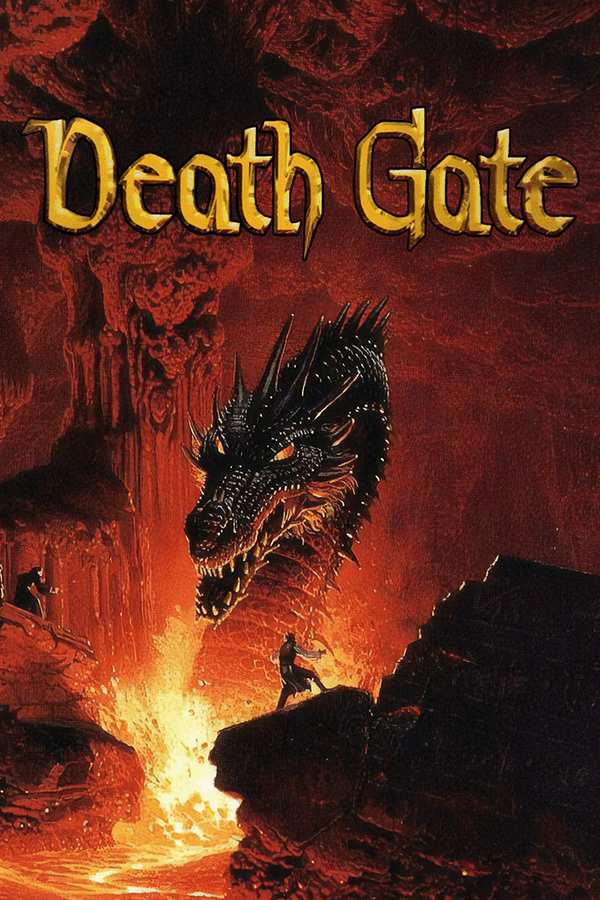

Death Gate takes the heavy fantasy lore of Margaret Weis and Tracy Hickman's novel series and translates it into an MS-DOS graphic adventure where drawing magic runes replaces typing commands at a prompt.
Ditching the parser for clean spellcasting
For years, Legend Entertainment built its reputation on text-heavy hybrid titles that kept the traditional parser sitting right alongside mouse controls. With Death Gate in 1994, designer Glen Dahlgren threw out text typing entirely, making this the developer's first complete shift into a pure point-and-click interface. Instead of wrestling with parser syntax, you select verbs directly from screen menus or open a dedicated spellbook to weave rune magic.
That magic system is easily the most memorable part of sitting down with the game. As the Patryn protagonist Haplo, you navigate through four elemental realms using a magic ship guided by a steering stone. Casting spells requires combining specific runes you unlock throughout your journey. To open a locked door or alter an environmental hazard, you pick the appropriate runes from your spellbook, arrange them, and hit the cast button. The system rewards reading your surroundings instead of rubbing every inventory item against every pixel on the screen.
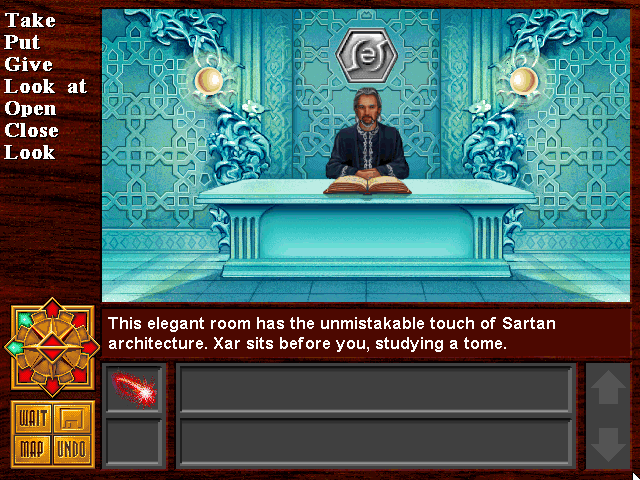
The visual step up was just as dramatic for PC gamers at the time. Legend built the game to support SVGA resolution at 640x480 alongside standard VGA, featuring pre-rendered 3D cutscenes, art based on Keith Parkinson's fantasy paintings, and full CD-ROM speech acting. Hearing full voice lines for humans, elves, and dwarves brought a weight to the world that earlier text-first games lacked, even if the Sound Blaster audio occasionally fought with full digital speech setups.
What navigating the elemental realms actually feels like
Your objective, assigned by your master Lord Xar, is to sail through the rift into Arianus, Pryan, Abarrach, and Chelestra to gather four seal pieces. The opening stretches establish a steady rhythm: arrive in a realm, identify how the local mensch races are struggling, and use your runes to solve their immediate political and physical crises. The puzzles play fair when compared to the pixel-hunting nightmares of rival adventure studios from the same era.
Most obstacles rely on clear logic. If a stone mechanism needs power, or a creature blocks a passage, your spell inventory usually holds a direct, clever answer rather than a absurd cartoon solution. Interacting with the local dwarves and elves yields helpful dialogue clues, and the game keeps track of major narrative beats through clear screen text descriptions.
Not everyone was sold on every stylistic choice at launch. When Scorpia reviewed the CD-ROM release for Computer Gaming World in late 1994, she noted that a surprisingly goofy tone occasionally peeked through, threatening to derail the dark fantasy premise. She also ran into a technical bug where running the game in standard VGA mode caused crashes during dialogues with merchants. Still, industry press recognized what Legend Entertainment accomplished, earning the game awards from Computer Game Review and InterActive Gaming, as well as an Adventure Game of the Year nomination from CGW.
The lock-out trap in Death Gate
For all its smooth interface wins, the biggest frustration modern players encounter is structural linearity. Once you complete a realm and sail to the next world, you cannot go back. If you board your steering stone and leave a world behind without grabbing a key item or reading a vital inscription, you are trapped. The game will let you press forward for hours until you hit a wall, forcing you to restore an old save file from several worlds prior.
This design choice turns keeping multiple save slots into an absolute necessity. You cannot simply wander across the universe at leisure like in open-ended computer role-playing games. The game demands that you exhaust every room and secure every vital item in Arianus or Pryan before you trigger the travel sequence to the next realm.
- Arianus, the realm of air, introduces the basic rune mechanics and mensch politics.
- Pryan, the realm of fire, raises the puzzle complexity inside towering canopy forests.
- Abarrach, the realm of stone, forces heavy reliance on defensive spellcasting.
- Chelestra, the realm of water, tests your ability to manage limited navigation options.
When stacked up against other major adventure games of 1994, such as Myst or King's Quest VII, this linear structure makes the journey feel noticeably shorter once you know the solutions. Yet the trade-off is a tight narrative arc that builds directly toward your encounter with the dragon-demon Sang-Drax without lingering on tedious backtracking.
How to play Death Gate online today
Finding an original physical box of this game is a genuine treat for collectors, mostly because Legend included an exclusive printed short story written directly by Weis and Hickman inside the packaging. digital distribution options have proven tricky over the years; a brief GOG re-release by Piko Interactive vanished from digital storefronts only two months after its launch in early 2018.
The good news is you do not need to hunt down rare disk images or mess with abandoned store listings to test your spellcasting skills today. You can play Death Gate free in your browser right now with zero installation. If you want to experience how 1990s MS-DOS graphics adapted heavy literary fantasy without the hassle of a command parser, launch the DOS version of this classic online and remember to cycle your save files every time you board your ship.