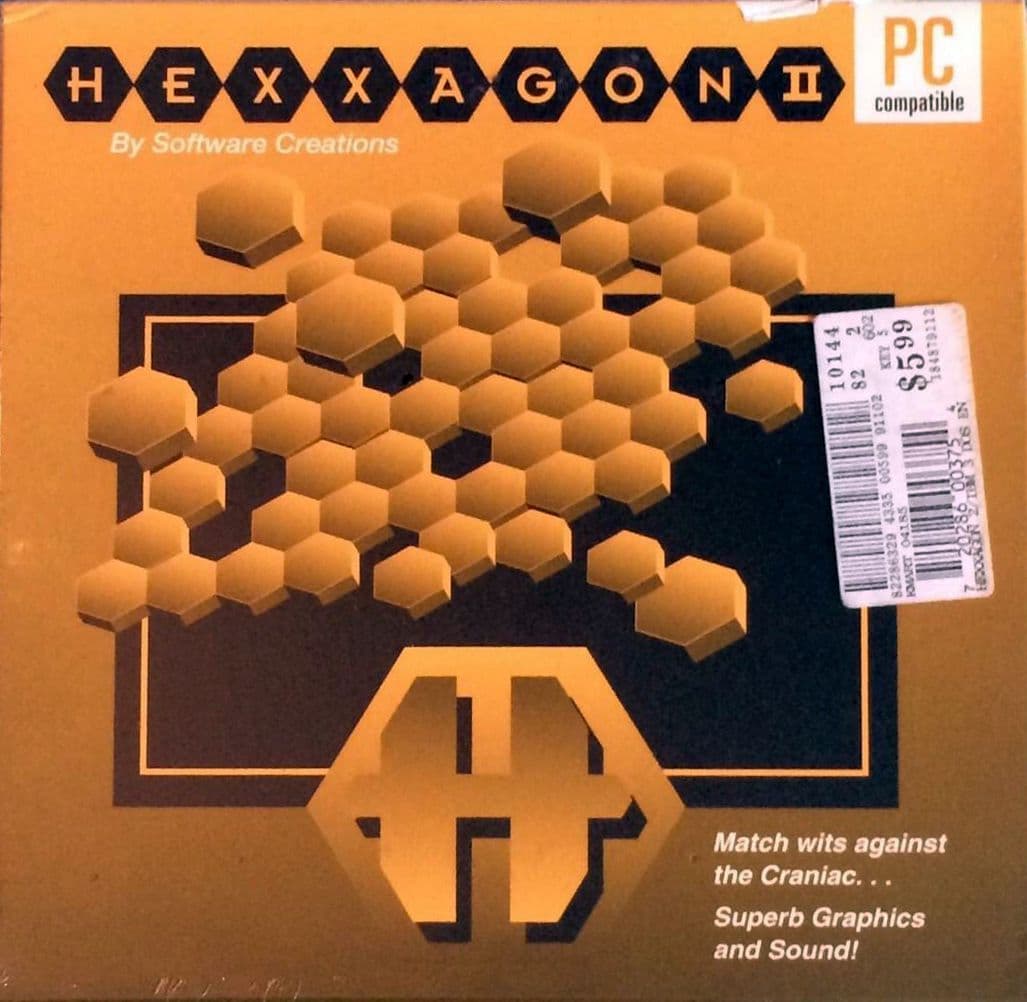
In Hexxagon II, a quick duplication move seems safe until your opponent jumps over your line, converts six adjacent tiles in one turn, and leaves you staring at a screen full of hostile green slime.
The Ataxx puzzle formula goes six-sided
Grid-based territorial board games usually struggle with a simple design problem: on a standard square grid, diagonal movement either creates awkward blind spots or lets players leap past defenses too easily. Arcade puzzle titles solved this by locking pieces into four directions, but that made matches predictable once a player memorized the corner openings. Argo Games tackled the balance issue by dropping square tiles entirely and building their puzzle match around a hexagonal board.
The original shareware release proved that six directions made spatial planning far more volatile. Argo Games returned to the concept in 1993 with Hexxagon II, doubling down on board flexibility and giving single-player matches a stiffer challenge. Instead of standard checkers or wooden marbles, match encounters pitch metallic capsules against pulsing blobs of green slime across custom-shaped boards rendered in standard 320x200 VGA graphics.
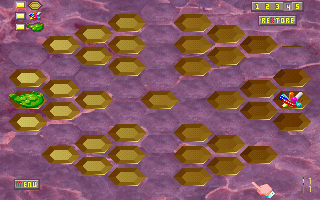
Hexxagon II relies on brutal chain conversions
Every turn presents you with a stark tactical trade-off between expanding your footprint or leaving a opening for a massive counter-attack. The rules follow the classic Ataxx structure, adapted to six-sided movement logic:
- Move a piece to an adjacent empty tile to clone it, duplicating your presence while keeping your original space filled.
- Jump a piece two spaces away to claim distant territory, leaving your starting tile completely empty.
- Land adjacent to enemy pieces to instantly convert every touching opponent tile to your own color.
Cloning builds a dense wall of defensive pieces, but it forces your front line forward into reach of enemy counters. Jumping lets you snag vital choke points across the board, but emptying your starting square creates a hole in your formations that an opponent can exploit. The moment a piece touches an enemy cluster, all surrounding adjacent pieces flip instantly. A single misplaced move can spark a chain reaction that flips eight tiles in a single second, completely reversing who holds the board majority.
That constant volatility makes every decision tense. In a typical match against a human opponent in hotseat mode, you spend two turns painstakingly building a solid wall of capsules, only to watch your friend land a single green slime piece right in a central pocket you left open. Half your territory turns green before you even finish planning your next turn. This quick, dramatic swing is what makes the match loop so addicting in a local strategy tactics session.
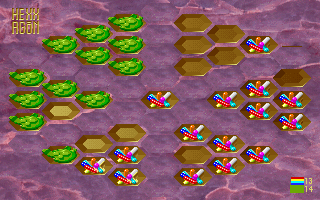
Craniac turns board layout into a trap
Single-player matches pit you against a computer opponent named Craniac, represented on screen as an animated lightbulb wearing round spectacles and a bowtie. While his cartoon look seems lighthearted, the AI logic underneath is sharp. Designers Jason Blochowiak and Abraham Edlin overhauled the opponent routines for this sequel, replacing the basic aggressive tendencies of the first game with a much more patient playstyle.
Where the original AI jumped on every immediate conversion opportunity, Craniac in this follow-up reads board geometry far more effectively. He deliberately leaves isolated pieces exposed as bait, waiting for you to jump out of position before he lands a piece in the gap behind your lines. If you try to play this Hexxagon II MS-DOS game with the same straightforward aggressive pushes that worked in the original release, the computer will quietly corner your expansion efforts and starve you of safe tiles.
The customizable board layouts make Craniac even more dangerous. You can set up custom board shapes with missing middle tiles, isolated islands, or tight bottlenecks. On boards filled with holes, a jumping move becomes a massive risk, because missing your target or exposing an edge tile leaves you with no adjacent allies to protect your fresh clone. When you run out of valid moves, the game simply passes your turn, allowing the AI to fill the remaining empty tiles uninterrupted.
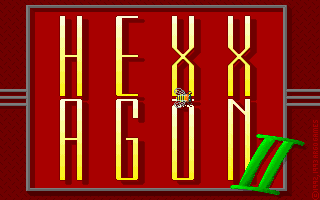
Five developers turned shareware incentives into a sequel
Published by Software Creations, the game came about through an unusual commercial distribution setup. The original game was widely distributed as shareware across bulletin boards, but this full sequel was initially offered as an exclusive bonus incentive. PC gamers who paid the $22 registration fee for the original game received this upgraded version along with their registered disk package.
The entire project was built by a compact team of just five people listed in the credits. Despite those modest production circumstances, the developers delivered cleaner visual presentation and better board configuration options than the base shareware title offered. Launching `HEXX2.EXE` gave players immediate access to customized two-player settings and board editors without forcing them to wade through long tutorial modes or unnecessary narrative introductions.
The lack of complex audio effects or high-resolution artwork means the whole package relies purely on mechanics. The sound card output consists primarily of simple clicks and conversion noises, but the speed of execution keeps matches moving fast. You can lose a board in under three minutes, reset the tiles, and launch straight into a fresh match without waiting on loading screens.
Play Hexxagon II free in your browser right now
While the basic board presentation looks simple in static screenshots, the real pull of the game only becomes clear once the board fills up and every single movement option carries massive spatial risk. You can play Hexxagon II online right here in your web browser with no download required. Select your starting layout, challenge a friend in hotseat mode or test your grid control against Craniac, and see if you can keep your capsules intact against the green slime.