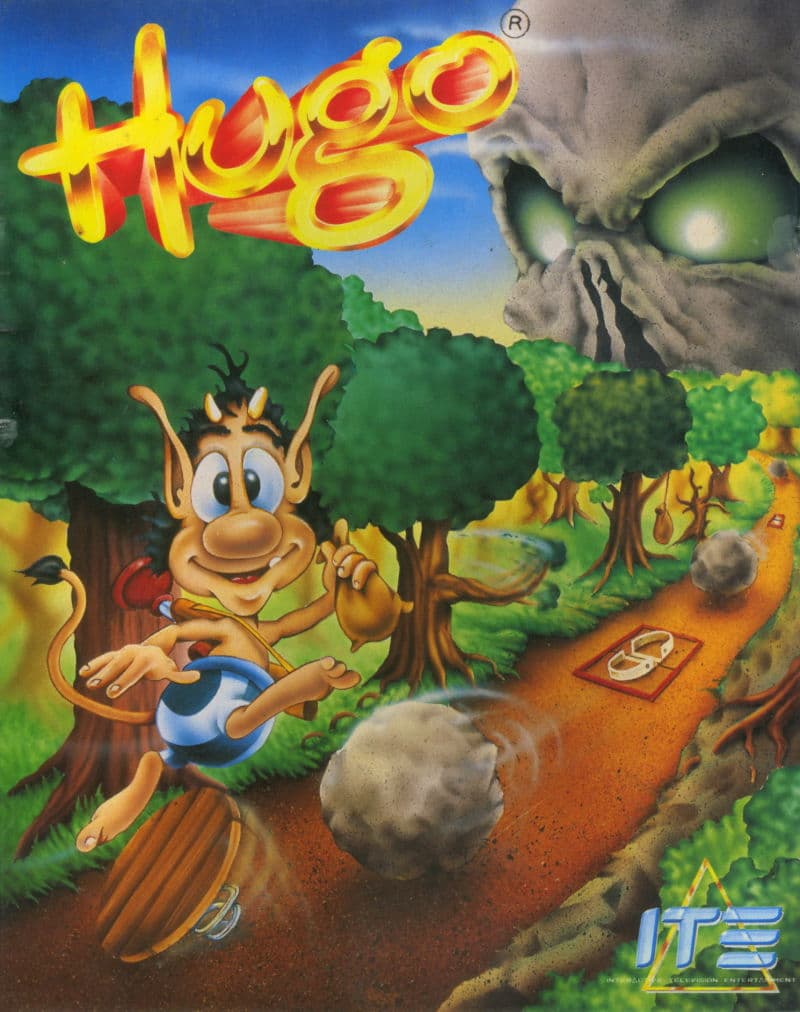
If you played Hugo 1 & 2 on an IBM-compatible PC in the mid-nineties, you were experiencing a bizarre slice of European television history brought straight to your monitor.
Controlling a troll with a telephone keypad in Hugo 1 & 2
Before it arrived on floppies and compact discs, Hugo was the star of a live interactive television show produced by Interactive Television Entertainment in Denmark. Kids called into the broadcast on a landline phone and pressed buttons on their keypad to steer the little troll live on air, praying that signal latency would not send him headfirst into a mountain wall. Producer Ivan Sølvason built an entire franchise around that technology, and the initial holiday release became a local phenomenon, selling 30,000 copies in Denmark alone before spreading across the continent.
When programmers Jakob Frandsen and Lasse Tassing adapted those TV routines into an 1995 release for personal computers, they kept the core idea intact. The system software converted keypresses into the exact same quick inputs that the original DTMF telephone tones triggered. Because of those origins, you do not get complex inventory management, directional aiming, or weapon loadouts. You get two or three keys, a strict rhythm, and immediate consequences if your timing slips by half a second.
Four minigames and three ropes in Skull Cave
A complete run in this action game is short by design, asking you to complete three selected stages before reaching the final lair of the evil witch Scylla, also known as Hexana in several localizations. You select your route from two pairs of scenarios before starting. You choose between the draisine rail track or the forest for your first leg, followed by either the mountain climb or the biplane flight for your second challenge.
Each stage tests a single mechanical idea:
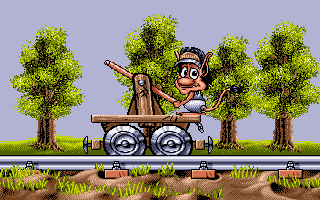
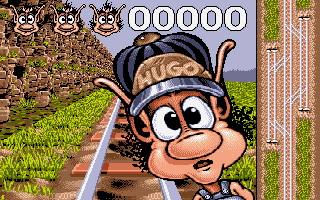
- Draisine: Hugo rides a handcar down train tracks, swapping rails to avoid oncoming locomotives and dead ends using a route map on the right side of the screen.
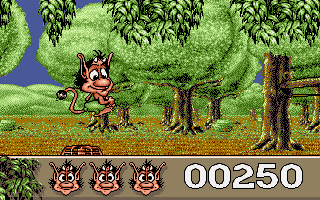
- Forest: A side-scrolling obstacle run where you leap over tree stumps and dodge low branches while keeping up a steady forward pace.
- Mountain: A vertical climb up steep rock faces, jumping over heavy rolling boulders tumbling down from above.
- Airplane: A side-scrolling flight scenario where you pilot a biplane through narrow air corridors while steering clear of floating balloons.
If you survive your chosen three stages, you enter Scylla's Skull Cave for the endgame. Hugo stands before three dangling ropes to free his captive wife Hugolina and their three children. Pulling the correct rope releases your family and doubles your total score, while picking wrong triggers a trap that ejects Hugo from the hideout entirely.
Cheat codes, timing spikes, and DOS quirks
Because the mechanics are so stripped back, the entire challenge comes down to strict window timing. This is where modern players running this ITE Media ApS compilation under standard DOSBox configuration usually run into trouble. The original code expected a very specific CPU speed. Without adjusting your cycles, the mountain desk jumps can lock up or crash, and digital sound effects composed by Thomas Engell can end up pitch-shifted or chopped.
If the strict difficulty spikes feel unreasonable, the developers actually left debug backdoors in the code. Pressing F1 immediately grants extra lives to keep your run alive. If a specific minigame is giving you fits, holding Caps Lock along with F12 and Insert simultaneously skips you straight into the next stage.
The presentation held real appeal for families at the time, featuring animated work by Niels Krogh Mortensen, Lars Krogh Mortensen, and Torben Larsen. The commercial release even contained digitized multi-language audio tracks, allowing players across Europe to hear Hugo talk in Danish or German right out of the box through a Sound Blaster card.
How the package holds up for modern players
Evaluating this compilation today requires accepting what it was built to do. It was never intended to compete with deep PC platformers like Jazz Jackrabbit or Commander Keen. It was created as an accessible home version of a popular televised event that young kids could play without reading a dense manual. Viewed through that lens, the immediate response of the controls and the crisp sprite artwork still deliver simple, quick amusement.
The short sequence length means a single run takes only ten or fifteen minutes, making it ideal for a quick session when you want pure reflexes without a learning curve. While the repetition sets in after a few complete runs, the charm of the sound effects and the sheer novelty of its television background make it worth exploring for anyone curious about unique nineties computer history.
Play Hugo 1 & 2 free in your browser right now
You do not need to hunt down original floppy disks or tweak vintage autoexec files to experience this classic MS-DOS title today. You can play Hugo 1 & 2 online right here in your web browser for free, complete with proper audio timing and immediate control mapping, with nothing to install and no complex setup required.
Launch the game directly on this page, choose between the draisine or the forest, and see if your reflexes are quick enough to rescue Hugolina and survive Scylla's rope trap in the Skull Cave.