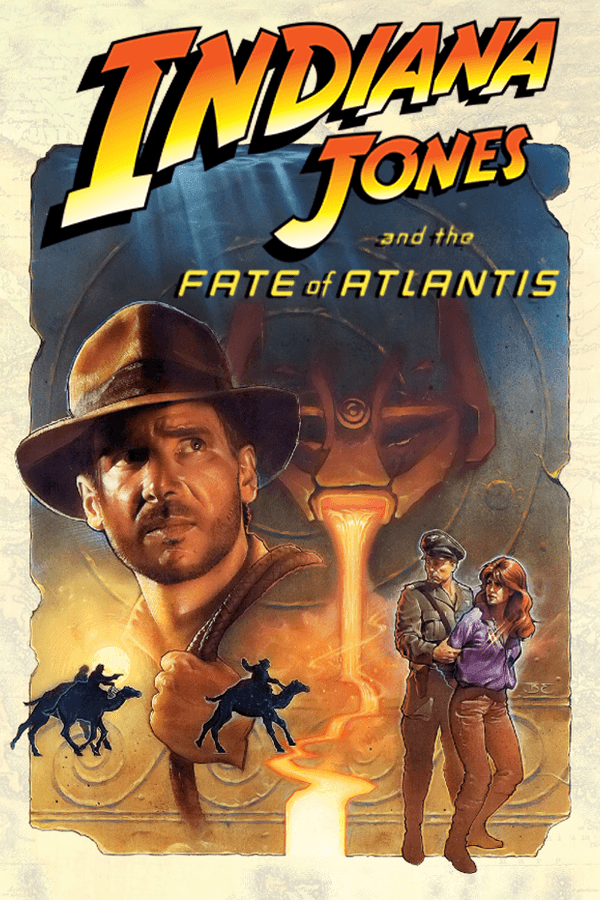

Indiana Jones and The Fate of Atlantis: The Action Game
Checking…
- 1this week
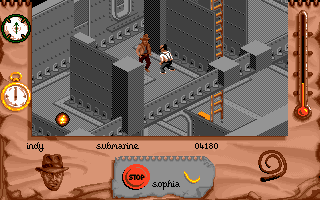
Indiana Jones and The Fate of Atlantis: The Action Game traded the famous point-and-click puzzles of its sister title for an isometric view where swinging Indy's whip and surviving Nazi dockyards took center stage.
Back in 1992, LucasArts released two distinct games based on the same story, leaving action fans with this isometric arcade combat title developed by Attention to Detail Limited. Instead of carefully picking through dialogue trees, you spend your time steering Indy through diagonally angled stages, lashing at enemies, and tracking down key items to advance.
How Indiana Jones and The Fate of Atlantis: The Action Game handles isometric combat
The journey begins in a Monte Carlo casino where you gather your bearings alongside your companion, Sophia Hapgood. From there, the action shifts to high-stakes set pieces, including a Nazi naval base docks area and a tense submarine sequence. Every room requires you to clear out hostile guards using Indy's whip or fists while searching for inventory items like money, which is used to purchase required progression goods.
The core mechanics center entirely around position and timing within a diagonal 3D space:
- Line up Indy precisely with guards to make whip strikes connect.
- Collect scattered cash and items to bypass minor puzzle hurdles.
- Navigate narrow pathways while avoiding damage from surrounding hazards.
- Escort and coordinate with Sophia through locked areas.
It is a straight structural trade: trade off complex puzzle design for physical positioning. The top-down diagonal perspective gives you a clean line of sight on coming threats, but aligning your whip attacks with moving enemies on a grid requires real precision.
Control issues and original reception
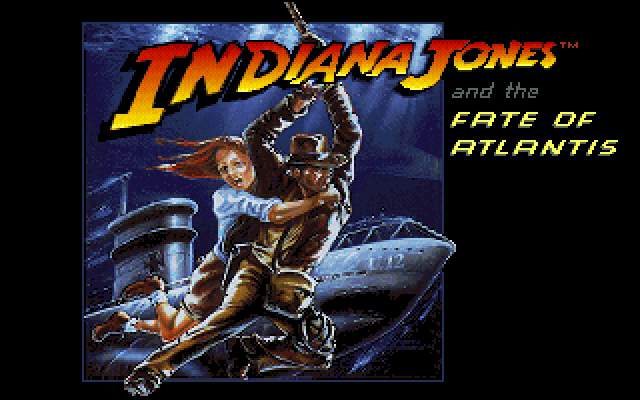
Designer Jon Dean and programmer Jon Steele built a fast engine, but the control scheme proved polarizing on release. While magazines like Sinclair User praised the 8-bit versions with scores as high as 88%, 16-bit coverage was far more mixed. Amiga Power handed down a brutal 36%, pointing squarely at the sluggish response and frustrating directional controls that plagued diagonal movement.
The physical release included a traditional paper code wheel for copy protection, forcing players to look up symbols before starting a run. Between the hardware protection barrier and the punishing collision detection during brawl scenes, many players struggled to get deep into the adventure.
Why the MS-DOS version plays like nothing else
Compared to the full adventure game released the same year, this arcade take feels like an experimental detour. Robert Allen Rusk programmed the MS-DOS version, attempting to deliver crisp sprite action on standard VGA setups. While it lacks the sound depth and atmosphere of the graphic adventure, it offers a totally different rhythm that favors raw reflexes over intellectual leaps.
If you enjoy 1992 top-down brawlers or want to see how LucasArts Entertainment Company, LLC handled action spinoffs, it is well worth exploring. The hitboxes can be unforgiving, but landing a whip crack across a crowded room of guards still carries a satisfying punch once you master the diagonal movement grid.
Play Indiana Jones and The Fate of Atlantis: The Action Game free in your browser
You can play Indiana Jones and The Fate of Atlantis: The Action Game online right now without downloading extra files or configuring ancient hardware settings. Modern players often expect a standard point-and-click layout, so remember to map your keyboard controls for diagonal isometric movement before jumping straight into the Monte Carlo casino floor.
How Indiana Jones and The Fate of Atlantis: The Action Game is played — the keys the game listens to, grouped by what they do.
- Movement
- Action
- Interface
Highlighted keys are mapped — hover or tap one to see what it does.
Run INDY.EXE to configure controls or unlock the game prior to running INDY4A.EXE. Joystick can be calibrated in-game using Alt+J.
Players' controls
Touch and gamepad controls
The on-screen keyboard and gamepad mapping the browser player uses on a phone, a tablet or a controller, as opposed to the real keys above. $PRO members make their own in the player and share them here; anyone can pick one to play with.
Make your own touch controlsPRO
- 1Open the editorSign in below, then pick what to make. The game starts with the editor open over it.
- 2Place your keysAdd keys and drag them where your thumbs rest, or map a controller's buttons. Test plays the game with them; Save keeps them, and you play with them from then on.
- 3Share themShare them right after saving in the game, or name and share them here. Players vote, and the best become this game's controls for everyone.
Go PROSee how it worksSign in+20 XP for sharing · +50 XP if yours become the game's own
- The game's own controlsKeyboardGamepadWhat every player starts with.In use
2 screenshots
From the archive
No gameplay video yet
No gameplay video for Indiana Jones and The Fate of Atlantis: The Action Game yet. Sign in to add one.
No reviews yet
Tell the community what you think of Indiana Jones and The Fate of Atlantis: The Action Game. Reviews are public and tied to your username.
No archived manuals for Indiana Jones and The Fate of Atlantis: The Action Game yet
No manuals archived for this title yet. Sign in to upload the first scan.
Cheat codes, console commands and memory pokes for Indiana Jones and The Fate of Atlantis: The Action Game — each one verified and attributed.
Sign in to submitNo cheats yet for this title
Know a working cheat, poke or trainer? Add it with the button above. Moderators check every entry before it goes live.
No archived soundtrack for Indiana Jones and The Fate of Atlantis: The Action Game yet
No soundtrack archived for this title yet. Sign in to upload the first rip.
No save states for Indiana Jones and The Fate of Atlantis: The Action Game yet
No save states for this title yet. Sign in to share one.
Discussions
Sign in to post- Threads0
- Total posts0
- Online now6
Community · Indiana Jones and The Fate of Atlantis: The Action Game
Who's contributing, and what's new
- Reviews0
- Threads0
- Uploadsapproved0
- Contributors0
Recent activity
Nothing here yet
Reviews, discussion threads and approved uploads appear here as members add them.