


Before you ever set foot in Castle Brunwald or bargain with Adolf Hitler in Berlin, Indiana Jones and the Last Crusade: The Graphic Adventure makes it clear that escaping a scrape requires equal parts brainpower and brute force. Developed in 1989 by Lucasfilm Games, it turned a Hollywood blockbuster into a branching puzzle box where a smooth tongue can save you from a fistfight.
The moment this game clicks is when you realize you do not have to fight every enemy who steps into your path. In the halls of Castle Brunwald, packed with patrolling Nazi guards and heavyweights like Biff, you can throw a punch, but you are far better off reading the room. Put on an officer's uniform or a servant's outfit, pick the right dialog choices, and Indy smoothly bluffing his way past an armed soldier feels infinitely more satisfying than smashing a keyboard numpad.
That dialog system was a quiet revolution for adventure games at the time. Designed by Ron Gilbert, Noah Falstein, and David Fox, the game gave you multiple paths through major obstacles. You can trick a drunken soldier, bribe a guard, or skip a room entirely if you found the right clue earlier at Barnett College or in the catacombs of Venice. If you insist on fighting, you can throw bare fists, but the combat mechanics are clunky enough that talking your way out always feels like the true victory.
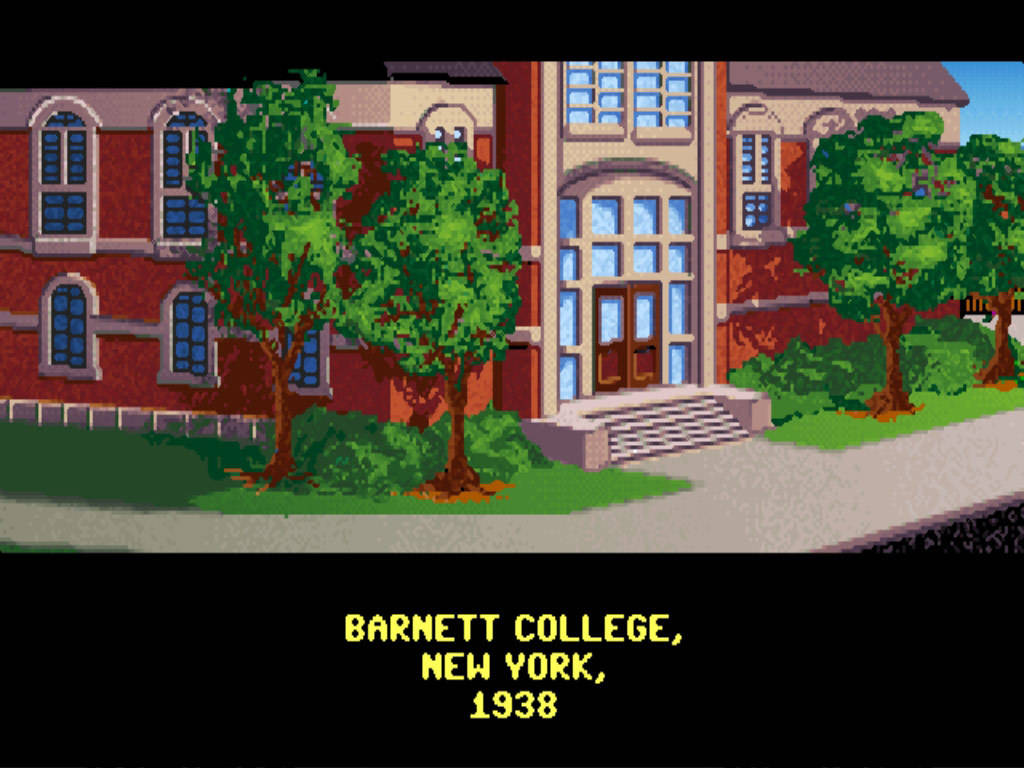
As the third game built on the SCUMM engine after Maniac Mansion and Zak McKracken, this release took point-and-click mechanics beyond simple item collection. The bottom third of the screen holds your classic verb menu, push, pull, give, talk, pick up, but the world on top reacts dynamically to how you play. The developers introduced the Indy Quotient, or IQ system, which tracks how cleanly you solve problems.
The IQ system splits your total points into two categories:
That scoring mechanic gave players a genuine reason to replay an adventure game, which was almost unheard of in 1989. You might brute-force your way through Castle Brunwald on your first attempt, only to reload a saved game later to see if you can bluff past every guard without taking a single hit.
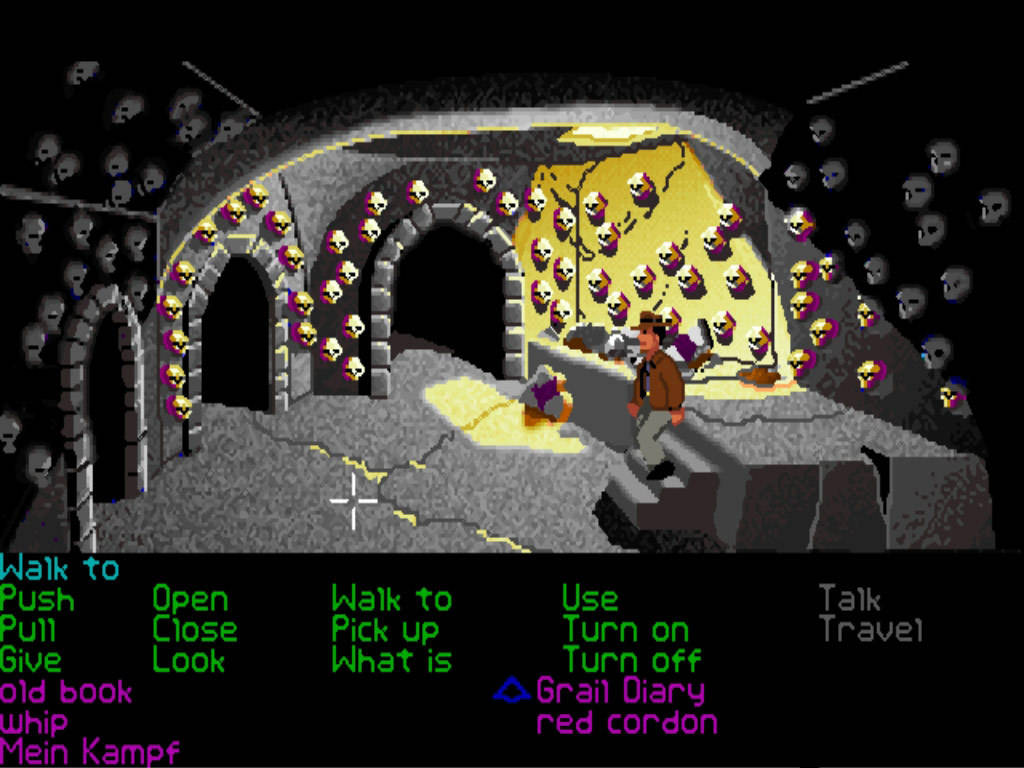
For all its clever design choices, the combat remains the weakest link. Battles play out in real time using rigid keyboard controls on the numpad, where you jab, block, and step back. The animations painted by Steve Purcell, Martin Cameron, James Dollar, and Mike Ebert look great, but the actual rhythm of fighting feels awkward and unforgiving. If your health bar runs out during a brawl with a heavy guard, Indy dies, forcing a reload.
Unlike later releases from LucasArts that abolished character death entirely, you can easily die here. Walk blindly into a trap inside the Grail Temple, pick the wrong chalice at the climax, or lose a hand-to-hand fight, and your journey ends instantly. Crucial clues are tucked inside the physical Grail Diary included with the original box, which doubled as both copy protection and a mandatory guidebook. Lose that booklet, and matching the correct catacomb symbols becomes pure trial-and-error.
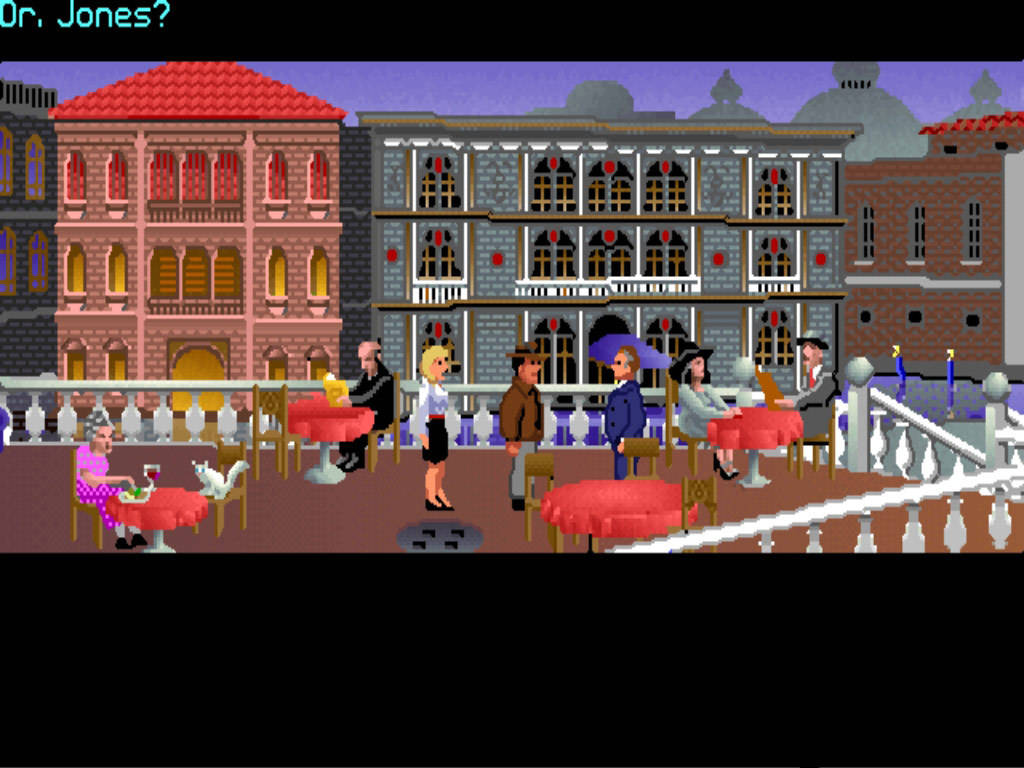
Audio-wise, hearing John Williams' movie theme chirp through an AdLib card or a PC speaker gave the DOS release an immediate personality that set it apart from typical computer games at the time. Whether played in its original 16-color EGA mode or the crisp 256-color VGA upgrade released shortly after, the visual storytelling holds up because the puzzle logic mostly plays fair. When you fail, it is usually because you missed a detail in your diary or picked a fight you should have talked your way out of.
The writing strikes a sharp balance between genuine tension and light comedy. Getting Adolf Hitler to sign a pass in Berlin is among the cleverest character interactions of late-eighties gaming according to retrospectives on Wikipedia. While modern players might struggle with the rigid arcade fighting, the puzzle structure gives players real agency within a cinematic story.
You do not need to hunt down five 5.25-inch floppy disks or fiddle with memory managers to experience this piece of gaming history. You can play Indiana Jones and the Last Crusade: The Graphic Adventure free in your browser right now, running the full MS-DOS release directly on this page. It is the perfect opportunity to see if you can max out your IQ score without taking a punch.
If you want to play Indiana Jones and the Last Crusade: The Graphic Adventure online, just jump straight into the browser window above and start your journey at Barnett College. Keep your wits about you, read every dialogue option carefully before committing to a response, and remember that a gentle word often accomplishes what a whip cannot.
Before you ever set foot in Castle Brunwald or bargain with Adolf Hitler in Berlin, Indiana Jones and the Last Crusade: The Graphic Adventure makes it clear that escaping a scrape requires equal parts brainpower and brute force. Developed in 1989 by Lucasfilm Games, it turned a Hollywood blockbuster into a branching puzzle box where a smooth tongue can save you from a fistfight.
The moment this game clicks is when you realize you do not have to fight every enemy who steps into your path. In the halls of Castle Brunwald, packed with patrolling Nazi guards and heavyweights like Biff, you can throw a punch, but you are far better off reading the room. Put on an officer's uniform or a servant's outfit, pick the right dialog choices, and Indy smoothly bluffing his way past an armed soldier feels infinitely more satisfying than smashing a keyboard numpad.
That dialog system was a quiet revolution for adventure games at the time. Designed by Ron Gilbert, Noah Falstein, and David Fox, the game gave you multiple paths through major obstacles. You can trick a drunken soldier, bribe a guard, or skip a room entirely if you found the right clue earlier at Barnett College or in the catacombs of Venice. If you insist on fighting, you can throw bare fists, but the combat mechanics are clunky enough that talking your way out always feels like the true victory.
As the third game built on the SCUMM engine after Maniac Mansion and Zak McKracken, this release took point-and-click mechanics beyond simple item collection. The bottom third of the screen holds your classic verb menu, push, pull, give, talk, pick up, but the world on top reacts dynamically to how you play. The developers introduced the Indy Quotient, or IQ system, which tracks how cleanly you solve problems.
The IQ system splits your total points into two categories:
That scoring mechanic gave players a genuine reason to replay an adventure game, which was almost unheard of in 1989. You might brute-force your way through Castle Brunwald on your first attempt, only to reload a saved game later to see if you can bluff past every guard without taking a single hit.
For all its clever design choices, the combat remains the weakest link. Battles play out in real time using rigid keyboard controls on the numpad, where you jab, block, and step back. The animations painted by Steve Purcell, Martin Cameron, James Dollar, and Mike Ebert look great, but the actual rhythm of fighting feels awkward and unforgiving. If your health bar runs out during a brawl with a heavy guard, Indy dies, forcing a reload.
Unlike later releases from LucasArts that abolished character death entirely, you can easily die here. Walk blindly into a trap inside the Grail Temple, pick the wrong chalice at the climax, or lose a hand-to-hand fight, and your journey ends instantly. Crucial clues are tucked inside the physical Grail Diary included with the original box, which doubled as both copy protection and a mandatory guidebook. Lose that booklet, and matching the correct catacomb symbols becomes pure trial-and-error.
Audio-wise, hearing John Williams' movie theme chirp through an AdLib card or a PC speaker gave the DOS release an immediate personality that set it apart from typical computer games at the time. Whether played in its original 16-color EGA mode or the crisp 256-color VGA upgrade released shortly after, the visual storytelling holds up because the puzzle logic mostly plays fair. When you fail, it is usually because you missed a detail in your diary or picked a fight you should have talked your way out of.
The writing strikes a sharp balance between genuine tension and light comedy. Getting Adolf Hitler to sign a pass in Berlin is among the cleverest character interactions of late-eighties gaming according to retrospectives on Wikipedia. While modern players might struggle with the rigid arcade fighting, the puzzle structure gives players real agency within a cinematic story.
You do not need to hunt down five 5.25-inch floppy disks or fiddle with memory managers to experience this piece of gaming history. You can play Indiana Jones and the Last Crusade: The Graphic Adventure free in your browser right now, running the full MS-DOS release directly on this page. It is the perfect opportunity to see if you can max out your IQ score without taking a punch.
If you want to play Indiana Jones and the Last Crusade: The Graphic Adventure online, just jump straight into the browser window above and start your journey at Barnett College. Keep your wits about you, read every dialogue option carefully before committing to a response, and remember that a gentle word often accomplishes what a whip cannot.
How Indiana Jones and the Last Crusade: The Graphic Adventure is played — the keys the game listens to, grouped by what they do.
Highlighted keys are mapped — hover or tap one to see what it does.
Keypad controls vary depending on whether Indy is facing left or right during fighting sequences. Directional walking keys are omitted as they were not specified in the primary documentation.
The on-screen keyboard and gamepad mapping the browser player uses on a phone, a tablet or a controller, as opposed to the real keys above. $PRO members make their own in the player and share them here; anyone can pick one to play with.
Cheat codes, console commands and memory pokes for Indiana Jones and the Last Crusade: The Graphic Adventure — each one verified and attributed.
Sign in to submitHow Indiana Jones and the Last Crusade: The Graphic Adventure is played — the keys the game listens to, grouped by what they do.
Highlighted keys are mapped — hover or tap one to see what it does.
Keypad controls vary depending on whether Indy is facing left or right during fighting sequences. Directional walking keys are omitted as they were not specified in the primary documentation.
The on-screen keyboard and gamepad mapping the browser player uses on a phone, a tablet or a controller, as opposed to the real keys above. $PRO members make their own in the player and share them here; anyone can pick one to play with.
Cheat codes, console commands and memory pokes for Indiana Jones and the Last Crusade: The Graphic Adventure — each one verified and attributed.
Sign in to submit