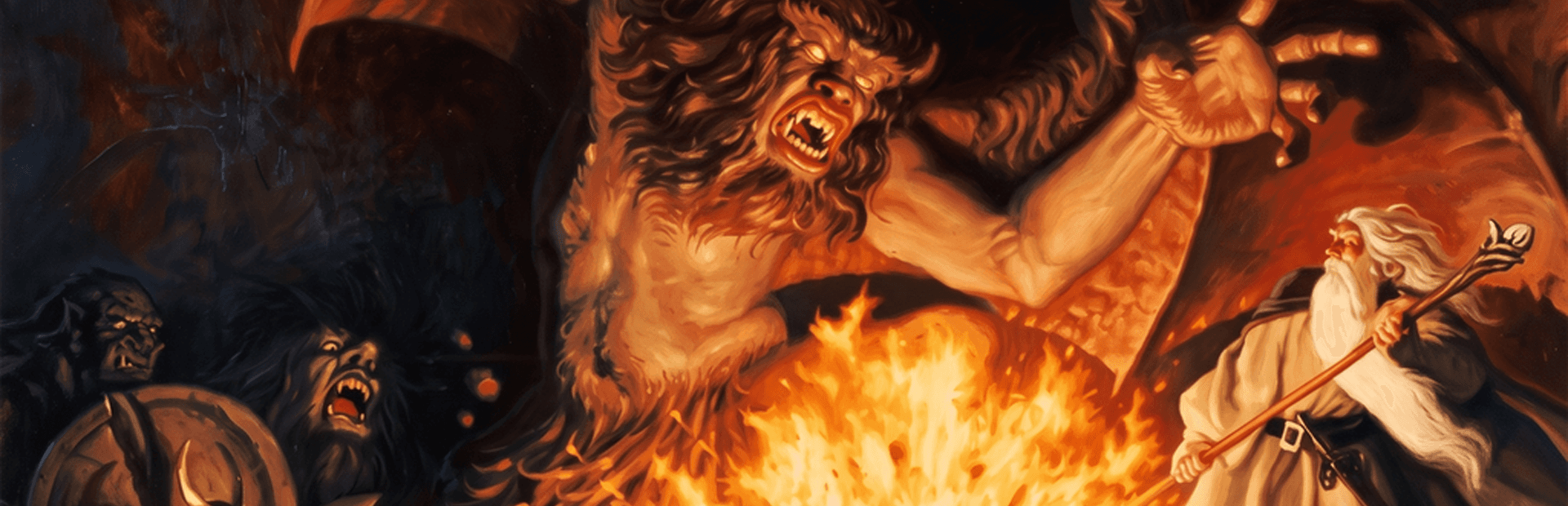
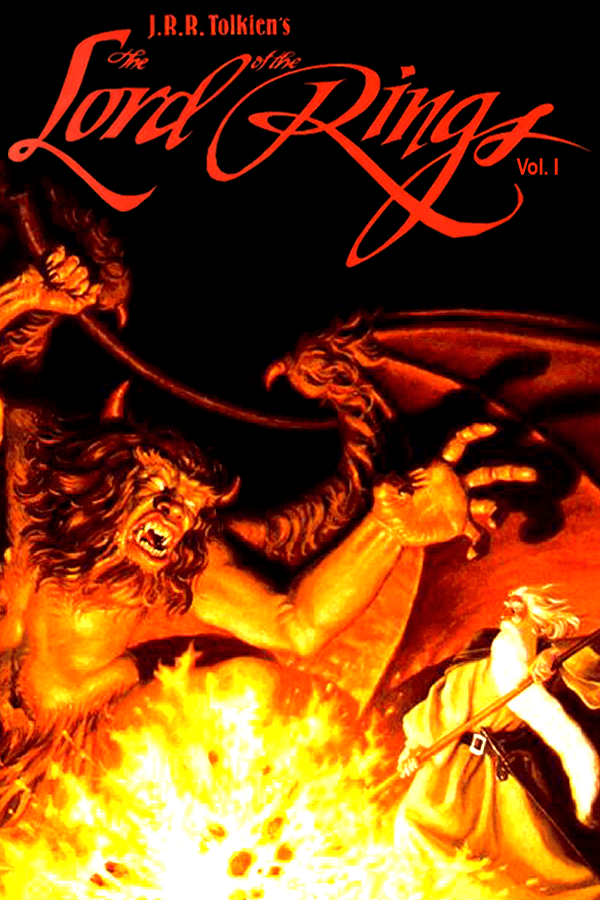

Starting directly outside Bag End, J.R.R. Tolkien's The Lord of the Rings, Vol. I drops you into a vast, slow-moving Middle-earth where recruiting your party and typing out text keywords matter far more than fast reflexes. It expands the narrative of the first book into an open wilderness filled with side quests, manual party management, and audio tricks that pushed PC hardware.
Most players who loaded up the floppy disk release in 1990 expected a straightforward retelling of the novel. Instead, Interplay Productions handed players a wide-open top-down world that lets Frodo wander far off the canonical path right from the start. Under the direction of Brian Fargo, designers Troy A. Miles, Scott Bennie, Jennell Jaquays, and Bruce Schlickbernd originally built the concept for the Commodore 64 before shifting development to the MS-DOS platform. That shift allowed for a massive landmass to explore, but it also meant the game inherited the structural sprawl of late-eighties computer design.
You begin control with just Frodo Baggins in the Shire, tasked with gathering the classic Fellowship - Sam, Pippin, Merry, Aragorn, Legolas, Gimli, Boromir, and Gandalf - as you push toward Rivendell and the borders of Mordor. Rather than locking you into a tight linear story, this role-playing game encourages detour after detour. You might find yourself searching for the scattered fragments of Andúril to reforge Aragorn's blade long before reaching key story locations. That structural freedom gives the world a genuine sense of scale, but it also dilutes the urgency of fleeing the Ringwraiths.
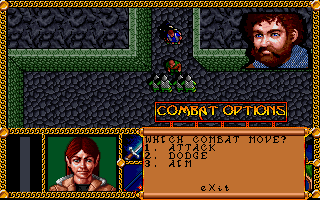
The defining physical sensation of playing this title is its grindingly slow movement speed. When reviewer Charles Ardai evaluated the release for Computer Gaming World in April 1991, he highlighted how much the game diverged from the source material and cited the tedious pacing across the wilderness as a major hurdle. Trudging from the Shire through the Old Forest, down into the Barrow-downs, and up through snowy mountain trails takes real patience. The 2D scrolling engine renders every patch of grass and stone, but watching your line of hobbits creep across the screen pixel by pixel can turn a simple delivery task into a test of endurance.
That deliberate pace makes encounters genuinely dangerous when they finally happen. Combat takes place across the overworld, where your party clashes with packs of wolves, wargs, lurking trolls, subterranean orcs, ancient ghosts, and the terrifying Dark Riders. Because combat happens in turn-based sequence on the main map, positioning matters immensely. If a fragile hobbit gets separated from Aragorn or Boromir while crossing narrow mountain passes, a single pack of wargs will tear your party apart before help can arrive.
Interacting with NPCs and managing your expedition relies on text parser mechanics backed by character sheet statistics. Rather than selecting simple branching dialogue options, you talk to inhabitants across Bree or Rivendell by typing specific keywords into a text prompt. The game also tracks secondary character traits like perception and sneaking, alongside magic cast through "words of power." Equipping your warriors with heavy armor or rare mithril mail changes their survivability drastically, but keeping track of nine individual inventories on floppy disks required constant menu cycling.
The original floppy release was infamous for its clunky interface. Switching between companions manually was a chore, and basic features were so poorly explained in the main screens that players regularly had to study the included reference cards just to figure out the key combination required to save or quit to DOS. Later CD-ROM re-releases addressed some of these mechanical headaches and added cutscenes pulled from Ralph Bakshi's 1978 animated movie, while studios like Silicon & Synapse handled ports to other systems like the Amiga. Yet the core DOS version remains the baseline for how Interplay tackled Tolkien's universe, flaws and all.
While the visual presentation offers clean 2D graphics, the sound engineering contains one of the neatest technical achievements on DOS. Composers Charles Deenen and Kurt Heiden were tasked with writing a soundtrack that could run on everything from high-end Roland MT-32 MIDI units, AdLib, and Sound Blaster cards down to the standard internal PC speaker. For machines lacking dedicated sound cards, they implemented a clever programming trick.
By rapidly toggling pitch frequencies back and forth faster than the human ear can separate them, the driver tricks the single-channel PC speaker into simulating up to four distinct musical voices at once. Hearing a multi-part polyphonic melody output from a tiny internal buzzer was a jaw-dropping moment for PC gamers in 1990. It demonstrated the sheer engineering effort Interplay poured into the presentation, complementing hardware options like the Innovation Sound Standard and Game Blaster.
As an ambitious adaptation, the game is fascinating, but it is brutal on modern expectations. The save system offers little mercy, party management feels overly rigid, and the slow movement speed across open terrain will test anyone used to modern conveniences. Yet for patient fans of classic computer RPGs, the atmospheric worldbuilding, deep keyword parser, and audio work make it worth playing.
You can play J.R.R. Tolkien's The Lord of the Rings, Vol. I free in your browser right now, with full keyboard input ready to go. When you step out of Bag End for the first time, make sure to recruit your hobbit companions immediately, open the text parser to talk to the locals, and turn the sound up to hear that famous PC speaker audio trick in action.
Starting directly outside Bag End, J.R.R. Tolkien's The Lord of the Rings, Vol. I drops you into a vast, slow-moving Middle-earth where recruiting your party and typing out text keywords matter far more than fast reflexes. It expands the narrative of the first book into an open wilderness filled with side quests, manual party management, and audio tricks that pushed PC hardware.
Most players who loaded up the floppy disk release in 1990 expected a straightforward retelling of the novel. Instead, Interplay Productions handed players a wide-open top-down world that lets Frodo wander far off the canonical path right from the start. Under the direction of Brian Fargo, designers Troy A. Miles, Scott Bennie, Jennell Jaquays, and Bruce Schlickbernd originally built the concept for the Commodore 64 before shifting development to the MS-DOS platform. That shift allowed for a massive landmass to explore, but it also meant the game inherited the structural sprawl of late-eighties computer design.
You begin control with just Frodo Baggins in the Shire, tasked with gathering the classic Fellowship - Sam, Pippin, Merry, Aragorn, Legolas, Gimli, Boromir, and Gandalf - as you push toward Rivendell and the borders of Mordor. Rather than locking you into a tight linear story, this role-playing game encourages detour after detour. You might find yourself searching for the scattered fragments of Andúril to reforge Aragorn's blade long before reaching key story locations. That structural freedom gives the world a genuine sense of scale, but it also dilutes the urgency of fleeing the Ringwraiths.
The defining physical sensation of playing this title is its grindingly slow movement speed. When reviewer Charles Ardai evaluated the release for Computer Gaming World in April 1991, he highlighted how much the game diverged from the source material and cited the tedious pacing across the wilderness as a major hurdle. Trudging from the Shire through the Old Forest, down into the Barrow-downs, and up through snowy mountain trails takes real patience. The 2D scrolling engine renders every patch of grass and stone, but watching your line of hobbits creep across the screen pixel by pixel can turn a simple delivery task into a test of endurance.
That deliberate pace makes encounters genuinely dangerous when they finally happen. Combat takes place across the overworld, where your party clashes with packs of wolves, wargs, lurking trolls, subterranean orcs, ancient ghosts, and the terrifying Dark Riders. Because combat happens in turn-based sequence on the main map, positioning matters immensely. If a fragile hobbit gets separated from Aragorn or Boromir while crossing narrow mountain passes, a single pack of wargs will tear your party apart before help can arrive.
Interacting with NPCs and managing your expedition relies on text parser mechanics backed by character sheet statistics. Rather than selecting simple branching dialogue options, you talk to inhabitants across Bree or Rivendell by typing specific keywords into a text prompt. The game also tracks secondary character traits like perception and sneaking, alongside magic cast through "words of power." Equipping your warriors with heavy armor or rare mithril mail changes their survivability drastically, but keeping track of nine individual inventories on floppy disks required constant menu cycling.
The original floppy release was infamous for its clunky interface. Switching between companions manually was a chore, and basic features were so poorly explained in the main screens that players regularly had to study the included reference cards just to figure out the key combination required to save or quit to DOS. Later CD-ROM re-releases addressed some of these mechanical headaches and added cutscenes pulled from Ralph Bakshi's 1978 animated movie, while studios like Silicon & Synapse handled ports to other systems like the Amiga. Yet the core DOS version remains the baseline for how Interplay tackled Tolkien's universe, flaws and all.
While the visual presentation offers clean 2D graphics, the sound engineering contains one of the neatest technical achievements on DOS. Composers Charles Deenen and Kurt Heiden were tasked with writing a soundtrack that could run on everything from high-end Roland MT-32 MIDI units, AdLib, and Sound Blaster cards down to the standard internal PC speaker. For machines lacking dedicated sound cards, they implemented a clever programming trick.
By rapidly toggling pitch frequencies back and forth faster than the human ear can separate them, the driver tricks the single-channel PC speaker into simulating up to four distinct musical voices at once. Hearing a multi-part polyphonic melody output from a tiny internal buzzer was a jaw-dropping moment for PC gamers in 1990. It demonstrated the sheer engineering effort Interplay poured into the presentation, complementing hardware options like the Innovation Sound Standard and Game Blaster.
As an ambitious adaptation, the game is fascinating, but it is brutal on modern expectations. The save system offers little mercy, party management feels overly rigid, and the slow movement speed across open terrain will test anyone used to modern conveniences. Yet for patient fans of classic computer RPGs, the atmospheric worldbuilding, deep keyword parser, and audio work make it worth playing.
You can play J.R.R. Tolkien's The Lord of the Rings, Vol. I free in your browser right now, with full keyboard input ready to go. When you step out of Bag End for the first time, make sure to recruit your hobbit companions immediately, open the text parser to talk to the locals, and turn the sound up to hear that famous PC speaker audio trick in action.
How J.R.R. Tolkien's The Lord of the Rings, Vol. I is played — the keys the game listens to, grouped by what they do.
Highlighted keys are mapped — hover or tap one to see what it does.
Full key map for movement, combat, and saving could not be completely extracted from available sources.
The on-screen keyboard and gamepad mapping the browser player uses on a phone, a tablet or a controller, as opposed to the real keys above. $PRO members make their own in the player and share them here; anyone can pick one to play with.
Cheat codes, console commands and memory pokes for J.R.R. Tolkien's The Lord of the Rings, Vol. I — each one verified and attributed.
Sign in to submitHow J.R.R. Tolkien's The Lord of the Rings, Vol. I is played — the keys the game listens to, grouped by what they do.
Highlighted keys are mapped — hover or tap one to see what it does.
Full key map for movement, combat, and saving could not be completely extracted from available sources.
The on-screen keyboard and gamepad mapping the browser player uses on a phone, a tablet or a controller, as opposed to the real keys above. $PRO members make their own in the player and share them here; anyone can pick one to play with.
Cheat codes, console commands and memory pokes for J.R.R. Tolkien's The Lord of the Rings, Vol. I — each one verified and attributed.
Sign in to submit