
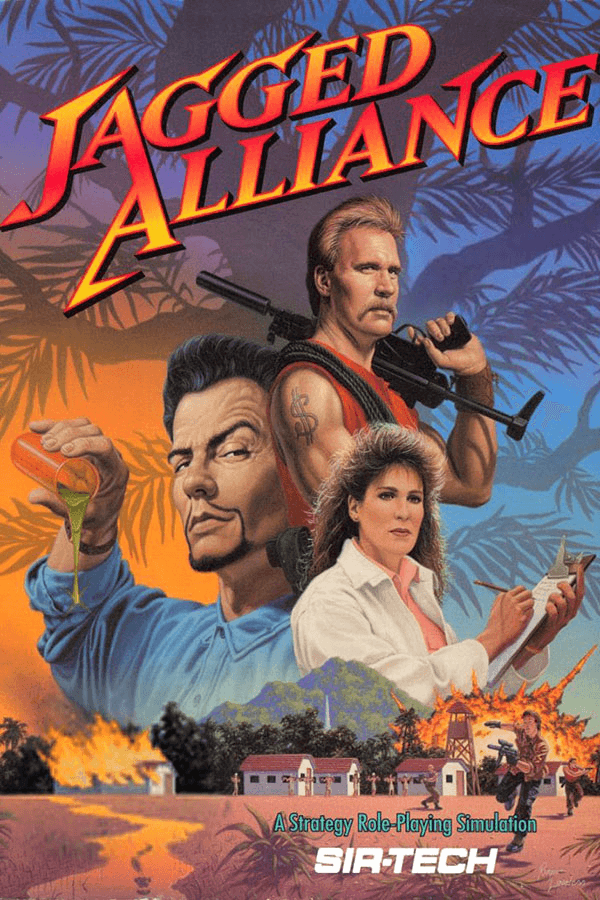

Jagged Alliance
Streaming build
Checking storage…281 MB
Preload in background
When you send a squad into the dense sector grids of Jagged Alliance, you quickly learn that managing psychological egos is just as dangerous as stepping on a landmine.
Tactical combat works best when your mercs actually listen
Most tactical strategy games treating hit points as simple numbers make soldiers feel like disposable pieces, but Madlab Software took a completely different approach. Designers Ian Currie, Linda Currie, and Shaun Lyng built a tactical turn-based campaign where every contractor hired from the Association of International Mercenaries (A.I.M.) behaves like a real person with severe attitude problems. If you order a hot-headed explosive expert like Fidel to hold his fire while an enemy guard walks past, he might ignore your command, yell a quick line of digitized dialogue, and throw a grenade anyway. If you pair two mercs who despise each other, their morale drops and their accuracy turns to absolute garbage.
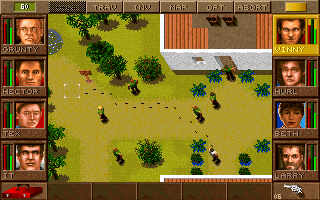
That personal friction gives every single sector battle on the South Atlantic island of Metavira a strange tension. Your employer, scientist Jack Richards and his daughter Brenda, need you to take back sixty sectors controlled by rogue researcher Lucas Santino. Every turn gives your team action points to move, crouch, sneak through bushes, swim across rivers, or fire off shots. The top-down perspective lets you calculate sight lines and cover, but line-of-sight visual checks mean enemy guards frequently step out of the shadows and ruin a carefully planned ambush before your squad can react.
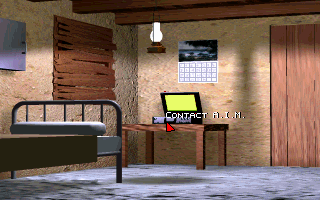
Managing the Metavira tree economy gets messy fast
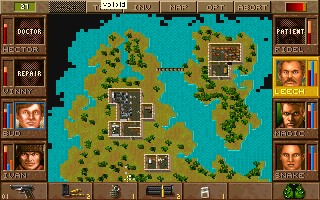
Winning fights is only half the battle because your daily payroll ticks down every morning at 8:00 AM. Metavira is rich in Fallow trees, whose rare medicinal sap fuels both the plot and your income. As you capture sectors, you have to hire native tappers to harvest the trees, along with armed guards to defend those sectors from Santino's counter-attacks. If you expand your territory too fast without leaving defensive forces behind, Santino takes sectors back overnight, cutting off your cash flow and leaving you unable to pay your best marksmen.
This economic balancing act forces agonizing choices during the morning hiring screen. Do you re-hire an expensive, highly skilled sniper for another week, or do you assemble a budget squad of bargain mercenaries and hope their low marksmanship scores do not get them killed? A good mechanic is mandatory to repair broken rifles and stitch together armor add-ons, while a medic keeps wounded troops from dying in the field. When equipment breaks or ammo runs out mid-battle, you quickly realize how fragile your entire operation really is.
The drag of mid-game sector sweeps and tech spikes
While the tactical decision loop keeps fights exciting, the middle section of the game brings noticeable frustration. Mid-game enemy forces suddenly upgrade their weapons and body armor without much warning, creating brutal difficulty spikes if your squad is still clutching basic handguns and shotguns. Suddenly, enemies absorb multiple rifle rounds while laying down lethal fire across open fields.
Sector cleanup can turn into an absolute crawl. Once you kill all but one enemy soldier in a sprawling, tree-filled sector, the turn-based mode stays locked in place. You are forced to spend ten minutes marching six mercenaries step-by-step across empty grass grids, burning action points just to hunt down a single fleeing guard hiding in a quiet corner of the map. It slows the momentum down severely, turning what should be a victory lap into a tedious search party.
Sound card quirks and technical design details
For a game running in standard 320x200 256-color VGA mode via the Rational Systems DOS/4GW runtime, the audio production carried massive personality. Hearing Ivan Dolvich speak exclusively in untranslated Russian voice lines added brilliant flavor, even if you needed a translator to figure out why he was refusing an order. The installer's sound driver list was extensive, offering native support for Roland MT-32, Gravis UltraSound, Ad-Lib, and Sound Blaster cards. Early players who ran the 1995 release on a Sound Blaster 16 encountered frequent system lockups until a patch was distributed to resolve hardware conflicts.
Publisher Sir-Tech Software, Inc. found a massive hit with this design, and it eventually became the company's best-selling non-Wizardry title. Reviewers at the time celebrated the mix of tactical combat and mercenary personality, with Computer Gaming World rating it 4.5 out of 5 stars and PC Magazine praising its addictive loop. While some reviewers noted that micromanaging daily guard allocations felt repetitive, the character interaction lifted it far above traditional hex-based strategy titles.
Why you should play Jagged Alliance today
The personality built into the original A.I.M. roster and the constant tension of managing action points under fire retain all of their punch. Mid-game sector cleanup and inventory sorting can drag, but the tactical combat holds up as well as ever. If you want deep party dynamics wrapped in grid-based gunfights, this tactical RPG is worth your evening.
You can play Jagged Alliance online free in your browser right now, with no setup required. Jump into the MS-DOS classic, sign your first batch of mercs, and see if you can hold Metavira without running out of money on day three.
How Jagged Alliance is played — the keys the game listens to, grouped by what they do.
- Interface
- Other
Highlighted keys are mapped — hover or tap one to see what it does.
The game is primarily controlled using a mouse. Keyboard shortcuts provide quick access to sector and merc interface management functions.
Players' controls
Touch and gamepad controls
The on-screen keyboard and gamepad mapping the browser player uses on a phone, a tablet or a controller, as opposed to the real keys above. $PRO members make their own in the player and share them here; anyone can pick one to play with.
Make your own touch controlsPRO
- 1Open the editorSign in below, then pick what to make. The game starts with the editor open over it.
- 2Place your keysAdd keys and drag them where your thumbs rest, or map a controller's buttons. Test plays the game with them; Save keeps them, and you play with them from then on.
- 3Share themShare them right after saving in the game, or name and share them here. Players vote, and the best become this game's controls for everyone.
Go PROSee how it worksSign in+20 XP for sharing · +50 XP if yours become the game's own
- The game's own controlsKeyboardGamepadWhat every player starts with.In use
8 screenshots
From the archive
No gameplay video yet
No gameplay video for Jagged Alliance yet. Sign in to add one.
No reviews yet
Tell the community what you think of Jagged Alliance. Reviews are public and tied to your username.
No archived manuals for Jagged Alliance yet
No manuals archived for this title yet. Sign in to upload the first scan.
Cheat codes, console commands and memory pokes for Jagged Alliance — each one verified and attributed.
Sign in to submitNo cheats yet for this title
Know a working cheat, poke or trainer? Add it with the button above. Moderators check every entry before it goes live.
No archived soundtrack for Jagged Alliance yet
No soundtrack archived for this title yet. Sign in to upload the first rip.
No save states for Jagged Alliance yet
No save states for this title yet. Sign in to share one.
Discussions
Sign in to post- Threads0
- Total posts0
- Online now6
Community · Jagged Alliance
Who's contributing, and what's new
- Reviews0
- Threads0
- Uploadsapproved0
- Contributors0
Recent activity
Nothing here yet
Reviews, discussion threads and approved uploads appear here as members add them.