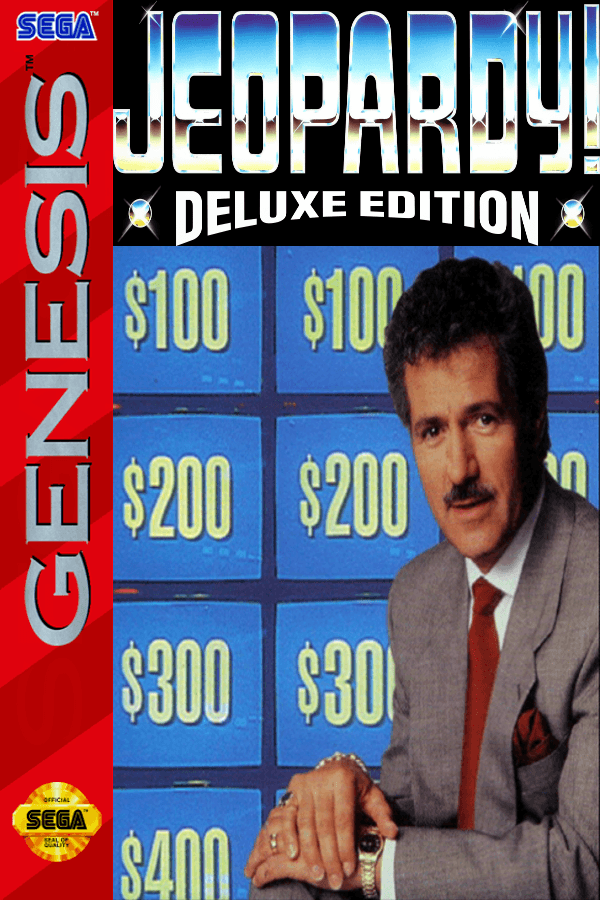

Sitting down with Jeopardy! Deluxe Edition means testing your general knowledge against a digitized Alex Trebek, an unrelenting buzzer timer, and a text parser that treats a single typo like an incorrect answer.
Alex Trebek and 3,500 trivia clues
GameTek knew exactly what players wanted when they loaded up Jeopardy! Deluxe Edition on MS-DOS. You get the familiar blue board, the classic theme song synthesized through your sound card, and a digitized host smiling beside the clue categories. It mimics the television studio setup faithfully, down to the podiums and cash displays for three contestants.
The core loop follows the standard show format across two main rounds and a final showdown. You choose a category and dollar value ranging from $100 up to $1000, wait for the clue to reveal itself, and slam your buzz-in key before the computer opponents beat you to it. Uncovering a Daily Double lets you wager your existing bankroll, while a wrong guess instantly docks that cash value from your total score.
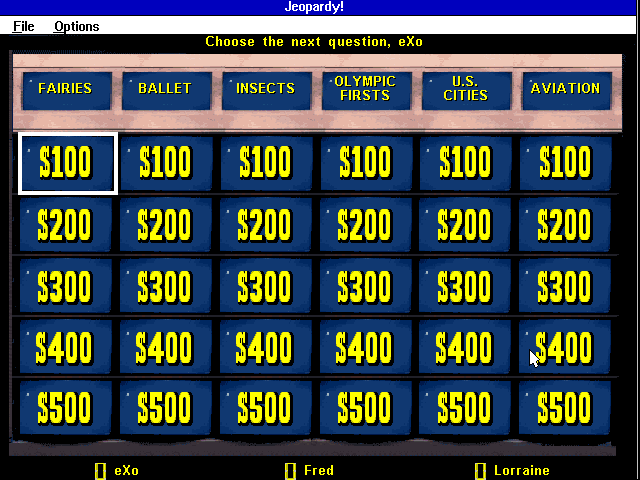
The vast library of over 3,500 clues keeps repeat questions rare, making it a solid entry among 1990s puzzle games. Playing against human opponents around a shared keyboard delivers genuine competition, especially when everyone tries to buzz in the split-second Alex finishes reading the board.
Why the parser in Jeopardy! Deluxe Edition turns trivia into a spelling bee
Knowing the answer is only half the battle here. Once you buzz in, a small text box appears at the bottom of the screen, demanding a precise typed response before the timer runs out. You do not need to type "What is" or "Who is" every single time, but the game demands exact spelling for the core subject matter.
This text parser remains the primary source of player frustration. If a clue expects "Koran" as the answer and you type "Quran", the game flags it wrong and deducts your hard-earned money. Missing a double consonant or swapping two letters under a five-second time limit leads to instant failure, even when your answer was conceptually spot on.
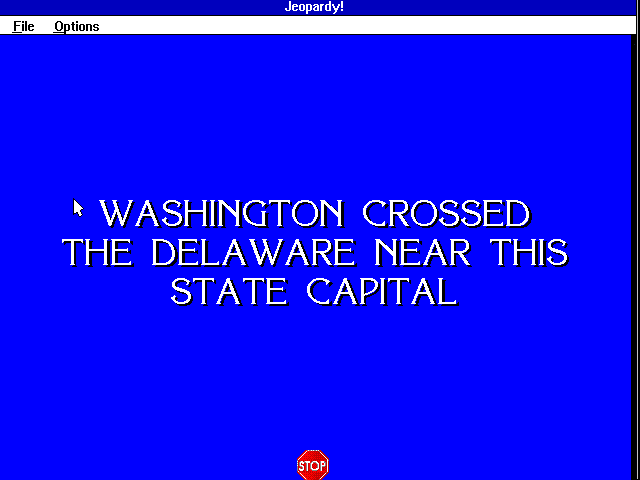
That strictness creates an unintended layer of difficulty that sets it apart from casual console quiz games. Computer players never make typing mistakes or misspell obscure historical names, so human players must develop quick, accurate keyboarding skills to keep up on higher difficulty settings.
How GameTek built a game show on 286 hardware
This 1994 release expanded and visually upgraded earlier PC adaptations published by GameTek, Inc. Hardware requirements were modest, asking for only an AT 286 processor, 1MB of system RAM, and 8MB of hard drive space to install the full package.
Despite those low system requirements, the developers squeezed in a surprising amount of presentation polish:
- VGA graphics that replicate the studio light boards and contestant podiums.
- Digitized voice audio clips for host Alex Trebek introducing rounds.
- Animated male and female contestant avatars that react to correct and incorrect responses.
- A persistent high score leaderboard that logs overall wins, losses, and maximum cash totals.
On standard PC speakers, the audio output consists of rudimentary single-channel beeps. Running the game with a Sound Blaster card completely transforms the atmosphere, delivering crisp digitized speech clips and a fuller rendition of the theme tune.
The final tally on this MS-DOS quiz show
While the uncompromising text entry can feel merciless, the sheer volume of trivia questions holds up for fans of traditional game shows. The turn-based structure and flexible contestant setups make it easy to drop in for a quick session or match up three human players for an evening of head-to-head competition.
The unforgiving spelling parser is a genuine flaw, but it also creates intense moments when you are racing against both the clock and your own fingers during Final Jeopardy. It gives a clear snapshot of how developers adapted major television properties for home computers during the DOS era.
You can play Jeopardy! Deluxe Edition online free in your browser right now with no setup needed. Jump straight into a game to test your typing speed against Alex Trebek and see if you can top the high score board in a single round.