
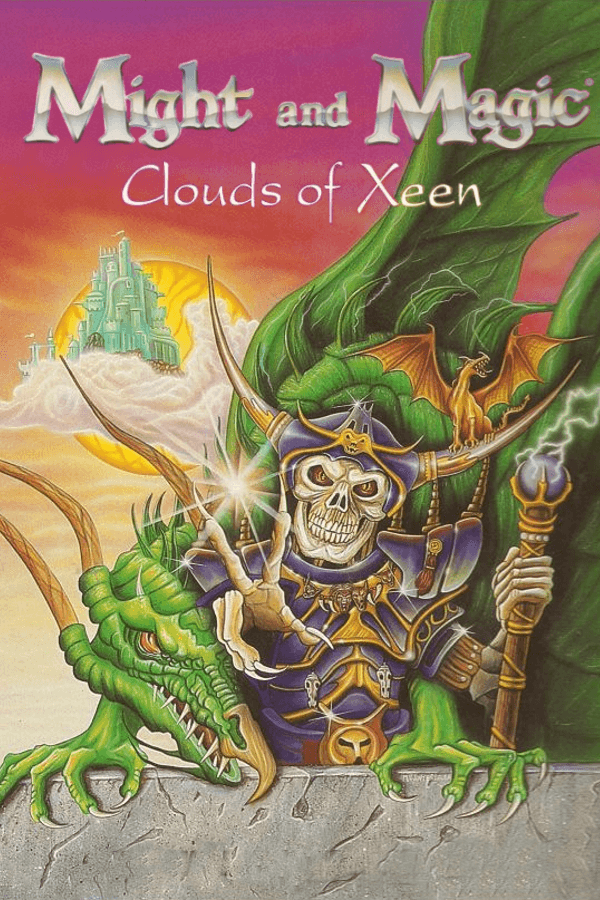

Might and Magic IV: Clouds of Xeen
Checking…
Building a party of six and stepping out into the town of Vertigo, Might and Magic IV: Clouds of Xeen immediately hands you total freedom to explore, get hopelessly lost, or stumble directly into a pack of slimes that wipes your team out in seconds.
Director Jon Van Caneghem and his team at New World Computing built this 1992 release on an upgraded version of the engine used in Might and Magic III: Isles of Terra. You view the grid-based fantasy world from a top-down, first-person viewport that makes every step into the unknown feel like a tactical gamble. The turn-based pacing gives you time to plan, but early on, you will spend half your time managing tiny gold reserves and trying to keep your six custom adventurers alive long enough to clear basic starter quests.
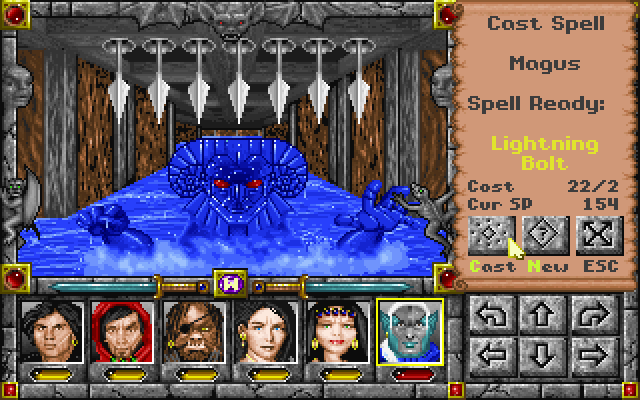
Step out of Vertigo and straight into a wall of difficulty
The campaign tasks you with saving the surface world of Xeen from the tyrant Lord Xeen, who has locked away the land's overseer Crodo inside Darzog Tower. To pull that off, your party must journey through cities like Nightshadow, Rivercity, and the underground haven of Shangri-La, fighting off everything from doom bugs and lava golems to Yang Knights. Honest Gamers rightly noted in a retrospective that the game eases you in with a few cupcake missions, but that gentle start vanishes fast once you venture past the basic perimeter.
Wandering into higher-tier territory too early, like making a wrong turn toward Rivercity, triggers a sudden difficulty wall where low-level parties get obliterated instantly. On top of the lethal monsters, this classic 1992 entry suffers from a chronic economic problem noted by CRPG Addict, where gold remains tight across almost the entire adventure. Training your party, learning essential spells, and buying decent gear constantly empties your pockets, forcing you to think carefully about every copper spent.
How Might and Magic IV: Clouds of Xeen handles its puzzles and party systems
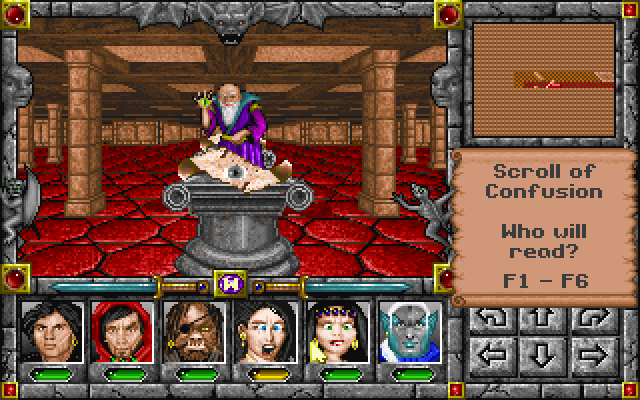
Progression relies heavily on smart exploration, manual wall-bashing to discover secret dungeon passages, and solving brain-teasers scattered across the land. Dungeon crawling in places like the Red Dwarf Mines, the Cave of Illusion, and the Dungeon of Terror involves word puzzles like the famous Vowelless Knights, password-protected magic mirrors, and hunting down hologram cards or pyramid key cards. In a review at the time for Computer Gaming World, Scorpia praised the grand scale of open exploration, even while finding a few of the puzzles somewhat tedious.
If you prefer breaking systems over solving riddles fair and square, the game contains a notorious financial speedrun exploit. By depositing what little gold you have into a bank, setting your system clock forward 10 years to accumulate massive compound interest, and then donating the resulting fortune to experience fountains, you can instantly boost your characters to peak power levels.
- Create a balanced six-person party with strong frontline fighters and dedicated spellcasters.
- Clear initial quests around Vertigo to gather basic gear before tackling distant dungeons.
- Keep a close record of magic mirror passwords and puzzle hints found on dungeon walls.
- Bash suspect walls in caves to uncover hidden treasure chambers and shortcut corridors.
The sound hardware magic and the World of Xeen combination
On the audio side, composers Tim Tully, Paul Lehrman, and Gregory Alper turned out a soundtrack that benefited immensely from high-end sound hardware of the day. Running this role-playing game on a Roland MT-32 MIDI module alongside a Sound Blaster card provided a massive audio upgrade over basic PC speaker chirps, giving every tavern and cavern its own distinct atmosphere. The programmers even hid a internal clock easter egg that displays a developer birthday greeting on specific dates.
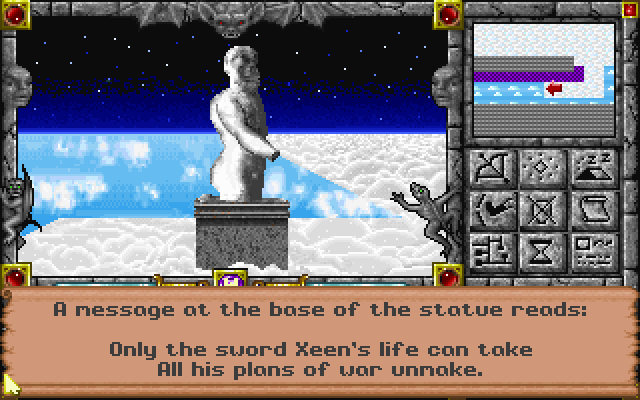
The defining tech design choice of Might and Magic IV: Clouds of Xeen was its ability to physically link with its 1993 direct sequel, Might and Magic V: Darkside of Xeen. Installing both games on the same hard drive merges them into an expansive dual-world module known as World of Xeen, activating cross-over quests and allowing teleporter pyramids to transport your group between both sides of the planet. Played purely by itself as a standalone MS-DOS release, the game imposes a hard level cap that prevents your characters from gaining further experience unless linked to the sequel.
Play Might and Magic IV: Clouds of Xeen online in your browser
The tight economy and artificial level cap in standalone play can sting, but it hits the spot for anyone who loves grid-based dungeon crawlers that do not hold your hand. Bright graphics, extensive party customization, and clever interconnectivity with its sequel give it real weight among early nineties PC crawlers. If you like mapping complex mazes and raising a crew of fragile novices into planar heroes, fire this one up.
You can play Might and Magic IV: Clouds of Xeen online free right in your browser, with no setup required. Modern players often forget that taking notes on password mirrors and dungeon inscriptions is required reading rather than optional flavor text, so keep a notepad handy when you start stepping through those town gates for the first time.
How Might and Magic IV: Clouds of Xeen is played — the keys the game listens to, grouped by what they do.
- Action
Highlighted keys are mapped — hover or tap one to see what it does.
Copy protection requires typing passwords from the manual when exiting early towns or entering castles. Sound and display settings are configured outside the game via setup executable.
Players' controls
Touch and gamepad controls
The on-screen keyboard and gamepad mapping the browser player uses on a phone, a tablet or a controller, as opposed to the real keys above. $PRO members make their own in the player and share them here; anyone can pick one to play with.
Make your own touch controlsPRO
- 1Open the editorSign in below, then pick what to make. The game starts with the editor open over it.
- 2Place your keysAdd keys and drag them where your thumbs rest, or map a controller's buttons. Test plays the game with them; Save keeps them, and you play with them from then on.
- 3Share themShare them right after saving in the game, or name and share them here. Players vote, and the best become this game's controls for everyone.
Go PROSee how it worksSign in+20 XP for sharing · +50 XP if yours become the game's own
- The game's own controlsKeyboardGamepadWhat every player starts with.In use
5 screenshots
From the archive
No gameplay video yet
No gameplay video for Might and Magic IV: Clouds of Xeen yet. Sign in to add one.
No reviews yet
Tell the community what you think of Might and Magic IV: Clouds of Xeen. Reviews are public and tied to your username.
No archived manuals for Might and Magic IV: Clouds of Xeen yet
No manuals archived for this title yet. Sign in to upload the first scan.
Cheat codes, console commands and memory pokes for Might and Magic IV: Clouds of Xeen — each one verified and attributed.
Sign in to submitNo cheats yet for this title
Know a working cheat, poke or trainer? Add it with the button above. Moderators check every entry before it goes live.
No archived soundtrack for Might and Magic IV: Clouds of Xeen yet
No soundtrack archived for this title yet. Sign in to upload the first rip.
No save states for Might and Magic IV: Clouds of Xeen yet
No save states for this title yet. Sign in to share one.
Discussions
Sign in to post- Threads0
- Total posts0
- Online now6
Community · Might and Magic IV: Clouds of Xeen
Who's contributing, and what's new
- Reviews0
- Threads0
- Uploadsapproved0
- Contributors0
Recent activity
Nothing here yet
Reviews, discussion threads and approved uploads appear here as members add them.