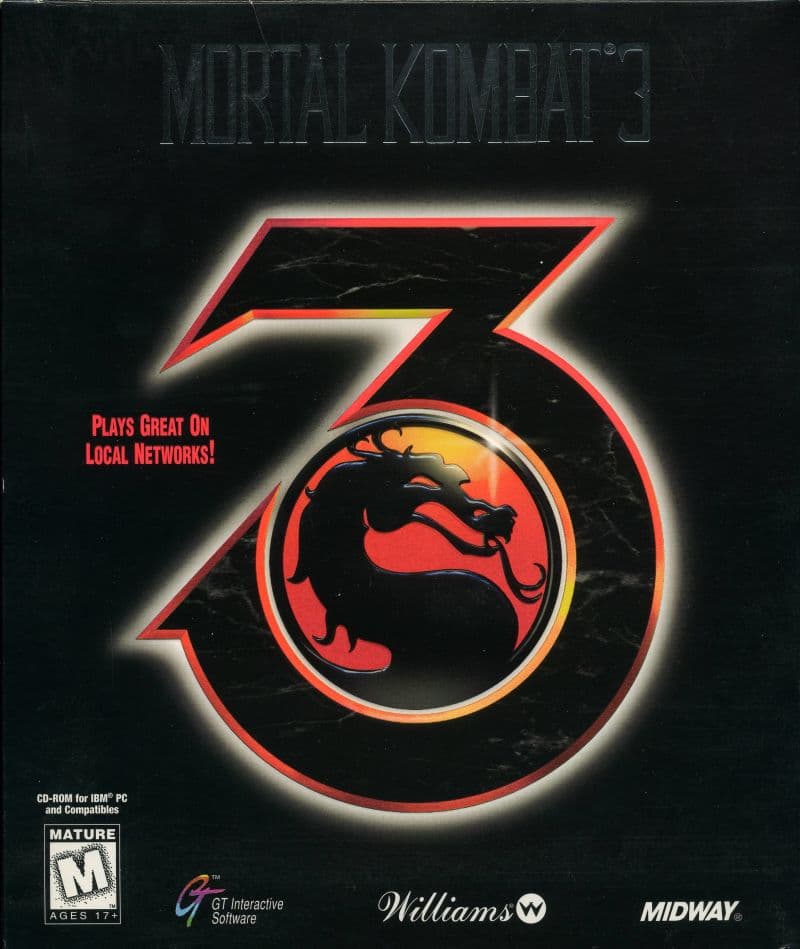
When Mortal Kombat 3 brought Shao Kahn’s extermination squads straight to Earthrealm urban streets, it redefined the pace of the fighting genre with high-speed rushdowns and ruthless combo strings.
Booting up this 1995 release places you right in the middle of an invasion. Shao Kahn has bypassed the tournament rules, resurrecting Queen Sindel on Earth to tear down the barrier between realms. Instead of mystical Outworld temples, you fight across everyday urban locations. Battles take place in subway stations, bank lobbies, city streets, and under highway bridges.
The visual shift felt jarring at the time. Replacing eerie fantasy arenas with plain brick walls and subway tracks took away some of the dark charm that made earlier entries famous. Still, the digitized character graphics packed a ton of sharp detail. Created by Midway Games, Inc. using real motion-captured actors like Kerri Hoskins and Sal Divita, these fighters were the last traditional rotoscoped sprites in the mainline series.
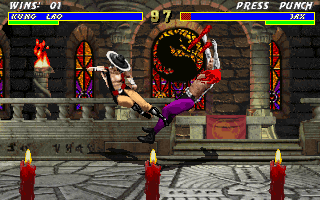
The initial roster gives you fifteen playable fighters to choose from. Fan favorites like Liu Kang, Sub-Zero, Sonya Blade, Jax, Kung Lao, and Kano return alongside fresh faces. You get the riot cop Stryker, the nomadic Kabal, the shaman Nightwolf, the four-armed Shokan warrior Sheeva, and cybernetic ninjas Sektor and Cyrax.
The actual fighting mechanics underwent a massive overhaul. Midway added a dedicated Run button, forcing players to abandon defensive turtling in favor of aggressive rushdown tactics. You can close distances instantly, trapping opponents in the corner before they can recover.
To match this faster tempo, the designers introduced predefined "Dial-A-Combo" chains. Pressing a precise sequence of buttons triggers a canned string of strikes that shreds an enemy health bar. While this opened up spectacular offense, it severely altered combat balance. Once an aggressive player catches you in a dial-a-combo, there is virtually no defensive counter-response available.
Stages also became multi-leveled and interactive. Landing a heavy uppercut on certain arenas sends your opponent crashing straight through the ceiling into a completely different playfield above. That vertical transition made matches feel far more dynamic than traditional flat fighters of the same year.

When the game hit home systems, player reaction was divided. Arcade veterans loved the fast action, but many missed the key ninja characters. Scorpion, Reptile, and Kitana were entirely omitted from the roster, a decision that sparked endless complaints until later revisions restored them. The addition of "Animality" finishing moves, where fighters transform into neon animals to maul their opponent, was widely panned as a silly step too far.
The action on PC required serious processing muscle. Running this MS-DOS game smoothly meant owning at least a 486DX2 processor with 8MB of RAM and a double-speed CD-ROM drive. High-end sound card setups were fully supported, filling rooms with crunchy digitized impacts via Sound Blaster 16, Sound Blaster AWE32, Roland RAP-10, or Gravis UltraSound cards.
The CD-ROM release hid several neat extras. On match load screens, players could enter six-digit "Vs. Kodes" using controller buttons to unlock single-button finishing moves, disable blocking, or alter gravity settings. Holding down specific button combinations allowed you to unlock the secret cybernetic ninja Smoke. If you put the game CD into a standard stereo player, Track 47 played a mysterious narrative track recorded entirely in reverse.
Playing against the computer AI reveals the game's brutal arcade roots. The single-player ladder spikes in difficulty once you encounter the sub-boss Motaro, a massive Centaurian who reflects projectile attacks back at you automatically. Defeating him leads straight to Emperor Shao Kahn, who reads player button inputs instantly and punishes minor mistakes with heavy shoulder charges.
The tight combo strings and rushdown mechanics shine best in multiplayer. The PC conversion included network and modem play, letting players battle over phone lines long before smooth internet play became standard. While animation frames can occasionally look choppy compared to smooth sprite animation in rival games, the speed of the engine keeps rounds tense and quick.
This entry holds a fascinating spot in fighting history. The Dial-A-Combo strings, high speed, and punishing boss fights represent a specific point in 1990s arcade design where aggression ruled supreme. While the urban art direction remains controversial and the single-player AI reads your inputs, the core mechanics still deliver loud, fast-paced fun when played against another human opponent.
You can play Mortal Kombat 3 online, free in your browser right now, with no extra setup required. Pick your favorite fighter, learn a basic combo sequence, and test your execution against Shao Kahn's invasion force today.
When Mortal Kombat 3 brought Shao Kahn’s extermination squads straight to Earthrealm urban streets, it redefined the pace of the fighting genre with high-speed rushdowns and ruthless combo strings.
Booting up this 1995 release places you right in the middle of an invasion. Shao Kahn has bypassed the tournament rules, resurrecting Queen Sindel on Earth to tear down the barrier between realms. Instead of mystical Outworld temples, you fight across everyday urban locations. Battles take place in subway stations, bank lobbies, city streets, and under highway bridges.
The visual shift felt jarring at the time. Replacing eerie fantasy arenas with plain brick walls and subway tracks took away some of the dark charm that made earlier entries famous. Still, the digitized character graphics packed a ton of sharp detail. Created by Midway Games, Inc. using real motion-captured actors like Kerri Hoskins and Sal Divita, these fighters were the last traditional rotoscoped sprites in the mainline series.

The initial roster gives you fifteen playable fighters to choose from. Fan favorites like Liu Kang, Sub-Zero, Sonya Blade, Jax, Kung Lao, and Kano return alongside fresh faces. You get the riot cop Stryker, the nomadic Kabal, the shaman Nightwolf, the four-armed Shokan warrior Sheeva, and cybernetic ninjas Sektor and Cyrax.
The actual fighting mechanics underwent a massive overhaul. Midway added a dedicated Run button, forcing players to abandon defensive turtling in favor of aggressive rushdown tactics. You can close distances instantly, trapping opponents in the corner before they can recover.
To match this faster tempo, the designers introduced predefined "Dial-A-Combo" chains. Pressing a precise sequence of buttons triggers a canned string of strikes that shreds an enemy health bar. While this opened up spectacular offense, it severely altered combat balance. Once an aggressive player catches you in a dial-a-combo, there is virtually no defensive counter-response available.
Stages also became multi-leveled and interactive. Landing a heavy uppercut on certain arenas sends your opponent crashing straight through the ceiling into a completely different playfield above. That vertical transition made matches feel far more dynamic than traditional flat fighters of the same year.

When the game hit home systems, player reaction was divided. Arcade veterans loved the fast action, but many missed the key ninja characters. Scorpion, Reptile, and Kitana were entirely omitted from the roster, a decision that sparked endless complaints until later revisions restored them. The addition of "Animality" finishing moves, where fighters transform into neon animals to maul their opponent, was widely panned as a silly step too far.
The action on PC required serious processing muscle. Running this MS-DOS game smoothly meant owning at least a 486DX2 processor with 8MB of RAM and a double-speed CD-ROM drive. High-end sound card setups were fully supported, filling rooms with crunchy digitized impacts via Sound Blaster 16, Sound Blaster AWE32, Roland RAP-10, or Gravis UltraSound cards.
The CD-ROM release hid several neat extras. On match load screens, players could enter six-digit "Vs. Kodes" using controller buttons to unlock single-button finishing moves, disable blocking, or alter gravity settings. Holding down specific button combinations allowed you to unlock the secret cybernetic ninja Smoke. If you put the game CD into a standard stereo player, Track 47 played a mysterious narrative track recorded entirely in reverse.
Playing against the computer AI reveals the game's brutal arcade roots. The single-player ladder spikes in difficulty once you encounter the sub-boss Motaro, a massive Centaurian who reflects projectile attacks back at you automatically. Defeating him leads straight to Emperor Shao Kahn, who reads player button inputs instantly and punishes minor mistakes with heavy shoulder charges.
The tight combo strings and rushdown mechanics shine best in multiplayer. The PC conversion included network and modem play, letting players battle over phone lines long before smooth internet play became standard. While animation frames can occasionally look choppy compared to smooth sprite animation in rival games, the speed of the engine keeps rounds tense and quick.
This entry holds a fascinating spot in fighting history. The Dial-A-Combo strings, high speed, and punishing boss fights represent a specific point in 1990s arcade design where aggression ruled supreme. While the urban art direction remains controversial and the single-player AI reads your inputs, the core mechanics still deliver loud, fast-paced fun when played against another human opponent.
You can play Mortal Kombat 3 online, free in your browser right now, with no extra setup required. Pick your favorite fighter, learn a basic combo sequence, and test your execution against Shao Kahn's invasion force today.
The on-screen keyboard and gamepad mapping the browser player uses on a phone, a tablet or a controller, as opposed to the real keys above. $PRO members make their own in the player and share them here; anyone can pick one to play with.
Cheat codes, console commands and memory pokes for Mortal Kombat 3 — each one verified and attributed.
Sign in to submitThe on-screen keyboard and gamepad mapping the browser player uses on a phone, a tablet or a controller, as opposed to the real keys above. $PRO members make their own in the player and share them here; anyone can pick one to play with.
Cheat codes, console commands and memory pokes for Mortal Kombat 3 — each one verified and attributed.
Sign in to submit