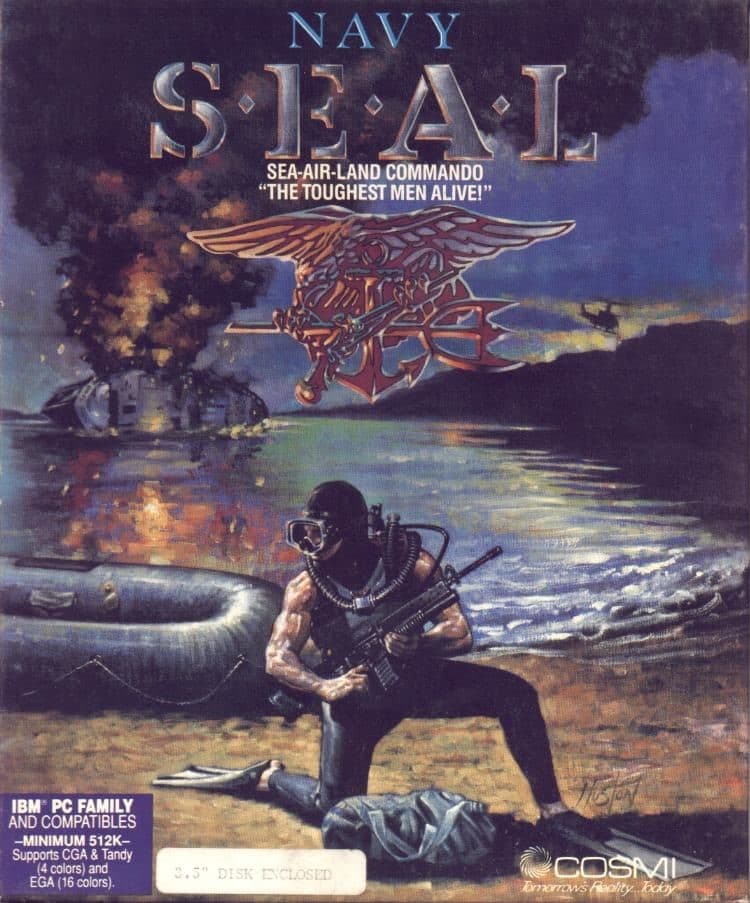
Cosmi Corporation's 1989 MS-DOS release Navy Seal throws players into high-stakes counter-terrorist operations where a single stray bullet or underwater mine sends you back to the very start of the mission.
Paul Norman's multi-stage experiment in military friction
When designer Paul Norman set out to build a modern combat title for developer and publisher Cosmi Corporation, he avoided the single-view perspective popularised by military hits of the late eighties. Instead of keeping players locked in a continuous top-down perspective like MicroProse's Airborne Ranger, Norman adapted the multi-phase structure he had used on Aztec Challenge. The result was a sequence of distinct tactical phases bundled into four separate operational chapters.
Every mission operates as an independent story. You are dropped into foreign territory with a defined objective, usually centered on neutralizing terrorist forces, disarming critical threats, or rescuing hostages. Rather than relying on standard shooter tropes, the gameplay shifts drastically between phases:
- Top-down surface swimming, where you must navigate ocean currents and dodge patrolling surface vessels.
- Sub-surface diving phases filled with submerged hazards, rival combat divers, and aggressive marine life.
- Side-scrolling infantry action, where you clear fortified bases on foot against heavily armed soldiers and guard dogs.
Swimming with sharks and diving past naval mines
The transition between game modes demands completely different skill sets within a single mission. The underwater diving stages play like a precision obstacle course. You swim through claustrophobic aquatic channels while avoiding bloodthirsty sharks, floating naval mines, and enemy divers intent on cutting your oxygen line. Steering in these underwater sections requires patience, as inertia makes sudden turns impossible when a mine drifts into your path.
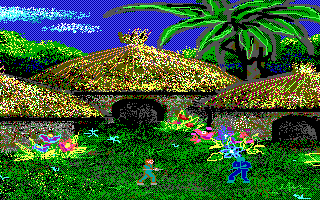
Once your operative reaches dry land, the game shifts into a side-scrolling action setup. Here, you exchange fire with infantry units, dodge incoming bullet sprays, and watch for attack dogs charging from off-screen. Unlike typical side-scrolling platformers of the era, there are no floating power-ups or medical crates sitting in hallway corners. You start with a set inventory, and every hit you take brings you closer to failure.
One bullet, start the level over
The defining element of playing this title is its complete lack of mid-mission safety nets. You receive exactly one life per operation. If an enemy soldier catches you off-guard or you graze an underwater mine nine minutes into a compound infiltration, the game ends instantly and forces you to restart the entire level from the initial insertion point.
Period gaming press showed little mercy toward this brutal design choice. In late 1989, Finnish magazine Pelit dismissed the game as an inferior imitator of established tactical military titles, criticizing its stiff visual presentation and excessive difficulty curve. Years later, Computer Gaming World echoed that sentiment, describing the package as an overly simple arcade conversion and steering readers toward realistic combat simulators like SEAL Team instead.
Boxed wristwatches and sound card chirps
To catch buyers' eyes on store shelves alongside heavily promoted simulation titles, Cosmi packed physical copies with a plastic diver's watch inside the box. That extra gave players a direct tie-in to the military theme, even if the software inside struggled against the technical limits of 1989 PC hardware.
Running alongside its original Commodore 64 counterpart, the MS-DOS release leaned heavily on the basic PC speaker for sound effects, generating thin chirps for gunshots and low rumbles for explosions. Visually, the graphics got the job done, but frame rates could choke when multiple enemy sprites and attack dogs filled the screen at once. The strict single-life rule meant that a momentary dip in performance often resulted in an unavoidable death.
How Navy Seal holds up today
This title does not succeed as a realistic military simulation, but it functions as an uncompromising test of trial-and-error memory for fans of retro action games. The constant shifts between swimming, deep diving, and indoor gunfights keep the pacing active, even when the brutal punishment for minor mistakes drives you to frustration. Success relies entirely on memorizing enemy spawn patterns and mastering the momentum of each movement mode.
If you want to test your patience against this piece of late-eighties PC history, you can play Navy Seal online right now. Launching Navy Seal free in your browser lets you skip old installation routines and jump directly into the insertion phase. Fire up this Navy Seal MS-DOS game, keep your eyes open for underwater minefields, and see if your reflexes can survive the opening operational phase without taking a single hit.