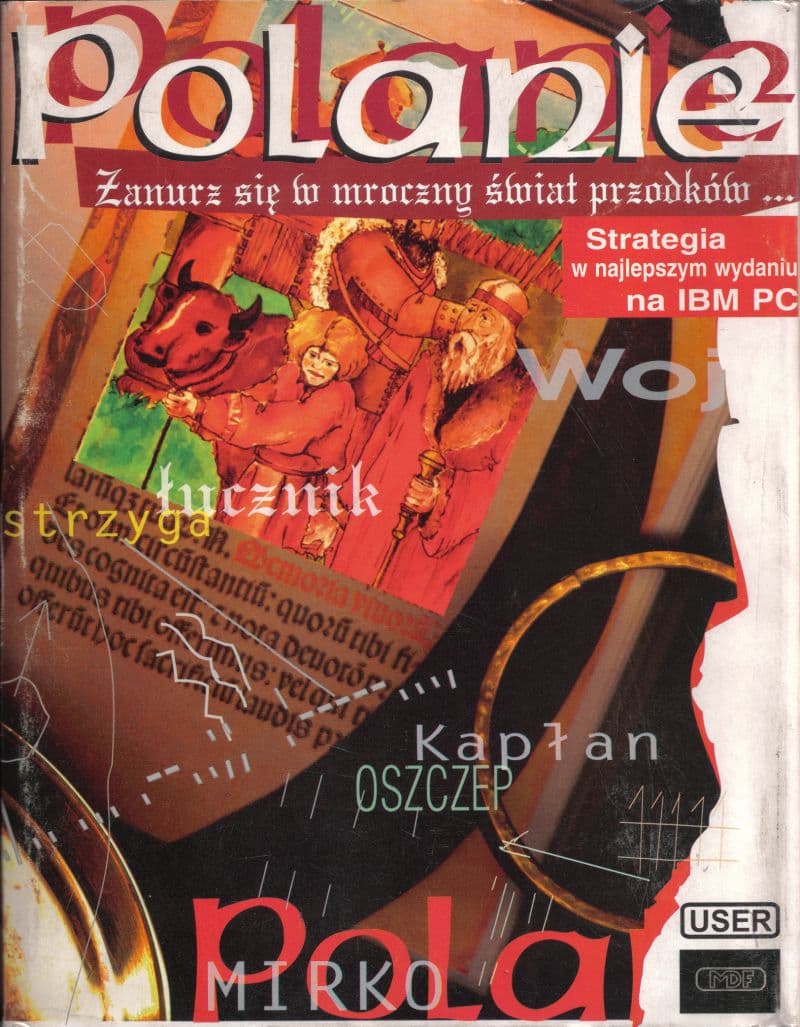
Polanie
aka Knights and Cows · Osadníci · Victory
In Polanie, your entire early medieval army is financed not by mining gold or chopping timber, but by sending cows out to graze on open pastures until they return to the barn full of milk.
Prince Mirko turns real-time strategy into a dairy operation
The campaign begins in the year 699 with Prince Mirko returning from a military expedition to find his home village burned to ashes and his kinsfolk slaughtered. Seeking revenge against neighbouring tribes, he rallies his surviving warriors across 25 single-player missions that demand constant territory conquest and careful base expansion. Before you can march axemen into enemy territory, however, you have to secure a herd of livestock.
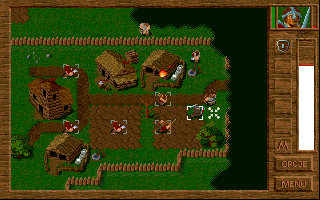
Every building, unit, wall, and bridge in this strategy game relies on a single resource: milk. Cows roam the green pastures scattered around your settlement, eating grass until they are full, at which point they walk back to a barn to deposit their load into your global treasury. Because pastures deplete as cows graze, protecting your herd while maintaining short walking paths to the nearest barn becomes the central strategic puzzle of every mission.
Woodcutters act as your primary construction workers, but you buy them directly with milk rather than setting them to chop down trees for currency. Once built, these timber workers double as effective axemen on the front lines, meaning your infantry doubles as your labor force. If an enemy raiding party slips past your guard towers and slaughters your grazing cows, your economy instantly halts, leaving you unable to train reinforcements or reinforce damaged defensive perimeters.
Why six floppy disks and PKUNZIP were part of the challenge
Developed by a group of young students at the AGH University of Science and Technology in Kraków under project lead Mirosław Dymek, the team released the title under the studio name MDF. Distribution fell to Polish publisher Hurtownia Oprogramowania USER in 1996, spanning six 3.5-inch floppy disks before a expanded CD-ROM edition arrived the following year. Getting the original floppies installed required navigating multi-volume extraction utilities like PKUNZIP, where missing archive flags or disk read errors often halted installation before the main menu ever loaded.
Copy protection was equally straightforward and stubborn. Every time you launched the program, it prompted you to open the printed manual, look up a specific page, and type the corresponding Polish word into the prompt. Clever players quickly discovered that the security system verified these answers against an unencrypted plain text file called hasla.txt sitting directly in the game folder. Editing or reading that file directly bypassed the need to keep the paper booklet next to your keyboard.
In contemporary coverage, Polish gaming magazine Top Secret writer Marcin Borkowski highlighted the impressive craftsmanship from MDF despite modest development conditions. The title went on to earn the "Złoty PlayBox" award at the PlayBox '96 trade show for the best release at the exhibition. While international commentators frequently labeled it a regional spin on Warcraft, players quickly found that managing bovine logistics created a very distinct rhythm on screen.
How priests, firestorms, and sacred grounds alter the battlefield
Combat relies on point-and-select mechanics with top-down unit control, allowing players to drag boxes around large warbands to issue movement and attack commands. While basic engagements pit traditional axemen and foot soldiers against identical enemy unit types, magic adds unpredictability to late-game encounters. Mystical creatures, wild animals, and spellcasting units can turn a straightforward assault into a costly retreat if you leave your squad unattended.
The tactical options extend well beyond simple melee clashes:
- Priests and priestesses can cast devastating fire from the sky directly onto grouped enemy formations.
- Sacred places scattered across the map allow wounded warriors to fully heal between skirmishes.
- Wild beasts and magical creatures inhabit neutral map zones, attacking whatever strays into their territory.
- Defensive walls and bridges force chokepoints where smaller guard forces can hold off larger raiding parties.
Because the enemy AI builds from the same pool of units and structures, missions often turn into wars of attrition over key grasslands. Losing a cluster of senior spellcasters or letting your sacred healing sites get overrun by enemy footmen forces you to pull back and re-train costly units from scratch using precious milk reserves.
The lasting footprint of MDF's medieval strategy debut
The success of the initial release led to a CD-ROM edition packed with expanded campaigns like "Przyjaciele", "Porwanie", and "Południe w ogniu", which added complex scenarios for veteran players. The original team eventually transitioned into Reality Pump Studios, producing Polanie II in 2003, released internationally under the titles KnightShift and Once Upon a Knight. Work on a planned third entry eventually pivoted design directions entirely, morphing into the action RPG franchise Two Worlds.
While an Android mobile remake was announced in 2014 and entered open testing, the project was officially canceled in 2018, leaving the 1990s originals as the definitive way to experience Mirko's campaign. What makes this MDF release memorable today is not high-polygon art, but how tightly its peculiar economy binds resource management directly to map control.
You can play Polanie online free in your browser right now with no setup required. When the first scenario loads, immediately build a barn near the densest patch of tall grass, set your woodcutters to construct defensive walls along the southern pass, and keep an eye on your herd before the first enemy scouts discover your pastures.