


Prisoner of Ice
aka Call of Cthulhu: Prisoner of Ice · Gevangen in het ijs · Prisoner of Ice: Jashin Kōrin
Streaming build
Checking storage…999 MB
Preload in background
In Prisoner of Ice, Infogrames swapped the quiet, creeping paranoia of their earlier Lovecraftian horror games for an action-adventure where an American agent shoots ancient monsters and dodges Nazi occultists aboard a sinking submarine.
Lovecraftian dread gives way to cinematic pulp
Most horror adventures from the mid-1990s were content to keep you stuck in a single haunted house or quiet coastal town, hunting through dusty drawers for brass keys. Prisoner of Ice dumps you straight into crisis management on the high seas. You play as Lieutenant Ryan, an American officer attached to the British submarine H.M.S. Victoria during a covert 1937 rescue run in the Antarctic. The ship recovers two stolen crates, but before you can settle into standard navy routine, a thaw breaks out in the cargo hold. A horror known as a Cthonian escapes, chews through the captain, and leaves you scrambling for anything on board that burns or freezes.
That immediate panic sets the pace for the rest of the game. Instead of lingering over archaic texts in a quiet study, you spend your time reacting to sudden threats across a globe-trotting campaign. The narrative jumps rapidly from sub-zero submarine corridors to the Edwards Antarctic Base, the Library of Buenos Aires, and even time-jumping Nazi compounds like Schlossadler Base across 1937 and 2037. It plays less like a slow Lovecraft mystery and more like a pulp action movie where ancient evil happens to be the primary villain.
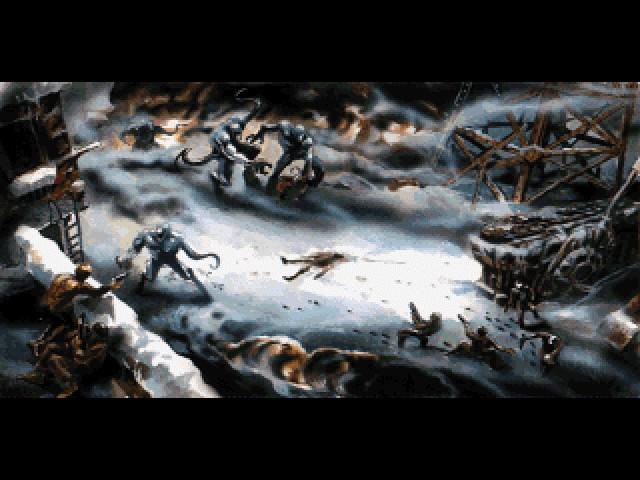
Puzzles built for momentum rather than trial and error
If you spent the early nineties banging your head against obscure puzzle logic in classical adventure games, the stream-lined mechanics here will feel deliberate. Infogrames threw out the wall of verb buttons and replaced them with a contextual cursor: left-click interacts, right-click examines. The game does not let you waste time trying every item on every pixels; if an object in your inventory cannot be used on something, Lieutenant Ryan simply moves on. Key items like flares, fire extinguishers, solar rays, and ancient books serve straightforward roles in resolving direct physical threats.
This design decision keeps the story moving at a breakneck speed, but it came with a distinct trade-off. Many key moments in the campaign rely on real-time countdowns where you have under a minute to make the correct move or suffer an immediate game over. You might need to seal a hatch, grab a extinguisher, or throw a flare while a monster lunges from the shadows. Luckily, the developers built in an auto-save function that triggers right before every timed event, so dying never forces you to re-read ten minutes of text.
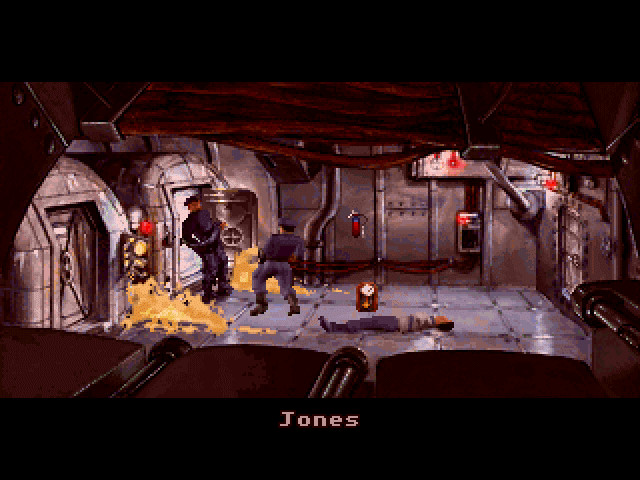
A major leap in 1995 SVGA presentation
From a purely technical perspective, this was one of the most ambitious games Infogrames released during their classic PC era. Running in SVGA at 640x480 resolution, it required an Intel 486 DX/33 with 8 MB of RAM to see at its best, combining detailed hand-drawn background art with pre-rendered 3D character sprites and full-motion video sequences. The visual jump over 1993's Shadow of the Comet was massive, replacing flat pixel landscapes with rich, atmospheric art crafted by lead artist Marc Albinet.
The audio side received equal attention, offering native support for high-end sound hardware of the day: sound cards like the Sound Blaster 16, AWE32, Pro Audio Spectrum, and Gravis Ultrasound really brought out the soundtrack. The musical score delivers a full, noirish weight that carries the tension through every chapter. Unfortunately, the voice acting does not match that high bar. The voice talent delivers lines with a flat, emotionless tone that frequently undermines the panic happening on screen, turning what should be terrifying monster encounters into oddly calm conversations.
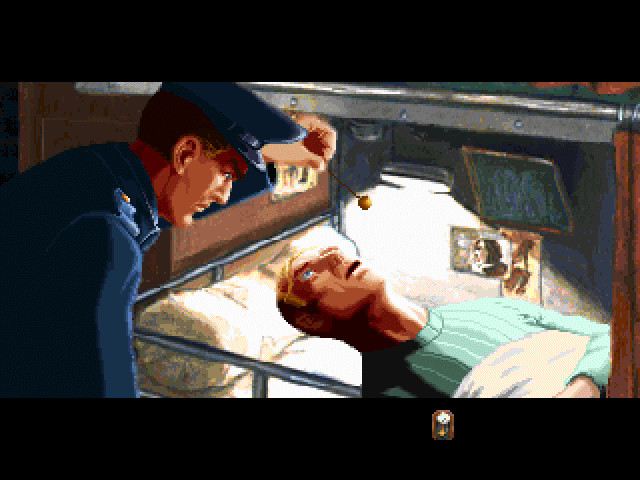
Why Prisoner of Ice leaves a mixed impression today
Looking back at the title released in North America by I•Motion, Inc., the primary frustration for players is not the puzzles or the interface, but its brief runtime. Experienced adventure players can easily clear the entire story in under four or five hours. Writing contributions from Hubert Chardot helped craft an entertaining occult plot involving the returning antagonist Narackamous, but the narrative escalates so fast into time travel and alternate timelines that the core cosmic horror vanishes under sci-fi tropes.
Here is what still works and what falls flat when you play through it today:
- What works: The atmospheric noir music, clean interface design, branching final choices that lead to two distinct endings, and generous auto-saves before timed puzzles.
- What does not: Stiff voice delivery, an extremely short play time, and a tone that leans too heavily into Indiana Jones adventure rather than genuine dread.
Despite those flaws, the game was a huge commercial success in 1995, moving over 30,000 units on its first day in North America and eventually topping 300,000 sales globally. It gave players a neat snapshot of mid-nineties adventure design, sacrificing sprawling complexity for tight pacing and Hollywood presentation.
How to play Prisoner of Ice online
If you want to experience this piece of DOS adventure history, you can play Prisoner of Ice online directly in your web browser with no setup required. When you start the game, pay attention to the opening submarine escape sequence. It establishes the real-time puzzle structure and shows off the SVGA artwork right away, giving you an immediate taste of how Infogrames tried to reshape Lovecraftian games for a broader audience.
How Prisoner of Ice is played — the keys the game listens to, grouped by what they do.
- Movement
- Action
- Interface
Highlighted keys are mapped — hover or tap one to see what it does.
Keyboard controls serve as shortcuts for the primary point-and-click mouse interface. Text typing is used when naming save files.
Players' controls
Touch and gamepad controls
The on-screen keyboard and gamepad mapping the browser player uses on a phone, a tablet or a controller, as opposed to the real keys above. $PRO members make their own in the player and share them here; anyone can pick one to play with.
Make your own touch controlsPRO
- 1Open the editorSign in below, then pick what to make. The game starts with the editor open over it.
- 2Place your keysAdd keys and drag them where your thumbs rest, or map a controller's buttons. Test plays the game with them; Save keeps them, and you play with them from then on.
- 3Share themShare them right after saving in the game, or name and share them here. Players vote, and the best become this game's controls for everyone.
Go PROSee how it worksSign in+20 XP for sharing · +50 XP if yours become the game's own
- The game's own controlsKeyboardGamepadWhat every player starts with.In use
9 screenshots
From the archive
No gameplay video yet
No gameplay video for Prisoner of Ice yet. Sign in to add one.
No reviews yet
Tell the community what you think of Prisoner of Ice. Reviews are public and tied to your username.
No archived manuals for Prisoner of Ice yet
No manuals archived for this title yet. Sign in to upload the first scan.
Cheat codes, console commands and memory pokes for Prisoner of Ice — each one verified and attributed.
Sign in to submitNo cheats yet for this title
Know a working cheat, poke or trainer? Add it with the button above. Moderators check every entry before it goes live.
No archived soundtrack for Prisoner of Ice yet
No soundtrack archived for this title yet. Sign in to upload the first rip.
No save states for Prisoner of Ice yet
No save states for this title yet. Sign in to share one.
Discussions
Sign in to post- Threads0
- Total posts0
- Online now6
Community · Prisoner of Ice
Who's contributing, and what's new
- Reviews0
- Threads0
- Uploadsapproved0
- Contributors0
Recent activity
Nothing here yet
Reviews, discussion threads and approved uploads appear here as members add them.