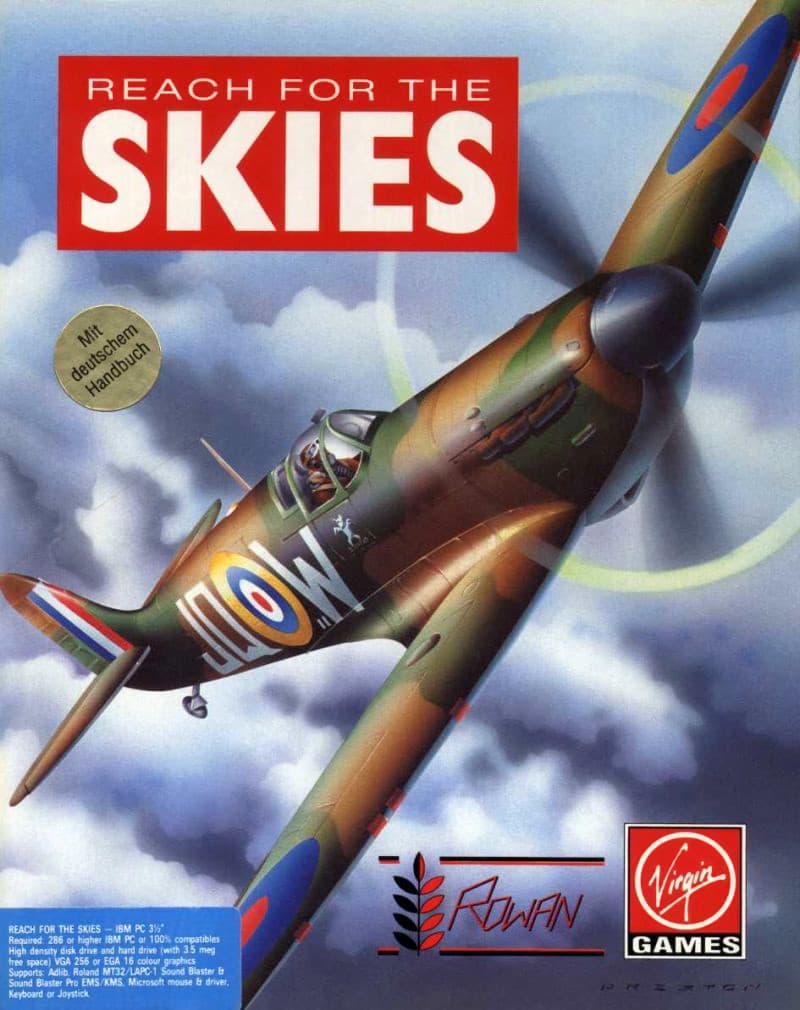
Reach for the Skies
Checking…
If you ever wanted to see what happens when a serious flight simulator hands you the operational map alongside the flight stick, Reach for the Skies is the game that tried to do both in the summer of 1940.
Commanding the Battle of Britain takes more than quick reflexes
Most flight simulators from this era dropped you straight behind a crosshair and let you dogfight in a vacuum. This game takes a very different path. You choose either the British Royal Air Force or the German Luftwaffe across four distinct phases of the Battle of Britain. You can jump straight into the cockpit as a front-line pilot, or take the desk as a Controller. At the Controller's desk, your daily job is plotting fighter vector sweeps, scrambling squadrons, and preserving precious aircraft and crew.
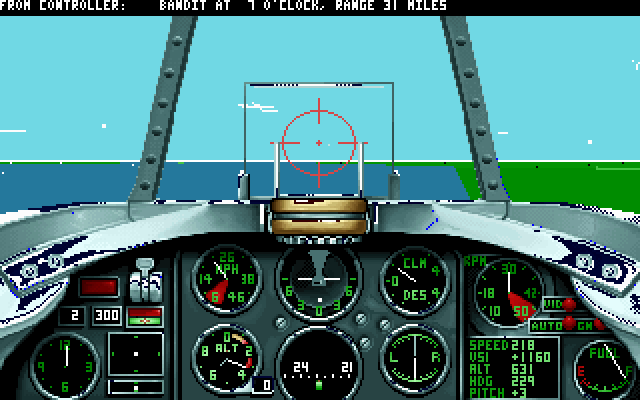
When you take to the air, the game models eight specific aircraft from the campaign. You can fly the Spitfire, Hurricane, Bf 109, Bf 110, Ju 87, Ju 88, He 111, and Do 17. Every plane features its own functional cockpit panel layout and distinct handling traits. Escorting slow Ju 88 bombers across the English Channel while RAF Spitfires dive out of the sun requires constant attention to your air speed and throttle adjustments.
The operational layer changes how you treat every dogfight. Lose a single Hurricane on an unnecessary scramble, and you do not just hit restart. You play out the rest of the week with a gap in your defensive grid.
Rowan built a polygon engine that pushed early nineties PCs
The technical foundation of the game came directly from the team's earlier work on Flight of the Intruder. Programmer and designer Rod Hyde led a coding team at Rowan Software Ltd. including Chris Orton, Paul Dunscombe, Colin Bell, James Taylor, Steve Tickle, and Dave Whiteside. Development originally started under publisher Mirrorsoft. When Mirrorsoft unexpectedly collapsed, Virgin Interactive Entertainment picked up the project and brought it to retail shelves.
The technical details made a huge splash on PC hardware. The 256-color VGA visual presentation gave individual aircraft solid polygon silhouettes against the English coastline. Martin Walker composed the game's musical soundtrack, while Dave Whiteside and James Taylor built the audio engine. Hearing engines roar on an AdLib card or a Roland MT-32 board gave the dogfights genuine audio punch. Rowan even added native support for specialized flight accessories like the Gravis MouseStick and Aerochopper controllers.
That engineering effort paid off on store shelves. The game quickly climbed to the number five position on the UK sales charts, carving out space against rival flight games of the era.
Where Reach for the Skies stalls under its own ambition
Combining grand strategy with detailed flight physics created plenty of technical friction. An external QA tester famously discovered twice as many bugs as Virgin's internal testing group during pre-release evaluation. Because ship dates were tight, the game eventually hit store shelves with several of those software bugs left unpatched. Original physical copies also forced players through tedious manual-based keyword lookup copy protection every time they booted up.
Gaming magazines in 1993 split sharply over the final product. Amiga Format awarded a high 90% score, praising its swift execution on low-end hardware. Atari ST User gave it 85%, praising its aerial excitement. However, CU Amiga slammed the package with a 59% rating, calling it a collection of great ideas ruined by sloppy execution. German magazine Aktueller Software Markt landed in the middle with a 48 out of 60 score for the MS-DOS version.
To keep novice pilots from crashing endlessly, Rowan included several difficulty aids. You can turn on invincibility in a dedicated practice mode, toggle autogun assistance, or let autopilot handle tricky navigation. A time acceleration feature also lets you skip quiet stretches of over-water flight whenever no enemy aircraft are in visual range.
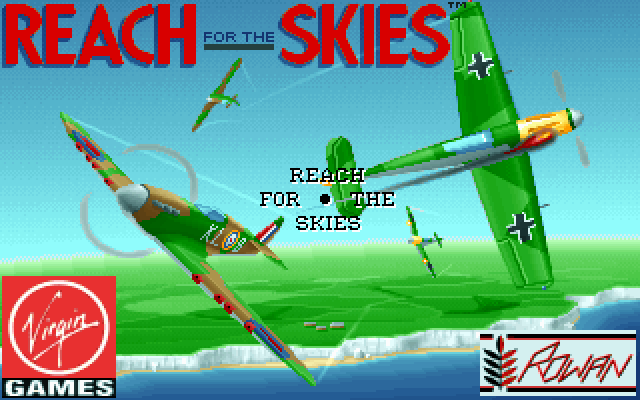
Fire up Reach for the Skies free in your browser today
It combines flight combat with real-time resource management in a way few simulators ever attempted. You spend as much time managing squadrons as you do tracking bandits over the Channel. Give it an evening if you want a flight sim where planning carries real weight.
You can play Reach for the Skies free in your browser right now with nothing to install. Jump straight into the cockpit of a Spitfire or take over the Luftwaffe controller table to test your defensive strategy in seconds.
How Reach for the Skies is played — the keys the game listens to, grouped by what they do.
- Interface
Highlighted keys are mapped — hover or tap one to see what it does.
Keymap is incomplete due to missing full documentation.
Players' controls
Touch and gamepad controls
The on-screen keyboard and gamepad mapping the browser player uses on a phone, a tablet or a controller, as opposed to the real keys above. $PRO members make their own in the player and share them here; anyone can pick one to play with.
Make your own touch controlsPRO
- 1Open the editorSign in below, then pick what to make. The game starts with the editor open over it.
- 2Place your keysAdd keys and drag them where your thumbs rest, or map a controller's buttons. Test plays the game with them; Save keeps them, and you play with them from then on.
- 3Share themShare them right after saving in the game, or name and share them here. Players vote, and the best become this game's controls for everyone.
Go PROSee how it worksSign in+20 XP for sharing · +50 XP if yours become the game's own
- The game's own controlsKeyboardGamepadWhat every player starts with.In use
2 screenshots
From the archive
No gameplay video yet
No gameplay video for Reach for the Skies yet. Sign in to add one.
No reviews yet
Tell the community what you think of Reach for the Skies. Reviews are public and tied to your username.
No archived manuals for Reach for the Skies yet
No manuals archived for this title yet. Sign in to upload the first scan.
Cheat codes, console commands and memory pokes for Reach for the Skies — each one verified and attributed.
Sign in to submitNo cheats yet for this title
Know a working cheat, poke or trainer? Add it with the button above. Moderators check every entry before it goes live.
No archived soundtrack for Reach for the Skies yet
No soundtrack archived for this title yet. Sign in to upload the first rip.
No save states for Reach for the Skies yet
No save states for this title yet. Sign in to share one.
Discussions
Sign in to post- Threads0
- Total posts0
- Online now6
Community · Reach for the Skies
Who's contributing, and what's new
- Reviews0
- Threads0
- Uploadsapproved0
- Contributors0
Recent activity
Nothing here yet
Reviews, discussion threads and approved uploads appear here as members add them.