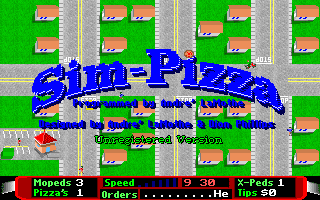
Sim Pizza
aka Sim-Pizza · SIM-Pizza
In Sim Pizza, you step into the sneakers of Vinnie, driving a loud moped across town to toss fresh pies at house porches before Uncle Tony loses his cool.
Vinnie's moped never learned how to reverse
The core concept behind Sim Pizza hinges on one brutal control constraint: your delivery bike only moves forward. Created in 1994 by Alan Phillips and André LaMothe under the Andromeda Industries label, this shareware action title takes the basic rhythm of arcade delivery games and strips away all room for error. If you overshoot a house number, you cannot just back up and fix your mistake. You either execute a wide, awkward loop through traffic or accept the lost sale and keep rolling down the street.
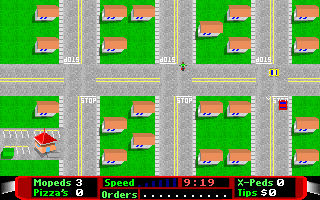
You start each shift at Uncle Tony's pizzeria, loading up your moped before setting out into the residential grid. The top-down perspective gives you a clean view of the neighborhood roads, oncoming cars, and wandering pedestrians. But because you can only carry five pizzas at a single time, every trip is a constant calculation between speed, fuel efficiency, and available cargo space.
Controlling the bike feels heavy, requiring careful management of your throttle. You can accelerate to dodge traffic or tap the brakes to buy yourself time, but steering at high speeds easily sends you skidding into curbs. It creates an immediate tension where getting the job done fast conflicts directly with keeping your moped intact.
Cruising for Uncle Tony in Sim Pizza
The core loop of this action game requires sharp memory and quick reflexes. As you ride through the streets, destination house numbers appear as flashing text at the bottom of the screen. In the original setup, Uncle Tony's digitized voice would call out the next address over your PC speaker or Sound Blaster card, giving you a verbal heads-up before the house came into view.
Once you locate the correct house, you must position your moped perfectly along the right side of the road. Pressing the spacebar launches a pizza sideways toward the front door. The mechanical rules of delivery are strict, and mastering the timing takes several practice runs:
- You can only hold a maximum of five pizzas before returning to the shop to restock.
- Pizzas can only be thrown to the right side of your vehicle, forcing specific route planning.
- Houses share identical visual designs, making house numbers your only reliable guide.
- Colliding with cars, pedestrians, or street obstacles knocks you down and wastes precious time.
Because every building in the neighborhood uses the exact same sprite artwork, you cannot rely on visual landmarks like red roofs or blue fences. You are forced to keep your eyes locked on the white street numbers painted near the front doors, scanning house by house while keeping one eye on oncoming cars.
Why throwing to the right creates absolute chaos
The single most frustrating mechanic in Sim Pizza is the rigid aiming system. Vinnie only throws pizzas out to his right. If your target destination happens to sit on the left side of a two-way street, you have to execute a full U-turn, integrate into oncoming traffic, and approach the house from the opposite direction just to line up a shot.
To make matters more confusing, tossed pizzas do not stop moving when they hit their target zone. When you hit the spacebar, the pizza sprite flies out toward the door and simply continues floating off the screen. There is no satisfying collision sound or immediate visual feedback confirming a successful delivery, leaving you guessing whether the points actually counted or if your throw missed the porch by an inch.
This lack of clear feedback turns close calls into pure guesswork. You might line up what looks like a flawless toss, only to realize three houses down that the order was logged as a miss because your moped was angled two degrees too far to the left.
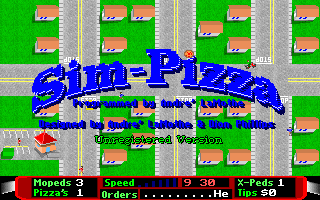
The sound engine struggle in this classic MS-DOS game
When playing this 1994 release on modern emulators, the audio system frequently runs into timing issues. In the original environment managed by Andromeda Industries, digitized voice samples alerted players to new orders. Under modern execution through DOSBox, the audio channels often stutter or drop entirely, causing destination prompts to flash on the interface for only a fraction of a second.
Without reliable audio cues, playing the Sim Pizza MS-DOS game becomes significantly harder. You lose the audio warning for incoming house orders, meaning you have to constantly monitor the text box at the screen margin while simultaneously dodging aggressive AI traffic.
Compared to mainstream arcade ports of the mid-nineties, the presentation here is raw and unpolished. The motor engine sound produces a harsh, buzzing drone that rattles through basic sound hardware. Yet despite the clunky audio and stiff controls, the fast-paced score attack loop retains a frantic, chaotic charm that keeps you trying for one more clean run.
Fire up Sim Pizza free in your browser right now
If you want to test your reflexes against Uncle Tony's delivery timer, you can play Sim Pizza online right here. There is no need to mess with old config files or mounting virtual drives, as the full shareware release runs directly inside your web browser with zero setup required.
When you jump into your first shift, make sure to take the first corner slow and get used to how the moped drifts. Practice tossing a couple of test pizzas on an empty street early on so you can get a feel for the projectile speed and right-side throw trajectory before traffic picks up. Grab your helmet, keep an eye on your inventory count, and see how many orders you can complete before time runs out.