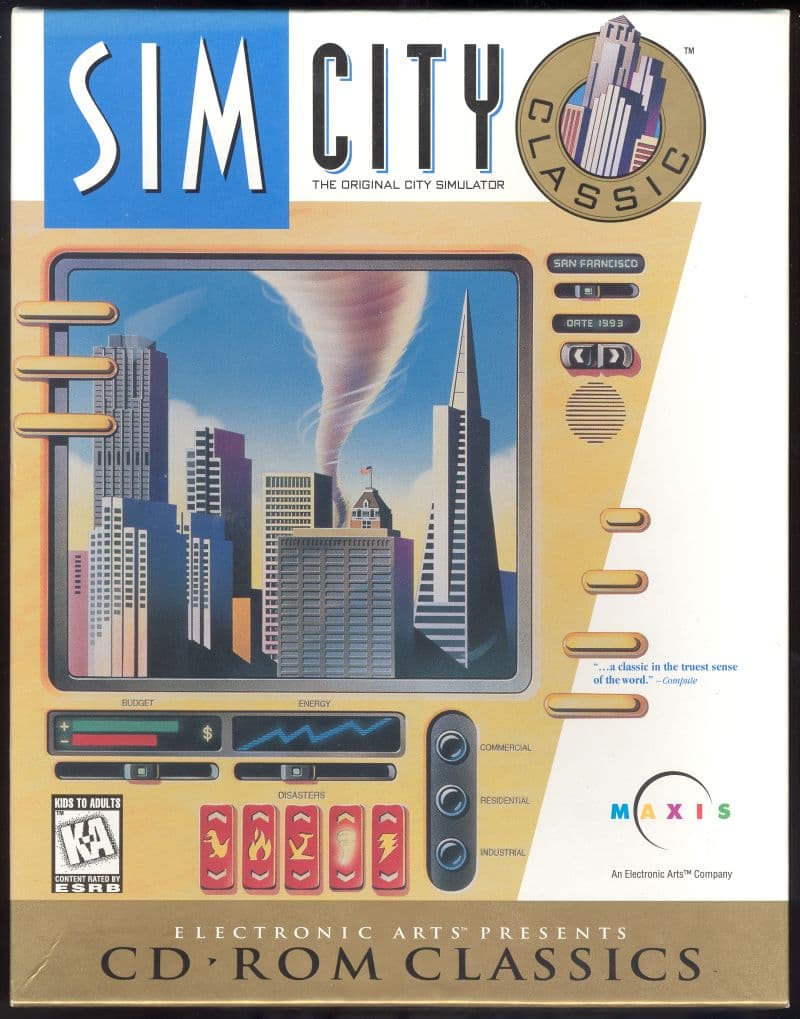
SimCity Classic
aka SimCity Original for Windows · SimCity Returns
Laying out power lines across a grid of brown dirt in SimCity Classic sounds simple, until your industrial zones choke on their own smog and the budget drops into the red.
What Maxis built into the original city management formula
Before Will Wright became a household name, he spent years trying to convince publishers that people would actually pay to manage a virtual zoning board. The bet paid off, but by 1992, the original code was showing its age. Maxis updated the original release for Windows before converting that polished interface back into an MS-DOS package, dressing the underlying grid engine in crisp high-resolution tile graphics and bundling extra scenarios directly onto the floppy disks.
When you start a fresh map in this 1992 version, you are greeted by an open landscape of green, blue, and uniform brown dirt waiting for high-voltage cables and bitumen. You select power plants, lay down heavy transit lines, and painted residential, commercial, and industrial zones using a point-and-select cursor. Your main engine of growth is balance: industries need residential labour, shops need commercial space, and everyone needs electricity fed through a unbroken grid of power lines that spark violently if a disaster strikes.
The simulation logic of SimCity Classic that forced players to cheat system traffic
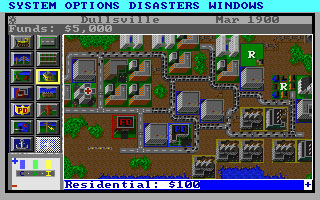
Every decision in the simulation comes down to spatial efficiency and tax yields. You drop coal plants down wind to keep residential land values high, add police stations to quell crime spikes, and dump mass transit systems down to stop severe traffic congestion from stalling expansion. The mechanics rely on a top-down tile engine that recalculates population density, pollution maps, and land values across the city every few months.
The core simulation logic has its quirks, though. Because traffic algorithms evaluate grid connections directly, players quickly discovered that building roads was actually a trap: replacing every road in your city with heavy rail eliminated traffic jams entirely because the engine processed trains without the congestion penalties tied to asphalt. It was the sort of odd mechanical exploit that every fan swapped on message boards while trying to reach a population of half a million without going bankrupt.
- Lay down nuclear or coal power plants to electrify the base grid.
- Surround residential areas with light commercial tiles while keeping heavy industry at the map edges.
- Connect all districts using rail networks instead of standard roads to bypass traffic logic bottlenecks.
- Fund local fire departments and police stations to prevent burning structures and crime waves from tanks landing value.
Where the mechanics break down once your budget balances
The real friction in SimCity Classic hits once your mayor account crosses into financial stability. Once you construct a clean self-sustaining loop of high-density zones with adequate fire cover, the core simulation runs out of direct threats. You earn enough annual tax revenue to fix occasional power line breaks or minor industrial fires with simple clicks, leaving you with little to do except watch the population numbers slowly crawl upward.
To fix that lull, the developers included pre-planned disaster scenarios. Instead of open-ended building, these act like timed puzzles: you are dropped into late-stage disaster maps like a monster attacking Tokyo or a monster tornado tearing through a coastal town. You spend your limited funds laying down emergency fire stops, redirecting traffic, or rebuilding destroyed power grids before the city collapses entirely. These break up the slow pace, even if purists found them a bit too rigid compared to freeplay.
The visual presentation is simple, relying on 256-color art assets and basic PC Speaker clicks or digitised sound files if you were lucky enough to own a Sound Blaster card. The lack of detailed animation on the terrain makes it hard to see micro-level issues like local pollution without constantly digging into separate data overlay menus.
How to play SimCity Classic free in your browser today
If you want to play the game that built the simulation genre, this 1992 release is easy to drop into for a few hours. It skips the deep menus of later entries like SimCity 2000, leaving you with simple grid tools and quick results. You can browse more releases from Maxis or start building your own layout right away.
You can play SimCity Classic online, free in your browser right here with zero setup required. Jump into the mayor's seat, try to avoid crashing your local transit budget, and see how long your city survives before a giant monster wanders through your downtown high-rises.