aka The Bard's Quest I: The Legend of Isil Thania
Building a party and exploring Isil Thania in The Bard's Quest: Dungeons of the Unknown feels instantly familiar, mostly because it is literally built inside the engine of an off-the-shelf creation kit.
When you start up this 1994 MS-DOS title, you are greeted by first-person grid navigation that mimics classic dungeon crawlers. You pull together a party of adventurers - or import existing ones - and set off into the village of Isil Thania. The broad goal is to investigate rumors surrounding the Star Light Cult, but your immediate task is surviving the town hubs. You have an equipment shop, an archery store, four distinct bars for picking up gossip, and Roscoe's Energy Emporium to recharge spell points when your mages run dry.
Leveling up happens at the Review Board, while three local temples stand ready to heal your squad when the turn-based battles go sour. There is even a dedicated building just for gathering random rumors. It provides a standard fantasy setup, requiring a modest 386 processor, 640K of RAM, and support for 256-color VGA visual presentation alongside standard SoundBlaster or AdLib audio.
The core issue with The Bard's Quest: Dungeons of the Unknown lies under the hood. Developed by Alex Ghadaksaz under the banner of VisionSoft, the project was released through Shareware channels with grand promises. Promotional materials claimed it was "So real you'll be playing for hours!", advertising planned registered episodes like The Warlock of Firetop Mountain and Dungeons of Darkness. However, modern retrospectives quickly uncovered that the first episode was virtually identical to the default "Star Light Festival" sample scenario that shipped directly inside Interplay's official The Bard's Tale Construction Set.
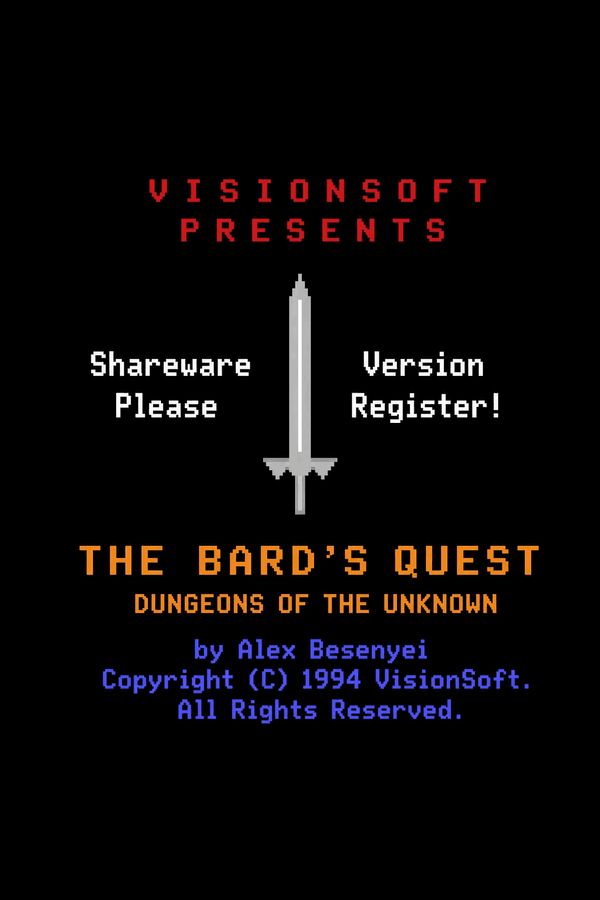
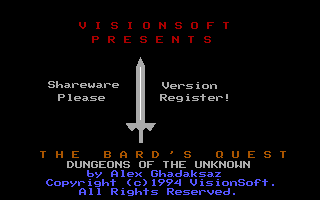
The title screen itself displays Dungeons of the Unknown, while the bundled documentation refers to it as The Legend of Isil Thania. Borrowing the title of a famous 1981 gamebook for its promised sequel further highlights how heavily it leaned on external assets. Players expecting a custom adventure instead received a repackaged tutorial project.
If you have played original first-person Role-playing (RPG) games, you know how punishing early street encounters can be. By contrast, the opening areas here present a much lower hurdle than classic titles like The Bard's Tale. Where exploring Skara Brae meant risking total party wipes on your very first step, the town streets in Isil Thania feature enemy encounters that first-level parties can handle without intense grinding.
This design makes the early hour far less frustrating for casual explorers, but it also strips away the tension that defines the genre. The mechanics rely strictly on standard engine templates, so combat plays out in familiar turn-based turns without custom tactical surprises.
While it adds no original levels, the compilation shows how mid-nineties shareware distribution actually worked. Anyone with accessible creation tools could pack up, rename, and upload whole modules across bulletin board systems.
You can run The Bard's Quest: Dungeons of the Unknown free in your browser right now without downloading floppy disk images or fiddling with system settings. If you want a quick look at how construction-kit RPGs operated back in 1994, launch this MS-DOS game directly on the page and test your party in the streets of Isil Thania.
Building a party and exploring Isil Thania in The Bard's Quest: Dungeons of the Unknown feels instantly familiar, mostly because it is literally built inside the engine of an off-the-shelf creation kit.
When you start up this 1994 MS-DOS title, you are greeted by first-person grid navigation that mimics classic dungeon crawlers. You pull together a party of adventurers - or import existing ones - and set off into the village of Isil Thania. The broad goal is to investigate rumors surrounding the Star Light Cult, but your immediate task is surviving the town hubs. You have an equipment shop, an archery store, four distinct bars for picking up gossip, and Roscoe's Energy Emporium to recharge spell points when your mages run dry.
Leveling up happens at the Review Board, while three local temples stand ready to heal your squad when the turn-based battles go sour. There is even a dedicated building just for gathering random rumors. It provides a standard fantasy setup, requiring a modest 386 processor, 640K of RAM, and support for 256-color VGA visual presentation alongside standard SoundBlaster or AdLib audio.

The core issue with The Bard's Quest: Dungeons of the Unknown lies under the hood. Developed by Alex Ghadaksaz under the banner of VisionSoft, the project was released through Shareware channels with grand promises. Promotional materials claimed it was "So real you'll be playing for hours!", advertising planned registered episodes like The Warlock of Firetop Mountain and Dungeons of Darkness. However, modern retrospectives quickly uncovered that the first episode was virtually identical to the default "Star Light Festival" sample scenario that shipped directly inside Interplay's official The Bard's Tale Construction Set.
The title screen itself displays Dungeons of the Unknown, while the bundled documentation refers to it as The Legend of Isil Thania. Borrowing the title of a famous 1981 gamebook for its promised sequel further highlights how heavily it leaned on external assets. Players expecting a custom adventure instead received a repackaged tutorial project.

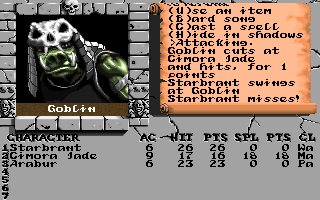
If you have played original first-person Role-playing (RPG) games, you know how punishing early street encounters can be. By contrast, the opening areas here present a much lower hurdle than classic titles like The Bard's Tale. Where exploring Skara Brae meant risking total party wipes on your very first step, the town streets in Isil Thania feature enemy encounters that first-level parties can handle without intense grinding.
This design makes the early hour far less frustrating for casual explorers, but it also strips away the tension that defines the genre. The mechanics rely strictly on standard engine templates, so combat plays out in familiar turn-based turns without custom tactical surprises.
While it adds no original levels, the compilation shows how mid-nineties shareware distribution actually worked. Anyone with accessible creation tools could pack up, rename, and upload whole modules across bulletin board systems.
You can run The Bard's Quest: Dungeons of the Unknown free in your browser right now without downloading floppy disk images or fiddling with system settings. If you want a quick look at how construction-kit RPGs operated back in 1994, launch this MS-DOS game directly on the page and test your party in the streets of Isil Thania.
How The Bard's Quest: Dungeons of the Unknown is played — the keys the game listens to, grouped by what they do.
Highlighted keys are mapped — hover or tap one to see what it does.
The on-screen keyboard and gamepad mapping the browser player uses on a phone, a tablet or a controller, as opposed to the real keys above. $PRO members make their own in the player and share them here; anyone can pick one to play with.
Cheat codes, console commands and memory pokes for The Bard's Quest: Dungeons of the Unknown — each one verified and attributed.
Sign in to submitHow The Bard's Quest: Dungeons of the Unknown is played — the keys the game listens to, grouped by what they do.
Highlighted keys are mapped — hover or tap one to see what it does.
The on-screen keyboard and gamepad mapping the browser player uses on a phone, a tablet or a controller, as opposed to the real keys above. $PRO members make their own in the player and share them here; anyone can pick one to play with.
Cheat codes, console commands and memory pokes for The Bard's Quest: Dungeons of the Unknown — each one verified and attributed.
Sign in to submit