
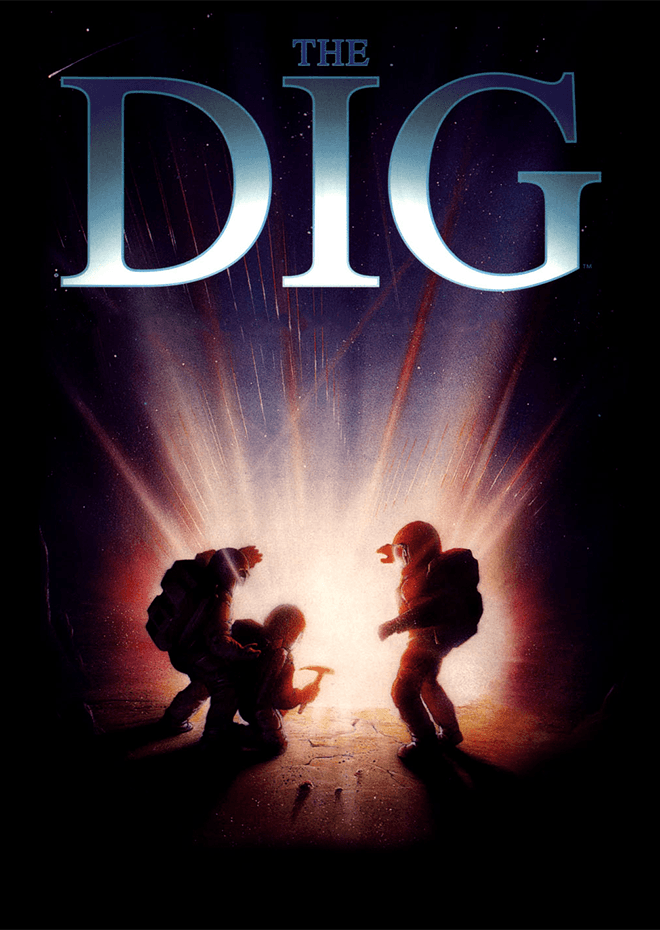

When sci-fi adventure The Dig arrived on store shelves after six years of development hell, it traded the classic verb interface for serious sci-fi isolation and some of the most stubborn alien logic puzzles in LucasArts history.
Most players expected another comedy when they opened a LucasArts box in 1995. Instead, The Dig opens with a nuclear device attached to an asteroid heading straight for Earth, voiced by Terminator 2 star Robert Patrick as NASA veteran Boston Low. You set the charges, blast the rock into a safe orbit, and then discover that the interior is actually an alien transport machine designed to drag your three-person crew across the universe to a dead planet called Cocytus.
What sets the game apart early on is how quiet it is. There are no fast talking dogs or pirates, just three human beings marooned on a lifeless rock of red dust, spires, and metallic ruins. Geologist Ludger Brink names the place after the lowest pit of Dante's inferno, and sci-fi writer Orson Scott Card wrote dialogue that keeps the mood appropriately tense. The atmosphere works because composer Michael Land used the engine's dynamic music system, iMUSE, to weave a eerie orchestral backdrop behind the wind echoing through deserted alien halls.
If you were used to the traditional SCUMM interface from earlier titles, the UI changes here were a sudden shock. The Dig was the last title built on the engine for MS-DOS, but it stripped away the familiar block of verbs at the bottom of the screen. Right-clicking or left-clicking directly on objects replaced the old text commands, simplifying how you interacted with the room but forcing the puzzle design to carry the weight.
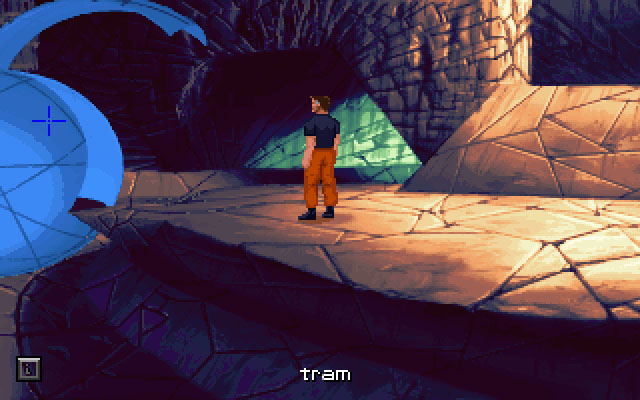
That design weight is where the game turns brutal. The puzzles ditch everyday Earth logic for xenoarchaeology, which sounds fascinating until you are staring at alien control panels trying to figure out which glowing rod powers a subterranean door. A few of the puzzles rely on straight pixel hunting, while others demand that you memorize sequences of alien symbols scattered across different chambers with no clear hint about where to start. When GameSpot handed out a harsh 45% score back on release, their biggest complaint was how arbitrary these roadblocks felt compared to the studio's previous hits.
Yet solving one of these machines still feels earned. The game asks you to think like an archaeologist piecing together a civilization that left no manual behind. You test alien devices, collect glowing crystals, and use specialized tools like an alien communicator to coordinate with journalist Maggie Robbins and the increasingly unstable Brink.
Director Steven Spielberg originally conceived the concept for an episode of Amazing Stories before deciding it would be too expensive to film, passing it along to LucasArts in 1989. Over the next six years, designers Noah Falstein, Brian Moriarty, and Sean Clark each took passes at the project. The final game bears the marks of those shifts, pairing traditional 2D hand-drawn backgrounds with pre-rendered 3D cutscene video delivered via their INSANE engine technology.

That long production cycle created a tone unlike anything else in the company's catalog. Other adventure games of the era leaned into slapstick or cartoon violence, but this project took its survival narrative seriously. Brink's obsession with the planet's life-restoring green crystals creates actual tension within your tiny group, giving the story an edge that balances out the dry puzzle hunting.
Reviewers at the time were split down the middle. PC Gamer gave the LucasArts release an 88% score and praised its grand scale, while other critics found the voice work inconsistent and the sequence puzzles far too cryptic. Look up a digital copy on Wikipedia or fan archives today, and you will see those same debates running decades later.
The pixel hunts and stubborn panel puzzles can test anyone's patience, but the striking environments and cold sci-fi atmosphere still work. It was a distinct moment in the studio's history, a serious hard-sci-fi story from a publisher better known for comedy, wrapped in a phenomenal soundtrack that carries you through the quietest moments on Cocytus.
If you missed this 1995 release back on your old 486 computer, you can jump straight into the mystery without hunting down an original disc. You can play The Dig free in your browser right now with nothing to install. Load it up, keep a notepad handy for the alien light panels, and see if you can guide Boston Low back home.
When sci-fi adventure The Dig arrived on store shelves after six years of development hell, it traded the classic verb interface for serious sci-fi isolation and some of the most stubborn alien logic puzzles in LucasArts history.
Most players expected another comedy when they opened a LucasArts box in 1995. Instead, The Dig opens with a nuclear device attached to an asteroid heading straight for Earth, voiced by Terminator 2 star Robert Patrick as NASA veteran Boston Low. You set the charges, blast the rock into a safe orbit, and then discover that the interior is actually an alien transport machine designed to drag your three-person crew across the universe to a dead planet called Cocytus.
What sets the game apart early on is how quiet it is. There are no fast talking dogs or pirates, just three human beings marooned on a lifeless rock of red dust, spires, and metallic ruins. Geologist Ludger Brink names the place after the lowest pit of Dante's inferno, and sci-fi writer Orson Scott Card wrote dialogue that keeps the mood appropriately tense. The atmosphere works because composer Michael Land used the engine's dynamic music system, iMUSE, to weave a eerie orchestral backdrop behind the wind echoing through deserted alien halls.
If you were used to the traditional SCUMM interface from earlier titles, the UI changes here were a sudden shock. The Dig was the last title built on the engine for MS-DOS, but it stripped away the familiar block of verbs at the bottom of the screen. Right-clicking or left-clicking directly on objects replaced the old text commands, simplifying how you interacted with the room but forcing the puzzle design to carry the weight.
That design weight is where the game turns brutal. The puzzles ditch everyday Earth logic for xenoarchaeology, which sounds fascinating until you are staring at alien control panels trying to figure out which glowing rod powers a subterranean door. A few of the puzzles rely on straight pixel hunting, while others demand that you memorize sequences of alien symbols scattered across different chambers with no clear hint about where to start. When GameSpot handed out a harsh 45% score back on release, their biggest complaint was how arbitrary these roadblocks felt compared to the studio's previous hits.
Yet solving one of these machines still feels earned. The game asks you to think like an archaeologist piecing together a civilization that left no manual behind. You test alien devices, collect glowing crystals, and use specialized tools like an alien communicator to coordinate with journalist Maggie Robbins and the increasingly unstable Brink.
Director Steven Spielberg originally conceived the concept for an episode of Amazing Stories before deciding it would be too expensive to film, passing it along to LucasArts in 1989. Over the next six years, designers Noah Falstein, Brian Moriarty, and Sean Clark each took passes at the project. The final game bears the marks of those shifts, pairing traditional 2D hand-drawn backgrounds with pre-rendered 3D cutscene video delivered via their INSANE engine technology.
That long production cycle created a tone unlike anything else in the company's catalog. Other adventure games of the era leaned into slapstick or cartoon violence, but this project took its survival narrative seriously. Brink's obsession with the planet's life-restoring green crystals creates actual tension within your tiny group, giving the story an edge that balances out the dry puzzle hunting.
Reviewers at the time were split down the middle. PC Gamer gave the LucasArts release an 88% score and praised its grand scale, while other critics found the voice work inconsistent and the sequence puzzles far too cryptic. Look up a digital copy on Wikipedia or fan archives today, and you will see those same debates running decades later.
The pixel hunts and stubborn panel puzzles can test anyone's patience, but the striking environments and cold sci-fi atmosphere still work. It was a distinct moment in the studio's history, a serious hard-sci-fi story from a publisher better known for comedy, wrapped in a phenomenal soundtrack that carries you through the quietest moments on Cocytus.
If you missed this 1995 release back on your old 486 computer, you can jump straight into the mystery without hunting down an original disc. You can play The Dig free in your browser right now with nothing to install. Load it up, keep a notepad handy for the alien light panels, and see if you can guide Boston Low back home.
How The Dig is played — the keys the game listens to, grouped by what they do.
Highlighted keys are mapped — hover or tap one to see what it does.
Full list of keyboard shortcuts could not be completely documented from the provided sources. Sound card setup utility must be run using IMUSE.EXE.
The on-screen keyboard and gamepad mapping the browser player uses on a phone, a tablet or a controller, as opposed to the real keys above. $PRO members make their own in the player and share them here; anyone can pick one to play with.
Cheat codes, console commands and memory pokes for The Dig — each one verified and attributed.
Sign in to submitHow The Dig is played — the keys the game listens to, grouped by what they do.
Highlighted keys are mapped — hover or tap one to see what it does.
Full list of keyboard shortcuts could not be completely documented from the provided sources. Sound card setup utility must be run using IMUSE.EXE.
The on-screen keyboard and gamepad mapping the browser player uses on a phone, a tablet or a controller, as opposed to the real keys above. $PRO members make their own in the player and share them here; anyone can pick one to play with.
Cheat codes, console commands and memory pokes for The Dig — each one verified and attributed.
Sign in to submit