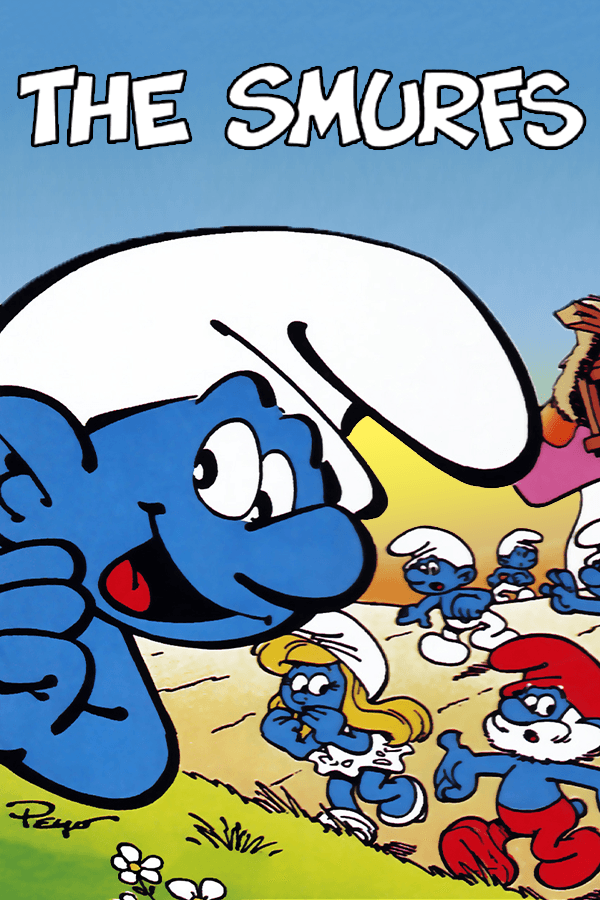

When Gargamel puts Smurfette into an enchanted sleep, The Smurfs: The Teletransportsmurf tasks you with hunting down random magical ingredients across side-scrolling stages before brewing Papa Smurf's rescue spell.
Papa Smurf needs ingredients, and you get to pick who fetches them
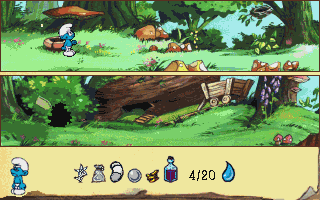
Booting up The Smurfs: The Teletransportsmurf puts you right into a character selection screen featuring six familiar blue villagers: Poet Smurf, Greedy Smurf, Jokey Smurf, Hefty Smurf, Handy Smurf, and Grouchy Smurf. Once you choose your character, you drop straight into the main single-player mode, where Gargamel's spell has locked Smurfette away and left Papa Smurf scrambling for a counter-magic formula. The core game loop sends you running through 2D side-scrolling levels, jumping over obstacles, dodging forest hazards, and tracking down the specific ingredients listed for your quest.
Because ingredient locations change randomly, every venture into Smurfland requires active exploration rather than pure muscle memory. You run, jump, and check every nook of the map while Papa Smurf occasionally steps in to offer hints about where the next item sits. The layout relies on traditional platforming mechanics, forcing you to time your jumps across gaps, avoid forest creatures, and navigate multi-tiered environments. Multiple difficulty settings allow you to tweak the challenge level, making platforming hazards tighter or giving you more room for error when navigating tricky ledges.
The Smurfs: The Teletransportsmurf recycles Sega CD animation with full PC voice acting
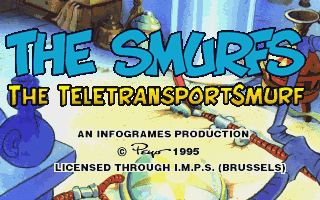
Developer Infogrames Multimedia SA took an interesting shortcut when assembling the production assets for this 1995 DOS release. Rather than animating entirely new introductory and ending cinematic sequences, the studio repurposed the pre-rendered video cutscenes from the 1994 Sega CD edition of The Smurfs. For this version, publisher EMME Interactive SA brought in actual voice talent to supply full spoken dialogue over the reused footage, hiring actors Adriana Maccoll, Les Clacks, and Joe Sheridan to perform the roles of Smurfette, the Magic Well, and the rest of the cast.
Hearing crisp spoken lines over animated sequences gave the release a multimedia flair typical of mid-nineties CD-ROM titles. The digitized speech and audio cues added weight to Papa Smurf's instructions during gameplay, contrasting with earlier 8-bit and 16-bit adaptations of Peyo's original comic books that relied strictly on text boxes. The visual style retained the bright, clean line art of the French-Belgian comics, rendering the forest environments with thick outlines and distinct character sprites.
Party mini-games offer a complete break from platforming
If you want a change of pace from running through stages, the second main mode turns the title into an interactive party game for up to four players on a single PC. Instead of saving Smurfette, players compete directly against each other in a series of reflex-driven challenges. The overall winner is simply the first player to accumulate 10 mini-game victories.
The mini-games focus on quick observations and rapid button inputs rather than pixel-perfect platforming jumps. You will encounter several distinct competitive activities during a match:
- Brainy Spotting: Scan a crowded photo to find Brainy Smurf before any of your opponents can spot him.
- Lazy's Birthday Cake: Time your button presses accurately to blow out all the candles on Lazy Smurf's cake before time runs out.
- Dewdrop Collecting: Win mini-game rounds to earn magical dewdrops, which act as points to track overall standings.
This split structure makes the package feel like two distinct games bundled into one executable. While the main quest focuses on single-player exploration, the mini-game mode turns the experience into a local couch-multiplayer competition that tests raw reaction speed.
How the design holds up for modern players
As a mid-nineties action game, the side-scrolling mode has moments where collision detection feels rigid. Missing a jump by a few pixels often sends your Smurf tumbling straight back down to lower terrain, forcing a tedious climb back up to search for that missing potion component. The randomized ingredient distribution adds replay value, but it can also force extra backtracking through quiet stretches of the stage if a final item spawns at the opposite end of the map.
Party mode sidesteps those platforming frustrations with quick, straightforward fun. Spotting Brainy in a packed scene gives your eyes a proper workout, and racing friends for dewdrops recaptures a classic arcade feel. It sits in Infogrames history as a clear example of how European developers expanded comic licences into multi-genre CD-ROM releases during the MS-DOS era.
Fire up your potion search right now
You can play The Smurfs: The Teletransportsmurf free in your browser right here, with nothing to install and no setup required. If you want a quick ten-minute session, jump straight into the party mode to test your eyes on the Brainy Smurf crowd photo or test your timing on Lazy's birthday candles. Pick your favorite villager, head into Smurfland, and see how quickly you can collect Papa Smurf's spell ingredients to stop Gargamel.