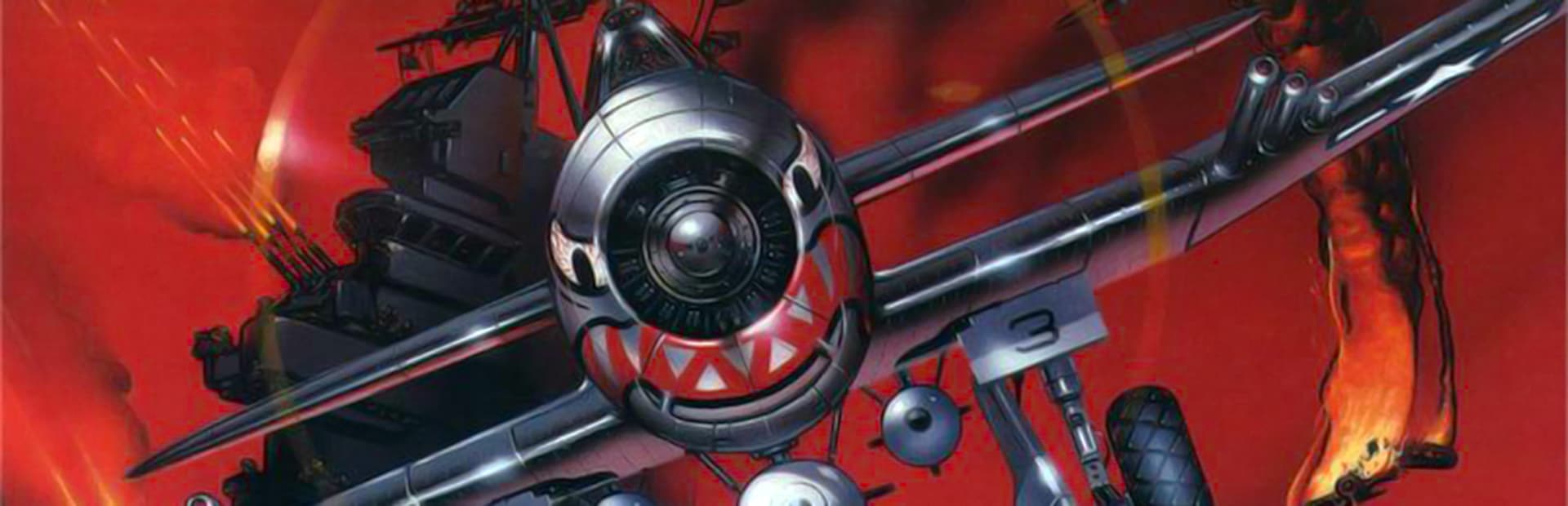
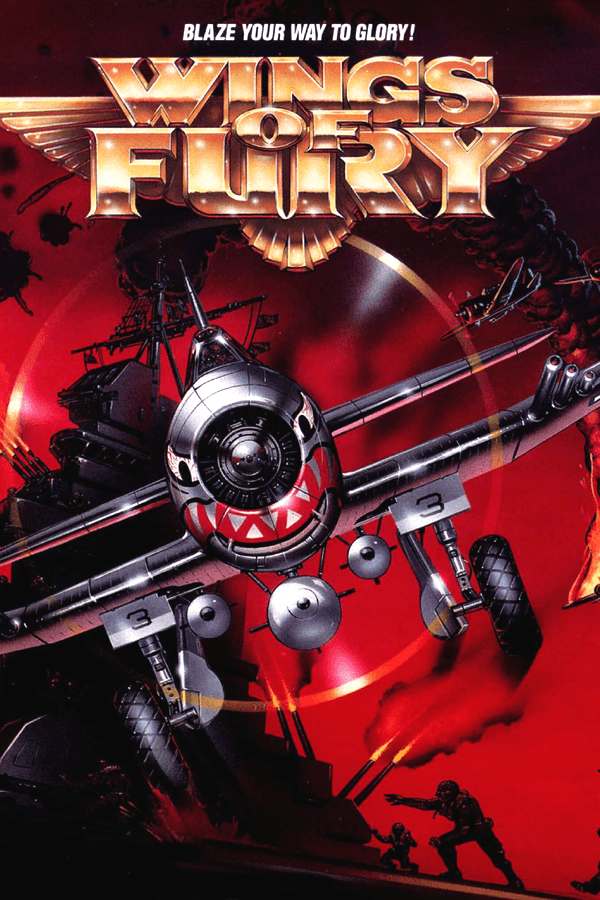

If you ever played Wings of Fury on a standard PC, your primary memory is probably not carrier maneuvers or high-altitude dogfights, but crashing into the deck at mach speed because your CPU was running too fast.
Taking off in Wings of Fury meant fighting your own hardware
Steve Waldo designed the original game for the Apple II, but when Lance Wall ported it to MS-DOS for Unlimited Software, PC hardware was fragmenting fast. If you booted the game on an AT machine or a early 386 without a slowdown utility, your F6F Hellcat took off like a rocket and smashed straight into the Pacific Ocean before the camera could scroll. Get the timing right, though, and you found a side-scrolling action game that discarded linear stages in favor of a open theater of naval warfare.
Your base of operations is the aircraft carrier USS Wasp, floating on the left side of the screen. You begin every mission parked on the flight deck, revving your engine, extending flaps, and timing your acceleration so you clear the bow without dipping into the water. When you fly near the water or your carrier, the screen sits in a tight close-up view. Pull up toward the clouds and the camera zooms out, turning your fighter into a tiny crosshair over miles of ocean.
The pitch-black skies of the MS-DOS port
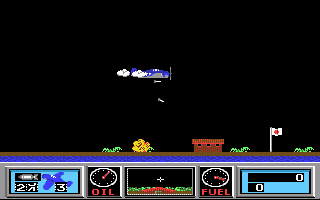
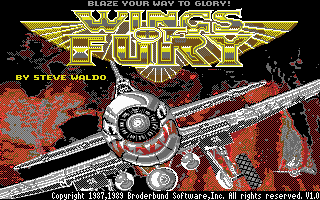
The DOS translation brought several strange technical compromises. While original Apple II players enjoyed blue skies, the DOS port rendered the entire backdrop as pitch black, effectively turning every battle into a midnight raid. Sound design was equally primitive on standard rigs. Unless you were running a Tandy system capable of three-voice sound and digital audio, every engine rumble, machine-gun burst, and exploding bunker was generated entirely by the internal PC speaker.
Interestingly, when Japanese developers ported the game to home computers like the Sharp X68000, they flipped the entire premise. Instead of flying a Hellcat to defend the American fleet, players took control of a Japanese Mitsubishi A6M Zero, sinking US carriers and strafing American military camps instead.
Choosing loadouts and strafing barracks
Your Hellcat comes permanently fitted with machine guns carrying infinite ammunition, perfect for dogfighting Japanese Zeroes or intercepting incoming torpedo bombers aimed at your carrier. Before launching, however, you must select one heavy weapon loadout depending on your objective:
- 30 standard bombs: Ideal for leveling barracks, gun nests, and soft targets.
- 15 rockets: Mandatory for crushing heavily armored concrete bunkers.
- 1 single torpedo: Sunk directly into the hull of enemy destroyers, battleships, and fleet carriers.
The game gained a reputation for its grim ground-attack mechanics. Bombing a troop barracks flushes dozens of Japanese soldiers out into the open, leaving them running across the sand. To clear the island completely, you drop your altitude, level your wings, and machine-gun the survivors on the beach. Once your ordnance runs dry or your fuselage takes heavy flak damage, you turn around, drop altitude, and search for the carrier.
Where the combat falls flat
Landing back on the moving carrier is where most players lost their tempers. You must match the speed of the moving vessel, align your approach angle perfectly, lower your tailhook, and stall out right over the wire. Touch down too fast, miss the wire, or approach slightly off-level, and your plane detonates instantly, wasting an entire half-hour run.
If you survive the landing, the flight deck crew re-arms your weapons, refuels your tanks, and patches your structural damage so you can launch again. Progression takes you through military ranks from Midshipman to Captain, but the core objectives never evolve. Later stages simply pile on denser anti-aircraft flak batteries and larger ship fleets. There is no final narrative victory screen; completing the final mission simply resets the campaign back to the starting ranks.
Sinking a battleship still satisfies today
Wings of Fury trade complex flight stick physics for quick tactical decisions about fuel, weapons, and approach angles. The core loop of flying out light, delivering a precise torpedo drop on a battleship, and limping back to your carrier on low fuel remains genuinely tense. It is frustrating, unforgiving of bad landing speeds, and deeply repetitive over long sessions, but as a quick arcade-style tactical shooter from 1989, it holds its own.
You can play Wings of Fury online free in your browser right now. You do not need to hunt down old system utilities to fix CPU cycles or mess with DOS configurations. Load it up, select your torpedo payload, and see if you can pull off a clean deck landing on your very first sortie.