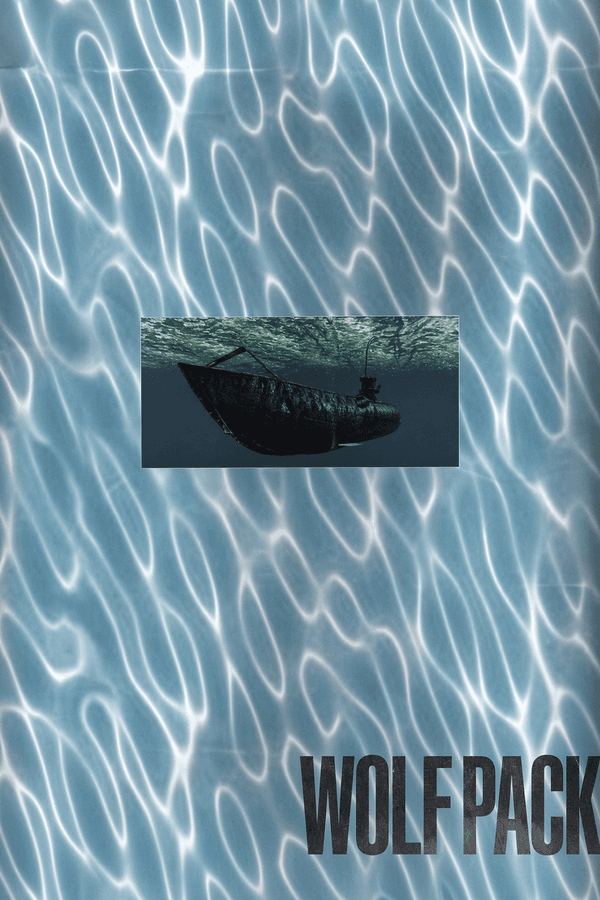
Playing Wolf Pack means constantly jumping between broad tactical maps and the spray-soaked deck of a North Atlantic escort while managing speeds up to 64x to catch an enemy convoy.
Commanding both sides of the Battle of the Atlantic in Wolf Pack
NovaLogic threw out the quiet, methodical atmosphere of single-sub titles when they designed this naval simulator. Released for DOS PCs by Broderbund Software in 1990, the game sets you right in the middle of the Battle of the Atlantic, but it leaves the choice of side entirely up to you. You can launch a coordinated U-boat strike on a heavy convoy, or step into the shoes of the Allied escort captain trying to screen defenseless tankers. Because enemy ships are handled by the computer, you can take full control of a single vessel while leaving the rest of your fleet on automated patrol orders.
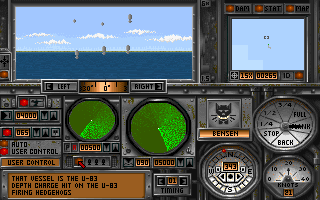
The tactical map screen is where you plan your group movements, setting patrol paths and speed orders using mouse controls. When the shooting starts, you can step directly onto the deck of any ship in your force. Taking direct control of an Allied merchant ship means operating its single stern gun, while taking over a U-boat requires managing periscope depth, torpedo angles, and deck guns. You can jump from ship to ship mid-fight, which completely changes the feel of battle compared to typical single-vessel simulators.
Historical gear, high-speed travel, and the reverse-gear glitch
The year you select for a mission dictates the technology at your disposal. Early-war scenarios restrict Allied escorts to simple passive sonar and basic depth charges, while late-war engagements introduce active sonar, radar, and hedgehog anti-submarine mortars. To skip the long lulls of open-sea searching, you can crank the game speed up to 32x or 64x. The engine automatically drops back to real-time compression the second a combat event triggers, such as a torpedo launch or shell hit, ensuring you never miss the action.
Every complex simulator from this vintage carries a few quirks, and this classic 1990 release is no exception. Beyond the physical cipher sheets required for copy protection, players quickly discovered a bizarre bug in the physics engine: if your U-boat takes heavy damage to its diesel engines, putting the sub into reverse engine mode lets it zip across the water at unconstrained "aircraft speeds." It ruins the historical tension, but it turned into one of the most famous hardware-defying bugs players ever found.
- German U-boat wolf packs focused on torpedo strikes and surface deck gun attacks
- Allied destroyers equipped with active radar, sonar, depth charges, and hedgehog launchers
- Armed Allied freighters and tankers carrying solitary defensive guns
Why Wolf Pack fell short of true simulator legend status
At the time of release, reviewers gave the game high praise for its presentation and interface. Génération 4 awarded the PC release a 90% Gen D'or rating, while Joystick scored it 89%. Critics praised the clean mouse-driven control system and the visual engine, which ran smoothly across everything from standard CGA display setups up to 256-color VGA cards, with full support for AdLib and Sound Blaster audio cards alongside the internal PC speaker.
Yet for all its immediate accessibility, hardcore simulation fans felt something was missing. Compared to deep single-ship titles like MicroProse's Silent Service II, the game lacks depth in damage modeling and accurate underwater physics. The complete absence of a career mode means there are no persistent captains to level up or long campaign deployments to survive. Once you finish the 12 built-in historical scenarios, you are left entirely with the mission construction set to build custom engagements. Broderbund later addressed this with a CD-ROM re-release in 1994, which added 58 new missions alongside five minutes of rendered animation sequences, bringing the total mission count to 70.
Fire up this classic simulator today
If you want a WWII naval game that lets you play scenario designer as easily as fleet admiral, this title still delivers a surprisingly brisk afternoon of tactical command. The interface holds up well because it was built around direct mouse navigation rather than requiring a keyboard overlay card just to order a course change.
You can play Wolf Pack free in your browser right now with no setup needed. Pick a quick Allied convoy scenario, set your escort sweep patterns on the tactical screen, and see if you can spot the periscopes before the first line of torpedo wakes reaches your tankers.