
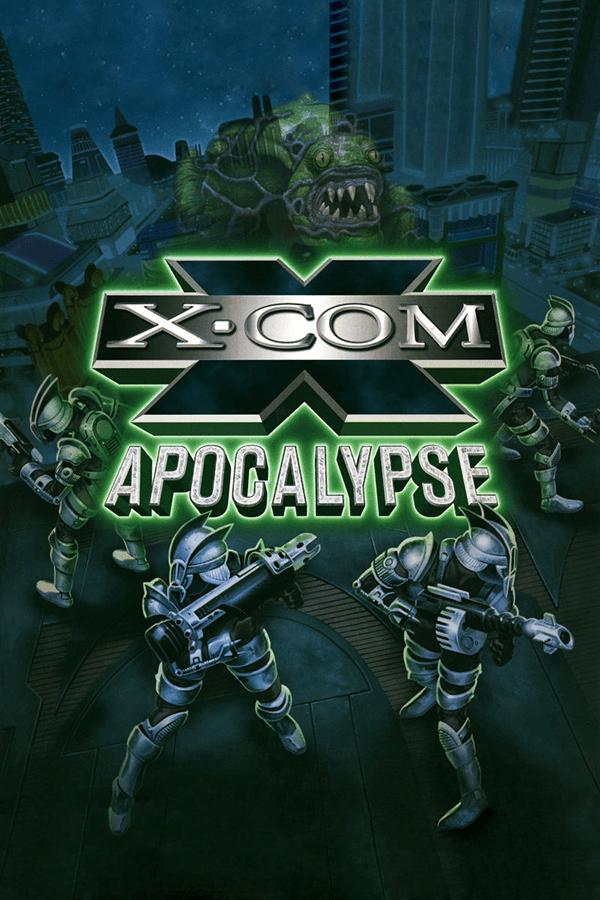

X-COM: Apocalypse
Streaming build
Checking storage…392 MB
Preload in background
- 1this week
In 2084, X-COM: Apocalypse traps you inside the glass domes of Mega-Primus, forcing you to fight extradimensional aliens while keeping corporate sponsors from declaring war on your base.
Tactical real-time combat changed the rules, for better and worse
After two entries built purely on turn-based tension, designer Julian Gollop and the team at Mythos Games introduced a choice that split the audience down the middle. You can run squad engagements in traditional turn-based turns or switch to a real-time clock that runs continuously until you pause it.
In practice, real-time mode renders the tactical battles far easier. Pausing instantly to give fresh orders lets your squad react to sudden threats before the enemy can finish an animation. Turn-based combat remains brutal, but it also highlights balance flaws. The humble dart gun is absurdly effective, and automatic fire weapons spray enough lead to dissolve armored targets in seconds.
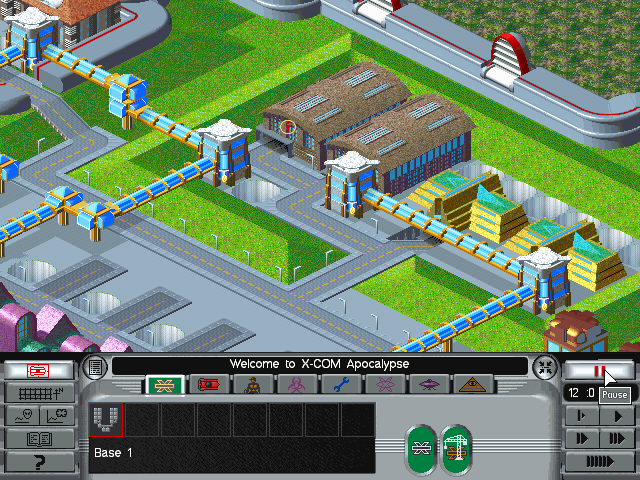
When you drop your squad into an infested building on the isometric Battlescape, individual enemy encounters are aggressive. Brainsuckers leap straight at soldier heads, while Hyperworms and Anthropods flush out weak angles. The real problem starts after the main firefight ends. Hunting down the final surviving Micronoid across a massive multi-floor map turns into a tedious slog, where moving ten soldiers through empty corridors grinds the pace to a halt.
Managing the delicate politics of Mega-Primus
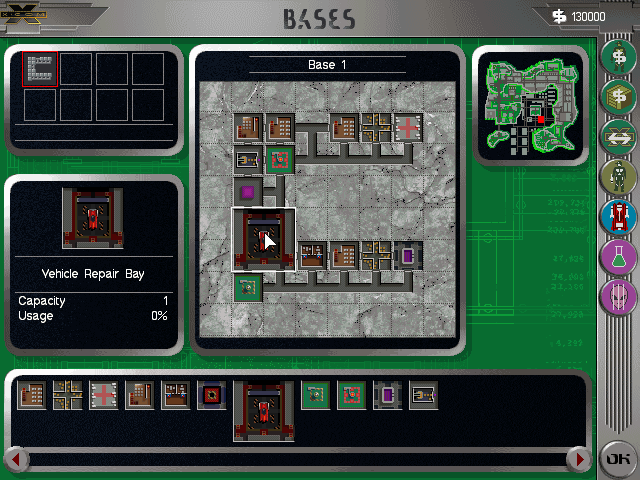
The strategic layer replaces global satellite coverage with the Cityscape, a sprawling metropolis built from interconnected towers and skyways. Managing this urban sandbox requires balancing direct military spending against fragile diplomacy across dozens of independent human factions.
If your interceptors accidentally blow out the windows of a local weapons manufacturer during a dogfight, that company will raise prices or cut off trade. Attack them outright, and their private security forces become active enemies on the map. You have to juggle several distinct power brokers across the city:
- Industrial giants who supply specialized armor, vehicles, and ammunition
- Security agencies and local gangs who control neighborhood transit routes
- The Cult of Sirius, a hostile religious faction actively worshiping the alien invaders
To fund your operational budget, you buy fleet interceptors, hire specialized scientists, and trade captured alien bio-technology. When strange tetrahedron portals open in the sky, you launch armed transports to dogfight incoming UFOs or enter infestation sites directly. Keeping every corporation happy while raiding extradimensional portals creates a constant financial tightrope.
Behind the messy development of X-COM: Apocalypse
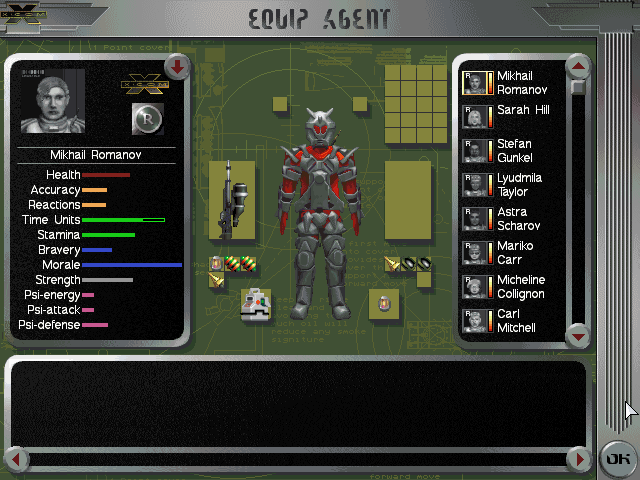
Production on this project was famously chaotic. Publisher MicroProse Software, Inc. pushed for artistic changes and tight deadlines, creating friction that Julian Gollop later summarized as a complete disaster. Features were cut, and when the game launched in 1997, critics noted that parts of the experience felt unfinished.
By late nineties standards, the visual presentation looked slightly dated on arrival, pairing pre-rendered character sprites with busy isometric terrain. Running the original X-COM: Apocalypse MS-DOS game on period hardware was notoriously unstable, often crashing under complex combat scenarios. Yet the audio design excelled, offering rich positional sound effects across Sound Blaster, Gravis UltraSound, and Ensoniq Soundscape cards.
Players quickly discovered wild tactical exploits that bypassed the intended difficulty. Save-loading allowed easy manipulation of squad survival, while abusing MarSec jet packs and teleporters allowed soldiers to drop high-explosive grenades directly onto alien clusters without taking a scratch in return.
Where to play this classic strategy title today
Despite its flaws and troubled development, the core strategic design holds a depth that few titles in the strategy and tactics genre ever matched. The corporate simulation on the Cityscape delivers genuine systemic cause and effect, even if combat balance favors rapid automatic fire and repetitive alien hunts on oversized maps.
You can play X-COM: Apocalypse online right now, completely free in your browser. There is no software setup required, so you can test real-time tactical mode or start managing corporate relationships in Mega-Primus in seconds.
How X-COM: Apocalypse is played — the keys the game listens to, grouped by what they do.
- Movement
- Action
- Weapons & items
- Interface
- Left click — Fire weapon / Select
Highlighted keys are mapped — hover or tap one to see what it does.
Cityscape mode plays in real-time, while tactical combat can be real-time or turn-based. Setup options like sound are configured via SETUP.EXE.
Players' controls
Touch and gamepad controls
The on-screen keyboard and gamepad mapping the browser player uses on a phone, a tablet or a controller, as opposed to the real keys above. $PRO members make their own in the player and share them here; anyone can pick one to play with.
Make your own touch controlsPRO
- 1Open the editorSign in below, then pick what to make. The game starts with the editor open over it.
- 2Place your keysAdd keys and drag them where your thumbs rest, or map a controller's buttons. Test plays the game with them; Save keeps them, and you play with them from then on.
- 3Share themShare them right after saving in the game, or name and share them here. Players vote, and the best become this game's controls for everyone.
Go PROSee how it worksSign in+20 XP for sharing · +50 XP if yours become the game's own
- The game's own controlsKeyboardGamepadWhat every player starts with.In use
4 screenshots
From the archive
No gameplay video yet
No gameplay video for X-COM: Apocalypse yet. Sign in to add one.
No reviews yet
Tell the community what you think of X-COM: Apocalypse. Reviews are public and tied to your username.
No archived manuals for X-COM: Apocalypse yet
No manuals archived for this title yet. Sign in to upload the first scan.
Cheat codes, console commands and memory pokes for X-COM: Apocalypse — each one verified and attributed.
Sign in to submitNo cheats yet for this title
Know a working cheat, poke or trainer? Add it with the button above. Moderators check every entry before it goes live.
No archived soundtrack for X-COM: Apocalypse yet
No soundtrack archived for this title yet. Sign in to upload the first rip.
No save states for X-COM: Apocalypse yet
No save states for this title yet. Sign in to share one.
Discussions
Sign in to post- Threads0
- Total posts0
- Online now6
Community · X-COM: Apocalypse
Who's contributing, and what's new
- Reviews0
- Threads0
- Uploadsapproved0
- Contributors0
Recent activity
Nothing here yet
Reviews, discussion threads and approved uploads appear here as members add them.