In 1942: The Pacific Air War, you can spend twenty minutes hunting through overcast skies for a Japanese carrier fleet, only to stall your engine the moment you pull up from a torpedo run.
Stalling out over the Pacific in 1942: The Pacific Air War
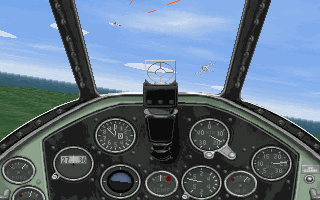
You boot up a mission, sit in the virtual cockpit of a Grumman F4F Wildcat, and look out over a flat blue ocean. MicroProse built a 3D engine here that let you track targets naturally by sweeping your view around the cockpit, much like Origin's Strike Commander had done a year prior. There are no magical target indicators or glowing ammo counters cluttering the screen. You read the analog dials on your instrument panel, line up your gun sights manually, and count your rounds in your head.
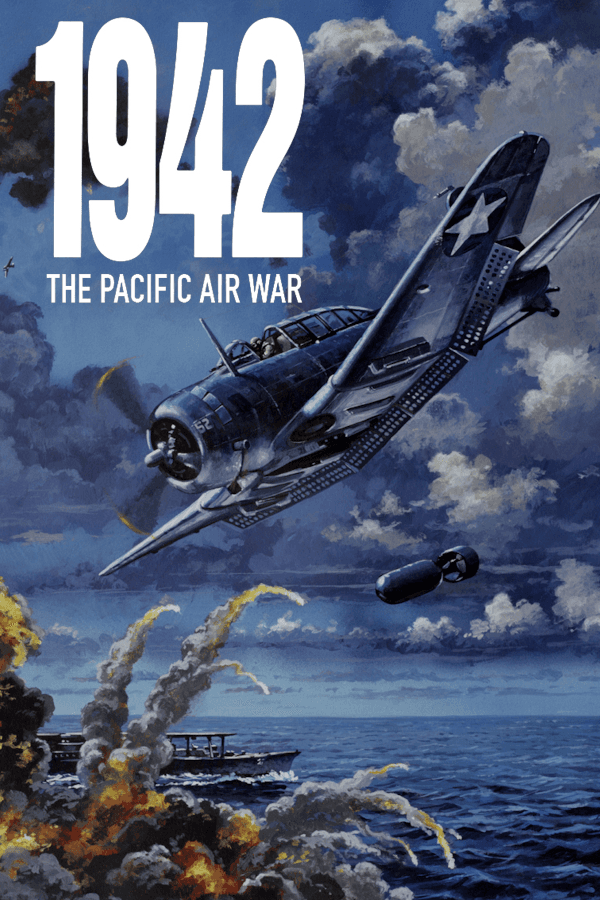
That commitment to real physics hits you the second you try a hard dogfight. Pull back too sharply on the stick to chase a Zero, and your wings lose lift, sending you into a flat spin straight into the ocean. The flight model is unforgiving, forcing you to respect energy management and dive speeds. If you jump into an SBD Dauntless for a dive-bombing run, you have to deploy your flaps, hold a steep angle through anti-aircraft fire, and release at the right altitude, or you will simply slam into the water alongside your ordnance.
Commanding task forces in 1942: The Pacific Air War
The real surprise of 1942: The Pacific Air War is that it expands well beyond the cockpit. In the "Carrier Battle" Tour of Duty mode, the game shifts to a strategic campaign map where you play as an admiral directing whole fleets and air squadrons across operations like the Battle of Midway and the Coral Sea. You manage search patterns, plot intercept courses for your task forces, and order strikes against enemy positions.
The transition between the strategic layer and the tactical air battles is instant. At any moment during a fleet engagement, you can jump straight into the cockpit of any friendly plane in the air, whether it is a TBF Avenger making a risky low-altitude torpedo run or a Corsair flying high cover. If your pilot gets shot down, you can simply take over another aircraft in your strike group to finish the mission.
For players who want to study their engagements afterward, the developers included a full camera replay tool. You can record a mission, scrub through the footage, change camera angles, and watch your dogfights play back like a film. If you just want to mess around without worrying about engine stalls or running out of machine-gun ammunition, typing the cheat code RASTA unlocks God Mode.
How the MicroProse flight model landed in 1994
When MicroProse Software, Inc. released the game as an MS-DOS title in 1994, reviewers immediately compared it to LucasArts' Aces of the Pacific. Writing for Computer Gaming World in August 1994, reviewer Johnny L. Wilson awarded it four out of five stars, highlighting its smooth frame rates, detailed texture mapping, and authentic game balance that favored historical tactics over arcade action. European magazines took a similar view, with Germany's PC Joker rating it at 79% and ASM giving it 75%.
Designers Ed Fletcher, John Paquin, and Michael Rea pushed 320x200 VGA graphics as far as they could go using early texture-mapping techniques. The planes looked sharp up close, even if the terrain below often dissolved into a pixelated grey-green haze. To get the best out of the experience, players needed a solid sound card: configuring the game via INSTALL.EXE for General MIDI gave the engine roars and anti-aircraft thumps proper weight compared to the tinny screech of standard PC speakers.
That realism came with sharp edges that still annoy players today:
- The flight model punishes small mistakes severely, making tight turns near the stall threshold a constant hazard.
- Ground textures smear heavily when flying low over islands or water.
- Mission pacing relies on long transit times over open water before you ever see enemy smoke on the horizon.
Taking to the skies today
Decades later, the hybrid design of this simulation game holds up well. While the 320x200 resolution looks rough on modern displays, the freedom to switch between fleet management and cockpit dogfighting gives the campaigns a scale that pure flight sims rarely matched. MicroProse later expanded the concept with a 1995 scenario pack and the 1998 sequel European Air War, but this initial Pacific outing balanced the dual role of pilot and commander best.
You can play 1942: The Pacific Air War online, free in your browser right here. There is nothing to install and no configuration menus to wrestle with. If you want to drop right into WWII aerial combat without setting up DOSBox cycles or audio drivers, jump into the pilot seat and see if you can pull out of your first dive bomb alive.