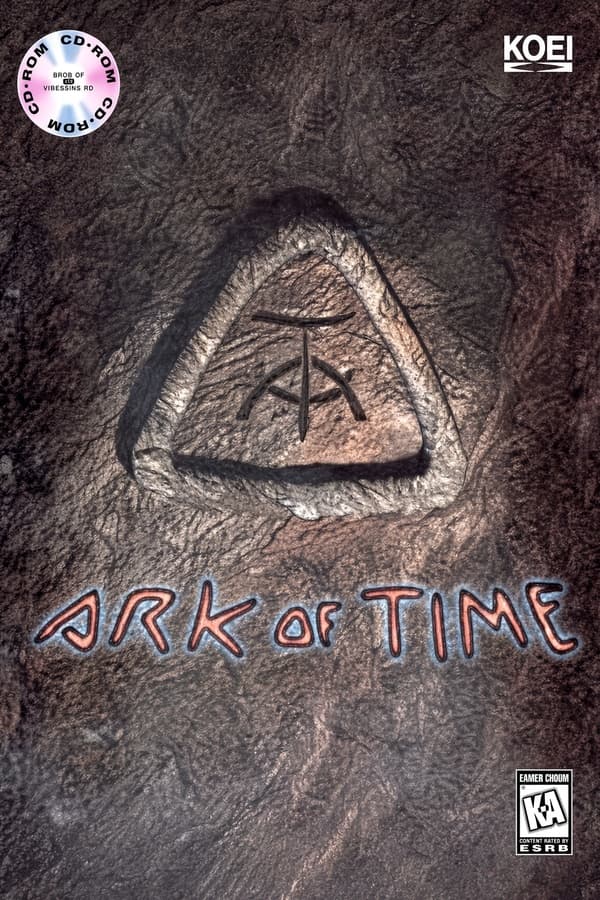
Ark of Time
aka Ark of Time: Enter a World of Adventure · Ark of Time~刻の箱船~ (Ark of Time: Koku no Hakobune)
If you ever wanted to solve the mystery of Atlantis by picking up pocket trash and painted crabs while your protagonist ambles at the pace of an injured sloth, Ark of Time has you covered.
Ark of Time puts a reluctant sports reporter on a global scavenger hunt
You play as Richard Kendall, an American sports writer living in London who would much rather cover football matches than chase nautical myths. When an expedition seeking Atlantis vanishes in the Atlantic Ocean, Kendall's editor forces him to drop his stadium press pass and track down archaeologist Professor Caldwell, along with his team members Helen, Mr. Blower, and Simon. The search takes you across eight distinct chapters, swinging through Stonehenge, a Caribbean resort on Rum Cay Island, the Yucatan jungle, Easter Island, Algeria, and eventually the sunken city itself.
Released late in 1997 by Italian developer Trecision and published by Koei, the game arrived at a tricky moment for adventure games. Windows 95 had already established itself as the desktop standard, yet this remained an Ark of Time MS-DOS game under the hood, running in SVGA modes with pre-rendered 2D backdrops and early polygonal character models overlaid on top. It stood in direct competition with massive releases from Sierra and LucasArts, which helps explain why it slipped past so many players at launch.
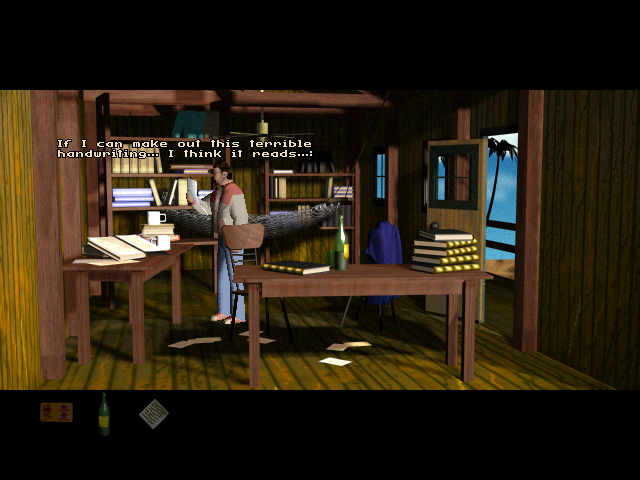
The inventory puzzles hide sly humor beneath agonizing click order logic
At its core, the game lives and dies on item manipulation and puzzle design. You interact with the world via standard third-person point-and-click controls, dividing mouse buttons between looking at scene elements and interacting with them. The screen clutter is minimal, but the brainteasers get absurd quickly. Solving a obstacle often requires combining obscure odds and ends, like thrown-away trash or live crabs, into improbable contraptions.
Where the design genuinely stumbles is its strict interface code. The inventory combination system exhibits a notorious bug: dragging item A onto item B might yield the correct tool, but dragging item B onto item A will trigger a generic failure line as if the two items have no relationship whatsoever. Players who had the exact right idea were frequently left stuck for days simply because they clicked their inventory in reverse order.
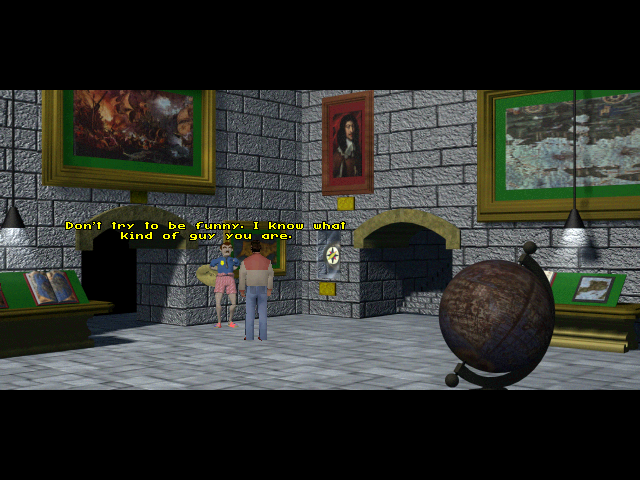
Global travel loses its charm when everyone sounds like they are from Ohio
Despite being created by an Italian studio and set across four continents, almost every voice actor in the game speaks with an identical middle-American accent. You can chat with an Algerian prince, a London local, or a Caribbean museum curator, and the dialogue delivers over three hours of digitized speech with the exact same Midwestern twang. Combined with stiff character models that barely articulate, these exchanges hover somewhere between dry European comedy and unintended camp.
Navigating these international locales is made harder by Kendall's painfully sluggish movement speed. With no run button and a slow-moving cursor, traveling across large pre-rendered scenes becomes a test of patience. Backtracking to earlier locations often reveals static non-player characters standing in the exact same spots, looping the same idle animations and repeating lines you heard hours prior.
The core gameplay loop centers on several predictable structural habits:
- Collecting seemingly useless environmental junk across world capitals and remote islands.
- Exhausting branching conversation trees with eccentric locals who hoard key items.
- Trial-and-error inventory matching while constantly swapping click order to bypass the engine's combination bug.
- Deciphering ancient stone mechanisms and temple locks in late-game tombs.
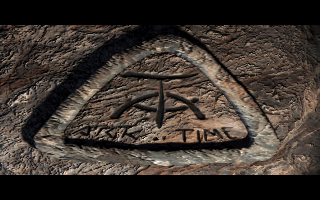
Why Ark of Time is an eccentric late-DOS oddity worth trying
GameSpot handed out a 6.3/10 upon release, slamming the atrocious voice production while acknowledging the generous density of puzzles. Adventure Gamers gave it a 3.5/5, calling it the "worst game that I've totally enjoyed" due to its clever sense of humor and challenging roadblocks. The contrast between its lovely pre-rendered backgrounds, composed by Luigi Gaggero, and its baffling interface design gives the whole campaign a unique personality that hardheaded adventure fans still appreciate.
If you enjoy mid-nineties inventory logic and can stomach a hero who moves like he is walking underwater long before he reaches Atlantis, there is a legitimate, witty mystery buried here. The writing keeps things light enough to balance out the frustration of the puzzle spikes, provided you keep a walk-through handy for when the item combination order gets unreasonable.
You can play Ark of Time online right now directly in your browser. There is nothing to install or configure before jumping into Kendall's globe-trotting search, so you can test your inventory puzzle skills on this classic DOS adventure within seconds.