
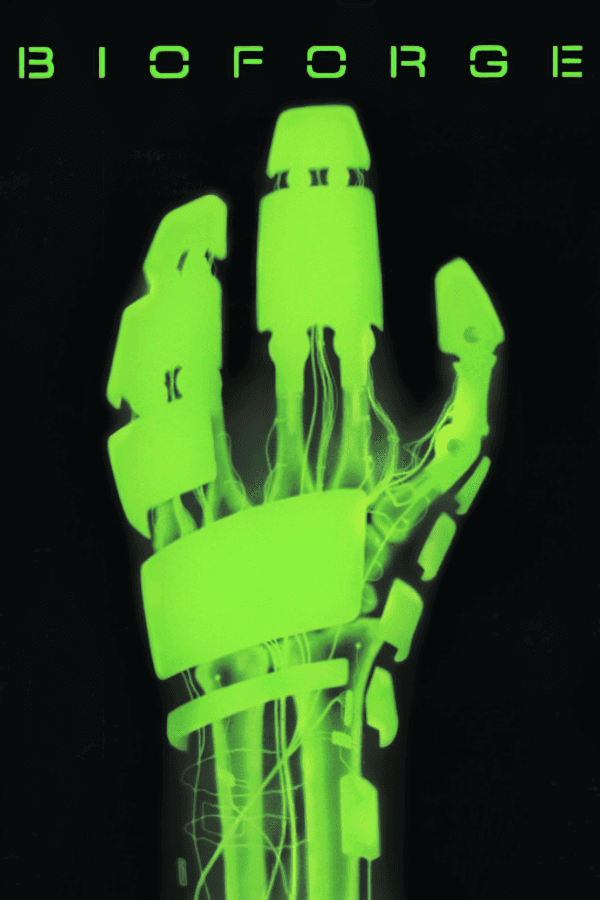

Waking up in a cold metal cell in BioForge with a cybernetic body you never asked for and no memory of your real name is a stark opening. You rip a pipe off the wall, bludgeon a rogue medical drone, and immediately start figuring out how to survive on a blood-soaked moon base.
3D characters over pre-rendered art made Daedalus feel real
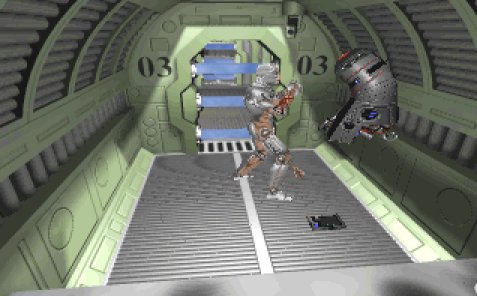
When director Ken Demarest and ORIGIN Systems, Inc. built their custom engine, they were chasing cinematic realism while most action titles were still sticking flat sprites onto blocky geometry. By placing fully textured 3D polygon character models over painted, pre-rendered static camera backgrounds, the game achieved a look that rivaled big-budget hardware demos in 1995. The team even captured animations using a Flock of Birds motion-capture rig, giving your chrome-plated protagonist a heavy, rhythmic stride as he stomps down metallic corridors.
That heavy visual weight extends directly into how you interact with the base on Daedalus. You spend as much time sifting through computer logs and private diaries as you do dodging plasma fire, piecing together how Dr. Escher and his fanatic Mondite cult turned a research outpost into an assembly line for cybernetic monstrosities. The audio design backed up that grim atmosphere, pushing dynamic music and full voice acting through Sound Blaster or General MIDI setups to keep the isolation thick.
Tank controls turn every hallway scuffle into a tense gamble
If you play this classic action game today, the first wall you hit is not a security grid; it is the control scheme. Much like early survival horror titles, movement is purely relative to the character's facing orientation, turned further complex by a heavy library of combat moves assigned to numeric keypad keys. Shifting your weight to throw a high kick or aiming your internal chest laser takes deliberate timing, and turning around in tight doorways feels like steering a freight train.
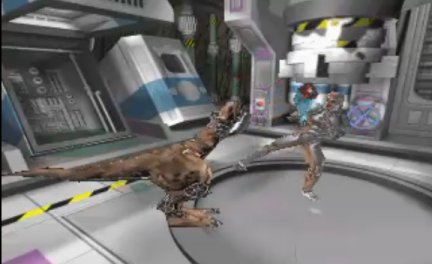
Because enemy guards and security mechs hit fast and brutally hard, fighting without a plan gets you killed in seconds. The combat mechanics proved so polarizing that period magazines split entirely on its value; French publication Gen4 awarded it 91%, while Britain's Edge issued a surprisingly critical review targeting the stiff, chaotic melee brawls. Yet when you manage to lure a Mondite guard into a narrow bottleneck and land a perfectly timed power punch, the heavy combat hits with satisfying weight.
To survive the facility's hazards, you have to master a broad set of survival tools:
- Biometric theft: Pick up a severed human arm and hold it against high-security hand scanners to unlock gated wings.
- Environmental bypasses: Route power through auxiliary reactors and decipher keypad passwords hidden inside terminal logbooks.
- Strange inventory items: Experiment with odd trinkets like a flute, a fork, and alien talismans alongside standard plasma rifles and grenades.
- Laser grid navigation: Time your movements through lethal security barriers that leave no room for input mistakes.
Bizarre puzzle solutions temper the dark sci-fi terror
What makes the experience stick with players decades later is the strange contrast between terrifying cybernetic body horror and darkly eccentric puzzle design. One moment you are listening to audio logs detailing agonizing surgical procedures, and the next you are picking up a dead crewmember's limp arm off the floor to bypass a door scanner. That dark humor gives the dark sci-fi world a personality few contemporary space thrillers bothered to cultivate.
The puzzle logic requires genuine reading comprehension rather than basic key-hunting. You have to comb through patient files, cross-reference security clearance codes, and explore alien ruins lurking beneath the moon installation. The game punishes carelessness mercilessly; missing a single power cell or rushing headfirst into an activated defense turret ends your run long before you ever get close to Dr. Escher.
Commercial stumbles cut a planned expansion short
When published by Electronic Arts, Inc. in 1995, the heavy system requirements kept a lot of casual PC owners from running it smoothly. High hardware demands combined with notoriously punishing early-game death traps kept sales lower than expected. Work had already begun on an expansion pack meant to resolve the massive cliffhanger ending, but the project was permanently canceled as commercial reality set in.
Despite the abrupt narrative cut, the technical ambition shows in every frame. The sound design, sharp pre-rendered perspective angles, and environmental storytelling established a layout that late nineties survival horror titles would refine for years to come.
You can play BioForge online right in your browser
If you want to experience this landmark MS-DOS game without hunting down vintage hardware, you can launch it instantly right here. You do not need to mess around with sound card IRQ settings or base memory allocation. Everything runs straight through your web browser, dropping you right into the awakening chamber within seconds.
When you start your escape, inspect your cell thoroughly and figure out how to dismantle your first guard before attempting to sprint down the main corridor. You can play BioForge free in your browser today to see if you have the patience and tactical precision needed to break out of Daedalus alive.