

Screenshot×31d ago
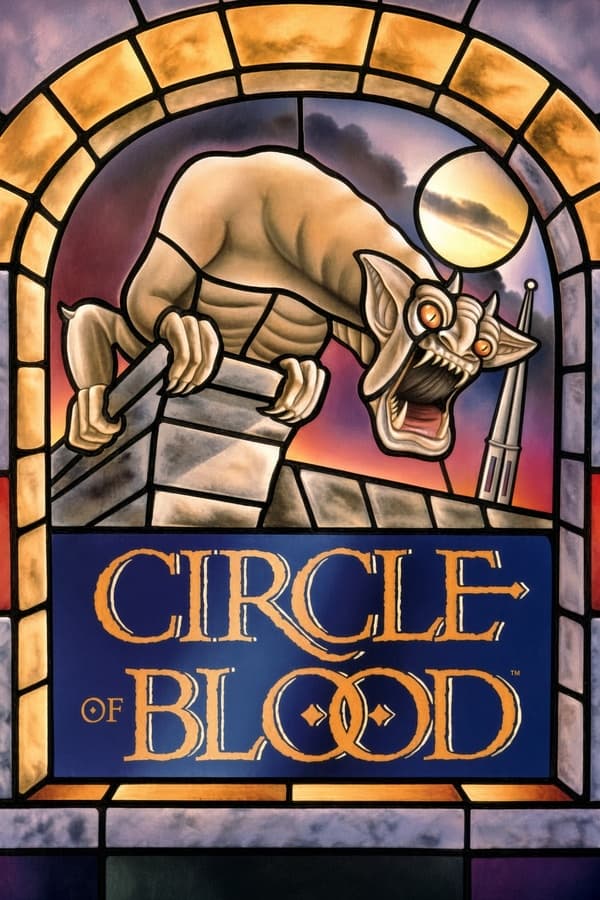
Playing Circle of Blood starts with a peaceful afternoon in a Paris café, right up until a clown with an accordion steals a briefcase and detonates a bomb.
You play as George Stobbart, an American tourist who suddenly finds himself scouring the Parisian streets alongside a photojournalist named Nico Collard. Designed by Charles Cecil and built on the Virtual Theatre engine, this 1996 title drops you into hand-painted backgrounds drawn in pencil and colored in Photoshop. Instead of wrestling with a clunky text-parser or scrolling through a wall of verbs like older Sierra and LucasArts titles, you get an intuitive cursor that changes icon when dragged over something you can examine, pick up, or talk about.
The pacing is relaxed right until the moment it demands strict spatial logic. You clear levels by chatting up locals, poking around locations like Montfaucon, Hagenmeyer Clinic, and the Site de Baphomet, and dragging objects from your inventory onto hot spots in the world. The music by Barrington Pheloung shifts softly depending on where you stand, giving each screen an atmosphere that keeps the endless questioning from feeling like a chore.
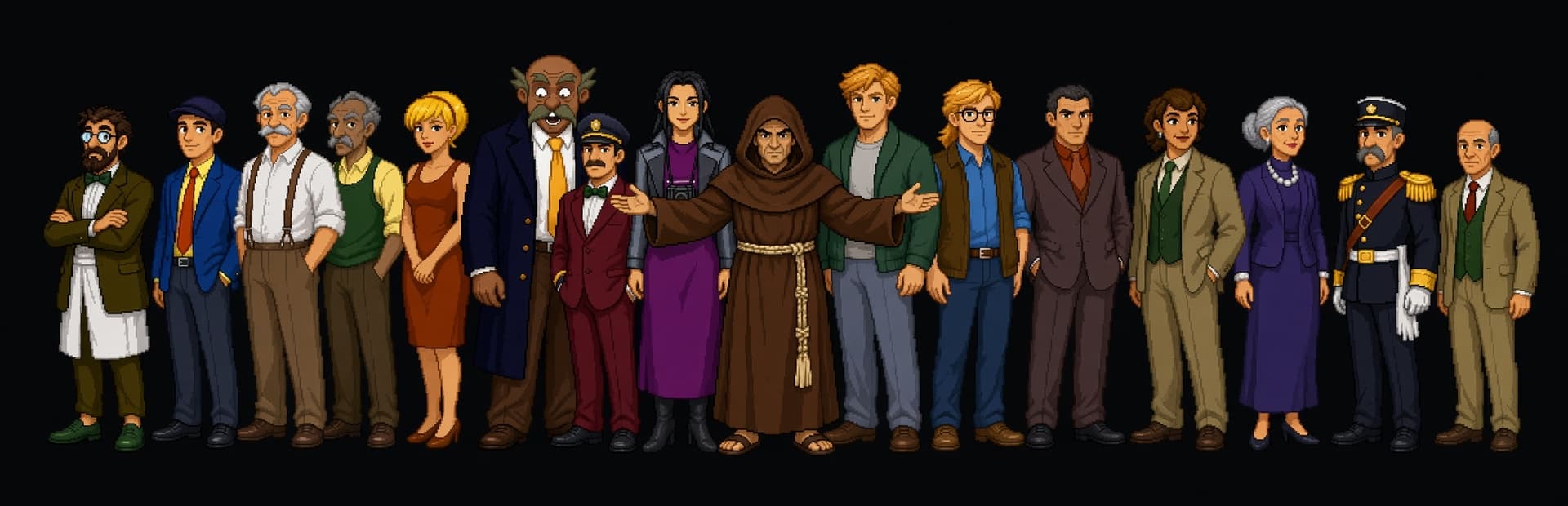
The writing leans heavily on dialogue, to the point where some players feel the game gets far too talky. George talks to everyone, from Parisian gendarmes to hotel concierges, pulling items out of his jacket to ask their opinion on fabric swatches or plaster casts. If you enjoy character-driven mysteries full of dry wit, it works. If you prefer rapid inventory puzzles without listening to long back-and-forth conversations, the momentum can stall out when you run through every topic on a character's dialogue tree just to find the one trigger that opens up the next location.
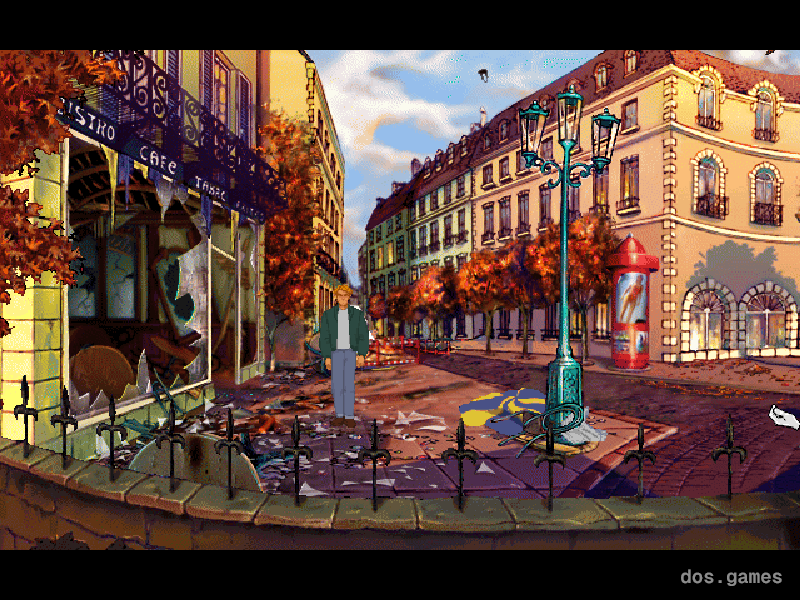
When the puzzles are working, they test how well you pay attention to the environment. You might need to distil clues from a newspaper clipping or combine random scrap items to trick a guard into leaving his post. The dark side of this mechanics model is that progress sometimes halts entirely because you missed a tiny cluster of pixels in a dark corner of a clinic room.
You cannot write about this game without addressing its most infamous road-block: the goat puzzle in Ireland. In a mid-game chapter, George visits a castle cellar only to be repeatedly knocked flat on his back by a aggressive goat every time he tries to open a trapdoor. Up to this point, the game is a relaxed adventure game where you can take as much time as you want to think through inventory combinations without fear of dying or failing on a timer.
The goat breaks those rules completely. Resolving the encounter requires you to let the goat knock you down, then immediately click a heavy farm implement on the left side of the screen while the animal is returning to its starting position. There is no hint that the game has suddenly introduced a strict timing window, and a generation of players ended up stuck in that cellar for days.
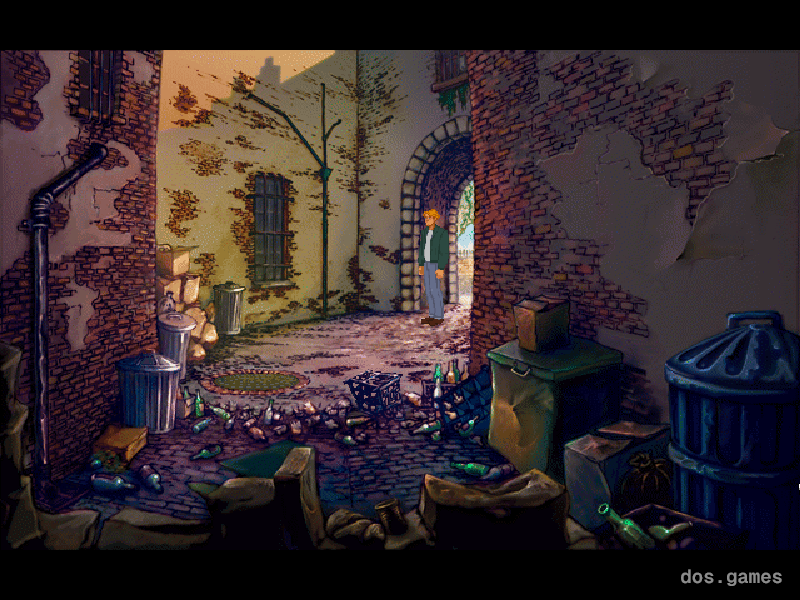
When published by Virgin Interactive, the US arm swapped the European title Broken Sword: The Shadow of the Templars for Circle of Blood, a decision director Cecil later admitted he felt uneasy about. Name changes aside, the game sold around one million copies because it delivered high-production animated visuals just as PC games were shifting toward primitive, blocky 3D models. While early 3D efforts from 1996 look rough today, the 2D artwork and crisp character portraits hold up far better.
The puzzle design relies on a clean, unobtrusive bottom-screen inventory bar. You do not have to fight the interface to play, making it far more approachable than many of its contemporaries. A few bizarre leaps in logic occur, but the mystery surrounding the Knights Templar takes you across Paris, Syria, Spain, Ireland, and Scotland with enough momentum to make up for the occasional moon-logic solution.
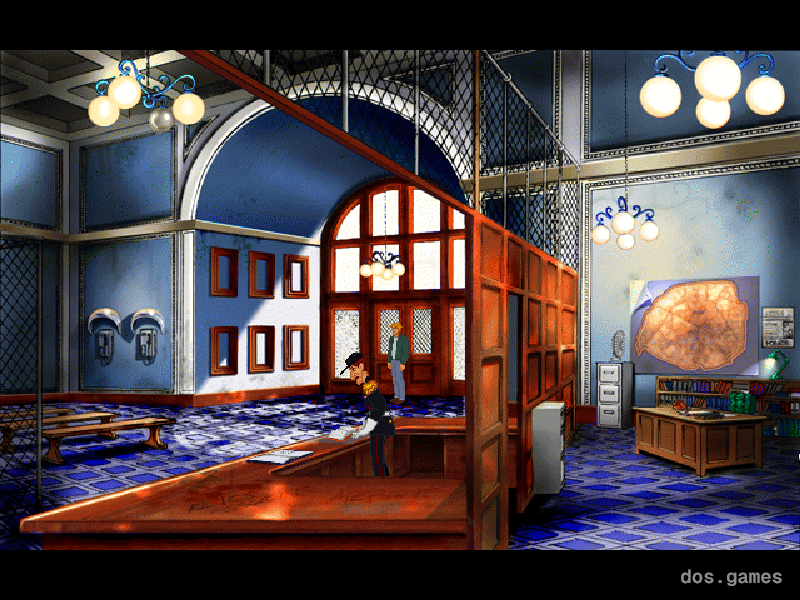
If you want to experience this point-and-click classic, you can run the complete 1996 Revolution Software adventure in your browser. If you love deep detective stories, sweeping soundtracks, and historical conspiracies, you should absolutely play Circle of Blood online. Just remember to react quickly when you finally set foot in that Irish cellar with the goat.
You can launch the full Virgin Interactive release of this MS-DOS game directly in your browser without downloading files or tweaking configuration menus. Jump straight into George Stobbart's Parisian holiday, talk to the locals, and see if you have what it takes to survive the goat puzzle on your very first try.
Playing Circle of Blood starts with a peaceful afternoon in a Paris café, right up until a clown with an accordion steals a briefcase and detonates a bomb.
You play as George Stobbart, an American tourist who suddenly finds himself scouring the Parisian streets alongside a photojournalist named Nico Collard. Designed by Charles Cecil and built on the Virtual Theatre engine, this 1996 title drops you into hand-painted backgrounds drawn in pencil and colored in Photoshop. Instead of wrestling with a clunky text-parser or scrolling through a wall of verbs like older Sierra and LucasArts titles, you get an intuitive cursor that changes icon when dragged over something you can examine, pick up, or talk about.
The pacing is relaxed right until the moment it demands strict spatial logic. You clear levels by chatting up locals, poking around locations like Montfaucon, Hagenmeyer Clinic, and the Site de Baphomet, and dragging objects from your inventory onto hot spots in the world. The music by Barrington Pheloung shifts softly depending on where you stand, giving each screen an atmosphere that keeps the endless questioning from feeling like a chore.
The writing leans heavily on dialogue, to the point where some players feel the game gets far too talky. George talks to everyone, from Parisian gendarmes to hotel concierges, pulling items out of his jacket to ask their opinion on fabric swatches or plaster casts. If you enjoy character-driven mysteries full of dry wit, it works. If you prefer rapid inventory puzzles without listening to long back-and-forth conversations, the momentum can stall out when you run through every topic on a character's dialogue tree just to find the one trigger that opens up the next location.
When the puzzles are working, they test how well you pay attention to the environment. You might need to distil clues from a newspaper clipping or combine random scrap items to trick a guard into leaving his post. The dark side of this mechanics model is that progress sometimes halts entirely because you missed a tiny cluster of pixels in a dark corner of a clinic room.
You cannot write about this game without addressing its most infamous road-block: the goat puzzle in Ireland. In a mid-game chapter, George visits a castle cellar only to be repeatedly knocked flat on his back by a aggressive goat every time he tries to open a trapdoor. Up to this point, the game is a relaxed adventure game where you can take as much time as you want to think through inventory combinations without fear of dying or failing on a timer.
The goat breaks those rules completely. Resolving the encounter requires you to let the goat knock you down, then immediately click a heavy farm implement on the left side of the screen while the animal is returning to its starting position. There is no hint that the game has suddenly introduced a strict timing window, and a generation of players ended up stuck in that cellar for days.
When published by Virgin Interactive, the US arm swapped the European title Broken Sword: The Shadow of the Templars for Circle of Blood, a decision director Cecil later admitted he felt uneasy about. Name changes aside, the game sold around one million copies because it delivered high-production animated visuals just as PC games were shifting toward primitive, blocky 3D models. While early 3D efforts from 1996 look rough today, the 2D artwork and crisp character portraits hold up far better.
The puzzle design relies on a clean, unobtrusive bottom-screen inventory bar. You do not have to fight the interface to play, making it far more approachable than many of its contemporaries. A few bizarre leaps in logic occur, but the mystery surrounding the Knights Templar takes you across Paris, Syria, Spain, Ireland, and Scotland with enough momentum to make up for the occasional moon-logic solution.
If you want to experience this point-and-click classic, you can run the complete 1996 Revolution Software adventure in your browser. If you love deep detective stories, sweeping soundtracks, and historical conspiracies, you should absolutely play Circle of Blood online. Just remember to react quickly when you finally set foot in that Irish cellar with the goat.
You can launch the full Virgin Interactive release of this MS-DOS game directly in your browser without downloading files or tweaking configuration menus. Jump straight into George Stobbart's Parisian holiday, talk to the locals, and see if you have what it takes to survive the goat puzzle on your very first try.
aka BS1 · Baphomets Fluch · Broken Sword: Il Segreto dei Templari · Broken Sword: La leyenda de los Templarios · Broken Sword: Stín templářů
How Circle of Blood is played — the keys the game listens to, grouped by what they do.
Highlighted keys are mapped — hover or tap one to see what it does.
In addition to Esc, sources note F5 accesses the save/load menu. During speech, either mouse button skips the current dialogue line.
The on-screen keyboard and gamepad mapping the browser player uses on a phone, a tablet or a controller, as opposed to the real keys above. $PRO members make their own in the player and share them here; anyone can pick one to play with.
Cheat codes, console commands and memory pokes for Circle of Blood — each one verified and attributed.
Sign in to submitHow Circle of Blood is played — the keys the game listens to, grouped by what they do.
Highlighted keys are mapped — hover or tap one to see what it does.
In addition to Esc, sources note F5 accesses the save/load menu. During speech, either mouse button skips the current dialogue line.
The on-screen keyboard and gamepad mapping the browser player uses on a phone, a tablet or a controller, as opposed to the real keys above. $PRO members make their own in the player and share them here; anyone can pick one to play with.
Cheat codes, console commands and memory pokes for Circle of Blood — each one verified and attributed.
Sign in to submit