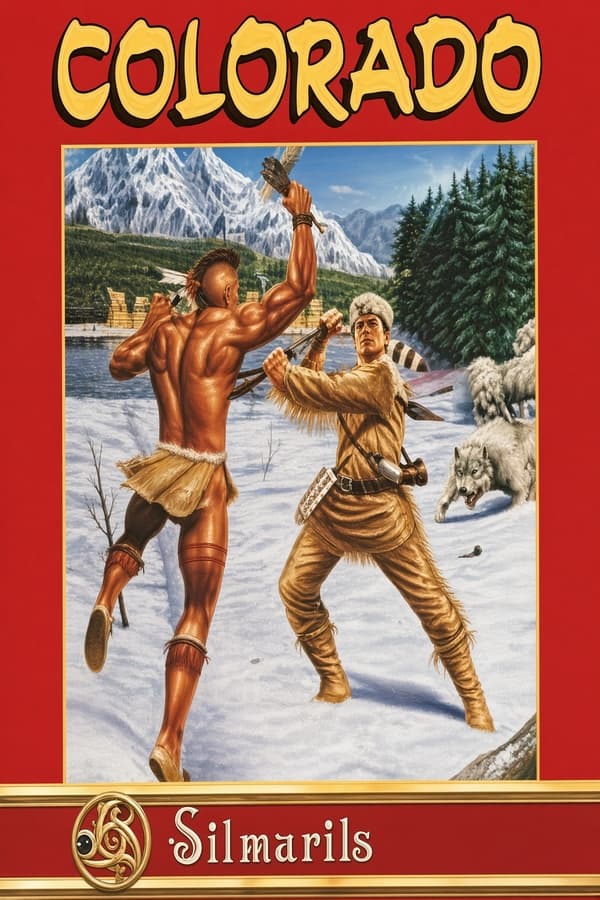
Colorado
In Colorado, a single misplaced step into shallow water or an improper push of a canoe paddle ends your frontier journey in seconds, leaving your trapper dead before he even gets close to the goldmine.
You start your expedition in 1990's Colorado as David O'Brian, a trapper armed with a rifle nicknamed "Betty," a hunting knife, and an axe. Having saved a dying Cheyenne chief, you receive a map to a hidden goldmine deep in native territories along the river. What follows is not a straightforward shooter, but a non-linear, multi-directional flip-screen maze that asks you to survive both the terrain and the local tribes on foot and in a birchbark canoe.
The moment you step into the game, the visual presentation catches your eye with detailed graphics showing off the rugged frontier. Yet, as soon as you press a key to move, the rigid design of Silmarils hits hard. Your character moves with a heavy, clunky gait, turning simple navigation into a high-stakes puzzle where a miscalculated leap means instantaneous death.
Survival along the river means learning 1001 ways to die
The core of Colorado revolves around exploring interconnected flip-screens. One screen has you ducking behind rocks to avoid arrows from Pawnee warriors, and the next leaves you face to face with hostile wildlife. Combat requires precise timing with your limited arsenal, but the environment itself poses the far greater threat. Waterfalls tear your canoe to shreds if your navigation strays, and snake bites kill just as quickly as a musket shot.
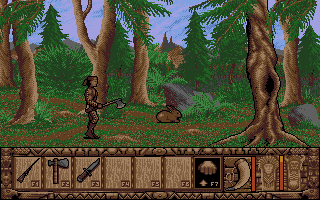
The canoeing sequences in particular bring unforgiving difficulty. Jumping into the canoe without fully understanding the controls leads to immediate drowning, a classic point of frustration for anyone trying the 1990 release for the first time. The game does not offer tutorial pop-ups; it expects you to consult the back-story printed in the physical manual, styled as O'Brian's personal memoirs, or figure out the mechanics through painful trial and error.
A typical run involves juggling survival tools, managing health, and keeping an eye out for seemingly useless inventory items that turn out to be critical progress gates:
- The trusty rifle "Betty" for long-range defense against hostile archers and beasts.
- The ship's horn, an unconventional item used to bypass specific environmental hazards.
- The hand-paddled canoe, necessary to cross river screens while avoiding lethal rocks and steep drops.
The visual trade-off behind Colorado's tough exploration
Back when contemporary gaming magazines reviewed Colorado, opinions split down the middle. European press like CU Amiga awarded it an 84%, raving about its detailed Wild West settings and the evolution over Silmarils' earlier titles like Targhan. Conversely, outlets like The One dismissed it with a 2/5, citing slow pacing, stiff controls, disk loading delays, and a lack of overall atmosphere.
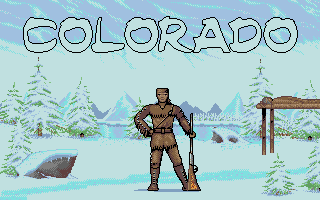
They were both right. Graphically, the artistic direction led by André Rocques, Louis-Marie Rocques, and their team delivers strong environmental detail, backed by audio work composed by Fabrice Hautecloque. But the technical performance suffers under the weight of those visuals. The flip-screen transitions interrupt the flow of movement, making intense shootouts feel disorienting when an enemy shoots at you from across a screen boundary.
Where games of the same year offered fluid, fast-paced action, Colorado demands methodic patience. If you sprint through a screen blind, you will land on a patch of snakes or tumble into a tiny stream that kills you outright. The lack of flexible save features means every mistake sends you right back to the beginning, testing your tolerance for punishing early-90s PC design.
Can you tame the Colorado MS-DOS game today?
Decades later, Colorado remains an intriguing piece of software development from French studio Silmarils. It holds brilliant ideas and a thick atmosphere, yet those ideas struggle under stiff movement and instant-kill hazards. It is a title built for players who appreciate slow-paced, trial-and-error cartography, where mapping out screens, surviving snake pits, and mastering canoe controls feel like genuine accomplishments.
If you want to experience this harsh frontier adventure without hunting down vintage floppy disks, you can play Colorado online right now. You can jump straight into the DOS version of Colorado free in your browser with zero setup. Just remember to keep your distance from the water's edge on screen one, keep "Betty" loaded, and don't push off in the canoe until you've figured out which way the current flows.