
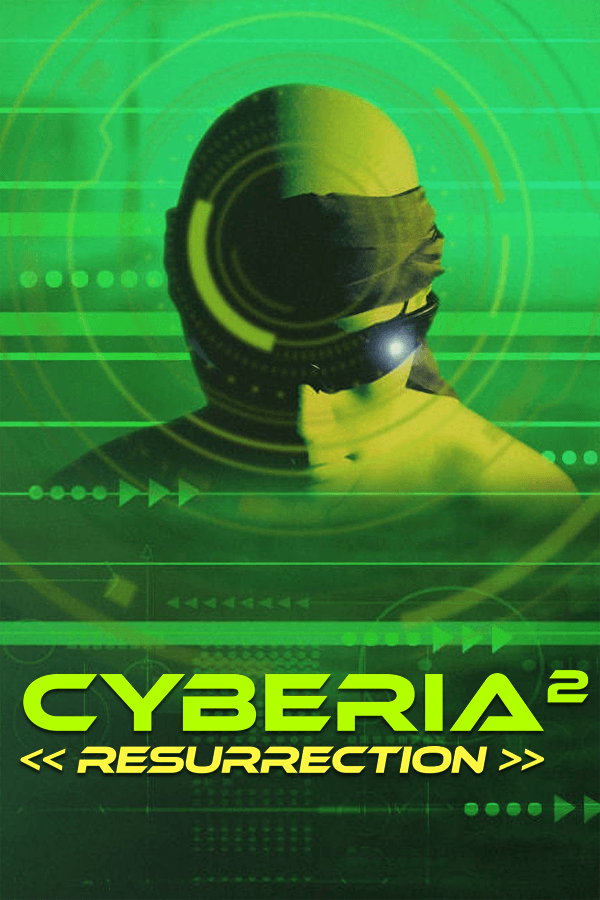

In Cyberia 2: Resurrection, you trade off between panning a crosshair over pre-rendered FMV backdrops and untangling cryptic terminal puzzles where a single wrong click sends you straight to a game over screen.
Thutting through FMV corridors with a crosshair
The original game ended with protagonist Zak merged with the Cyberion weapon after shattering Devlin's orbital station. When his craft crashes back to Earth, an FWA team under Dr. John Corbin recovers the wreckage, puts Zak into cryo-storage, and drains the Cyberion remains to construct a biological weapon called nano-toxin. Three years pass before a renegade female FWA major thaws Zak out, needing his modified blood as an antidote while Corbin sets out to wipe out millions to remake human society.
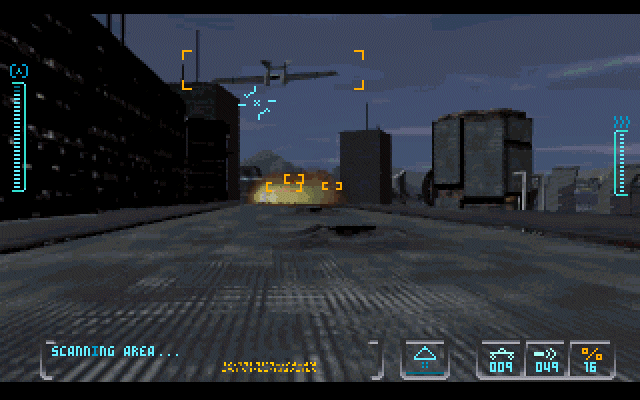
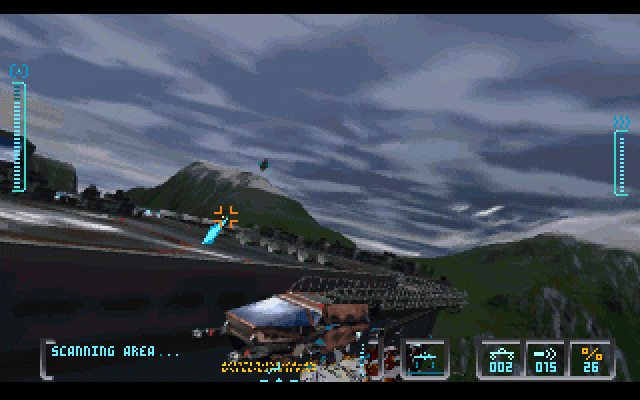
Once you get past that premise, you are immediately thrust into heavy arcade shooting. Your movement is entirely on rails: the game streams pre-rendered video off CD-ROM while you sweep a gun crosshair across the screen to blow up incoming interceptors, defense turrets, and armored troops. The arcade segments ask for basic target acquisition and quick reflex taps, working through mounted turrets and suit weapons as the camera sweeps through steel corridors and high-speed airborne pursuits.
Where Cyberia 2: Resurrection punishes every hesitation
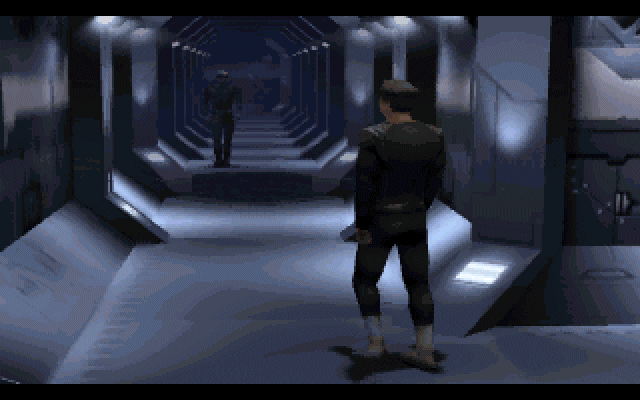
When Zak steps out of vehicle cockpits and onto his own two feet, the perspective shifts to node-based exploration. Here you choose directions at set branching points, bypass security networks, and execute stealth movements. Unlike standard real-time action titles in the action genre, on-foot navigation keeps you locked to rigid, pre-calculated camera steps rather than free movement.
This rigid structure means trial and error dominates the design. Picking the wrong turn at a junction, mistiming a stealth advance, or making an incorrect input during a data terminal sequence usually leads to instant death. Players who remember the first entry will quickly notice that developer Xatrix Entertainment removed the separate difficulty toggles for arcade action and logic puzzles, forcing everyone through the same exacting gauntlet.
The logic puzzles range from memory minigames to interface decryption terminals. Because instructions on these computer terminals are deliberately sparse, clear solutions often come only after a few failed attempts. A single mistake sends you right back to the start of the section, making progress a matter of memorizing path choices and terminal inputs.
Two CDs of pre-rendered sci-fi and Sound Blaster noise
Published by Virgin Interactive late in 1995, the game came on two CD-ROMs to accommodate its higher resolution pre-rendered 3D cutscenes and interactive video backgrounds. Compared to its 1994 predecessor, the visual upgrades were obvious, showing off cleaner character models, smoother background animation, and frequent cinematic cuts during combat sequences.
Audio setups of the time leaned heavily on Sound Blaster cards to render the crisp laser blasts, digital explosions, and full voice work that accompanied every plot beat. Period magazines were divided on the execution when it hit store shelves. PC Action in Germany awarded the DOS release an 83% rating in April 1996, praising the sharp visual presentation, while High Score was cooler, handing down a 60% score later that autumn due to the simple arcade loops and high frustration factor.
The core gameplay loop rests on these distinct phases:
- Sweeping target reticles across vehicle cockpits during fast FMV flight and turret sequences.
- Navigating branching paths step-by-step through security facilities while avoiding instant-kill hazards.
- Cracking computer systems through trial-and-error terminal interactions and pattern-matching puzzles.
Fire up this Cyberia 2: Resurrection MS-DOS game straight in your browser
If you want a pure slice of mid-nineties cinematic rail shooting where pre-rendered spectacle takes precedence over player freedom, this sequel delivers on both fronts. The target shooting itself is straightforward enough for anyone with decent reaction speeds, but the real test is whether you have the patience to navigate its lethal puzzle junctions without losing your cool.
You can play Cyberia 2: Resurrection online right now. You can experience this Cyberia 2: Resurrection free in your browser with zero setup required. Jump straight into the first turret escape sequence to see how 1995 FMV tech holds up today.