
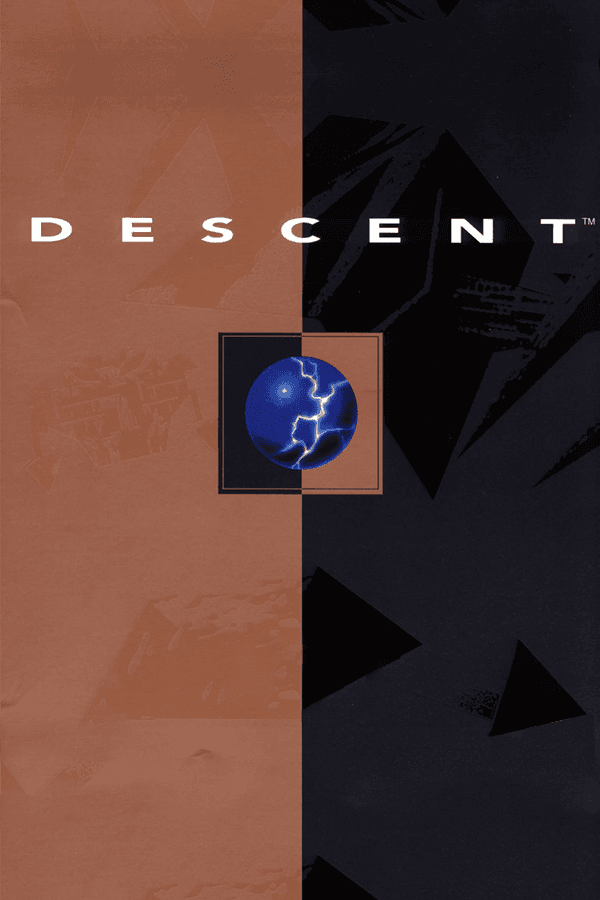

By stripping away the floor and throwing out gravity, Descent forced PC gamers in 1995 to learn how to fly, aim, and navigate inside claustrophobic, three-dimensional mining shafts.
When Parallax Software released Descent, most players were used to Doom. In id Software's shooter, you moved fast across flat planes, and the computer handled aiming up and down for you. Here, directors Mike Kulas and Matt Toschlog handed you the joystick of a Pyro-GX ship and dropped you into subterranean mines with six degrees of freedom. Suddenly, up was wherever your ship's roof happened to be pointing, and down was a ceiling filled with hostile drill-bots.
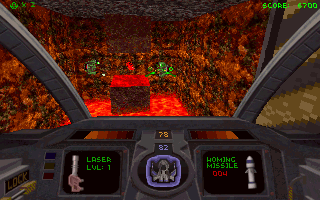
The core struggle of playing this 1995 action game goes beyond taking out rogue mining machinery. Staying oriented is half the battle. Built on a custom portal engine made of connected wireframe cubes, the levels span 27 mines across the Solar System, starting at the Moon and pushing outward to Mercury. Because there is no artificial horizon, you will regularly roll your ship sideways to squeeze through a narrow door, only to realize you are now upside down relative to the hostages locked in cages below you.
It is easy to get completely lost. The wireframe automap helps, but in the heat of a firefight, spinning around to track a homing missile usually means losing your bearings entirely. Reviewers at launch praised the game's full polygonal 3D models, which replaced flat sprites, but plenty of players had to take breaks to let their motion sickness fade. Without a floor to anchor your eyes, your brain takes a few hours to adapt to true weightless dogfighting.

Every level follows a tight, stressful mission loop: hunt for red, yellow, and blue keycards, rescue the trapped workers, find the central power reactor, and blast it to pieces. The moment that reactor detonates, a 45-second emergency countdown begins. You have to locate the designated exit tunnel and fly out before the entire mine collapses around you. Missing the exit door by two seconds because you took a wrong turn in the dark is an experience every veteran pilot remembers with a grimace.
To survive the enemy hordes sent by Interplay Productions' corrupt corporation, you have to manage your ship's energy reserves carefully. Your primary weapons draw from a shared power pool:
Secondary ordnance ranges from basic Concussion Missiles to massive Mega Missiles that vaporize entire rooms. If you run low on energy, you have to hunt for yellow energy hubs scattered around the sector to recharge your shields and systems.
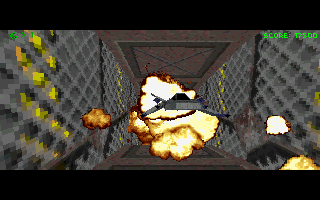
While developer Parallax Software designed an adaptable AI that ambushes you from blind spots, the game's real bite comes from its harsh difficulty spikes. On higher settings like Insane mode, enemy reaction times are instantaneous. Later levels hide heavy-hitting bots right behind doorway corners, firing fusion charges before your cockpit view even clears the threshold. Early shareware releases made this worse by preventing you from saving mid-mission, meaning one bad drop into a room full of drillers wiped out twenty minutes of careful exploration.
If you got hopelessly stuck or just wanted to mess around, typing the master cheat code gabbagabbahey unlocked the developer controls. From there, typing racerx gave you invincibility, mitzi handed over all access keys, and flash illuminated the shortest path straight to the exit tunnel. Hilariously, the developers remembered their main code when making Descent II a year later: if you try typing gabbagabbahey in the sequel, the game immediately punishes your cheating by draining your energy and shields down to 1%.
While modern flight simulators rely on complex HOTAS setups, playing the original DOS version of this shooter with a standard keyboard and mouse or a simple USB gamepad still feels sharp once you map strafing to your preferred keys. The mechanical sound design comes alive when routed through Roland SC-55 MIDI hardware, making the hum of reactor cores and the screech of warning sirens sound properly industrial.
You can play Descent online right here in your browser with zero setup required. Jump straight into the first mine on the Moon, map your roll and pitch controls in the options menu, and see how fast you can find the reactor and escape before the countdown hits zero.
By stripping away the floor and throwing out gravity, Descent forced PC gamers in 1995 to learn how to fly, aim, and navigate inside claustrophobic, three-dimensional mining shafts.
When Parallax Software released Descent, most players were used to Doom. In id Software's shooter, you moved fast across flat planes, and the computer handled aiming up and down for you. Here, directors Mike Kulas and Matt Toschlog handed you the joystick of a Pyro-GX ship and dropped you into subterranean mines with six degrees of freedom. Suddenly, up was wherever your ship's roof happened to be pointing, and down was a ceiling filled with hostile drill-bots.

The core struggle of playing this 1995 action game goes beyond taking out rogue mining machinery. Staying oriented is half the battle. Built on a custom portal engine made of connected wireframe cubes, the levels span 27 mines across the Solar System, starting at the Moon and pushing outward to Mercury. Because there is no artificial horizon, you will regularly roll your ship sideways to squeeze through a narrow door, only to realize you are now upside down relative to the hostages locked in cages below you.
It is easy to get completely lost. The wireframe automap helps, but in the heat of a firefight, spinning around to track a homing missile usually means losing your bearings entirely. Reviewers at launch praised the game's full polygonal 3D models, which replaced flat sprites, but plenty of players had to take breaks to let their motion sickness fade. Without a floor to anchor your eyes, your brain takes a few hours to adapt to true weightless dogfighting.

Every level follows a tight, stressful mission loop: hunt for red, yellow, and blue keycards, rescue the trapped workers, find the central power reactor, and blast it to pieces. The moment that reactor detonates, a 45-second emergency countdown begins. You have to locate the designated exit tunnel and fly out before the entire mine collapses around you. Missing the exit door by two seconds because you took a wrong turn in the dark is an experience every veteran pilot remembers with a grimace.
To survive the enemy hordes sent by Interplay Productions' corrupt corporation, you have to manage your ship's energy reserves carefully. Your primary weapons draw from a shared power pool:
Secondary ordnance ranges from basic Concussion Missiles to massive Mega Missiles that vaporize entire rooms. If you run low on energy, you have to hunt for yellow energy hubs scattered around the sector to recharge your shields and systems.

While developer Parallax Software designed an adaptable AI that ambushes you from blind spots, the game's real bite comes from its harsh difficulty spikes. On higher settings like Insane mode, enemy reaction times are instantaneous. Later levels hide heavy-hitting bots right behind doorway corners, firing fusion charges before your cockpit view even clears the threshold. Early shareware releases made this worse by preventing you from saving mid-mission, meaning one bad drop into a room full of drillers wiped out twenty minutes of careful exploration.
If you got hopelessly stuck or just wanted to mess around, typing the master cheat code gabbagabbahey unlocked the developer controls. From there, typing racerx gave you invincibility, mitzi handed over all access keys, and flash illuminated the shortest path straight to the exit tunnel. Hilariously, the developers remembered their main code when making Descent II a year later: if you try typing gabbagabbahey in the sequel, the game immediately punishes your cheating by draining your energy and shields down to 1%.
While modern flight simulators rely on complex HOTAS setups, playing the original DOS version of this shooter with a standard keyboard and mouse or a simple USB gamepad still feels sharp once you map strafing to your preferred keys. The mechanical sound design comes alive when routed through Roland SC-55 MIDI hardware, making the hum of reactor cores and the screech of warning sirens sound properly industrial.
You can play Descent online right here in your browser with zero setup required. Jump straight into the first mine on the Moon, map your roll and pitch controls in the options menu, and see how fast you can find the reactor and escape before the countdown hits zero.
How Descent is played — the keys the game listens to, grouped by what they do.
Highlighted keys are mapped — hover or tap one to see what it does.
Controls can be fully remapped in the game's Options/Controls menu. F3 with +/- adjusts the game window size.
The on-screen keyboard and gamepad mapping the browser player uses on a phone, a tablet or a controller, as opposed to the real keys above. $PRO members make their own in the player and share them here; anyone can pick one to play with.
Cheat codes, console commands and memory pokes for Descent — each one verified and attributed.
Sign in to submitaka Descent 1 · Descent: Destination Saturn · Inferno
How Descent is played — the keys the game listens to, grouped by what they do.
Highlighted keys are mapped — hover or tap one to see what it does.
Controls can be fully remapped in the game's Options/Controls menu. F3 with +/- adjusts the game window size.
The on-screen keyboard and gamepad mapping the browser player uses on a phone, a tablet or a controller, as opposed to the real keys above. $PRO members make their own in the player and share them here; anyone can pick one to play with.
Cheat codes, console commands and memory pokes for Descent — each one verified and attributed.
Sign in to submit