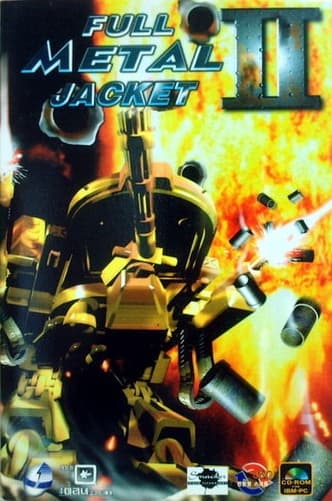
aka 풀 메탈 자켓 2
Full Metal Jacket 2 takes the top-down mecha combat of its predecessor and bumps the display up to SVGA resolution, but it also inherits a heavy barrage of enemy fire that leaves you nowhere to hide.
Launching this Korean top-down mecha shooter puts you right into a battlefield full of heavy ordnance and industrial metallic corridors. The original game made its mark earlier the same year, but this sequel upgraded the menus and crisp terrain art into higher-resolution SVGA modes. The higher pixel count gives you a clean overhead view of every aggressive automated turret, patrolling battle tank, and incoming energy shell across the map.
Having that extra screen space changes how you scout ahead. You can spot defensive turrets long before they roll into attack distance, giving you time to line up heavy artillery shots from maximum range. The trade-off is that enemy projectiles move just as fast across the wider field, turning large rooms into chaotic bullet-dodging zones where standing still for a couple seconds means total destruction.
The core momentum relies entirely on rapid movement and constant weapon cycling. Your heavy walking war machine moves with genuine mechanical weight, turning on a central axis as you sweep cannon fire through oncoming waves of hostile machines. It hits the classic notes of mid-nineties PC blasting, where survival relies on reading enemy spawn patterns and maintaining clear escape routes behind you.
The most defining mechanical quirk in this sequel comes from how its environment reacts to combat. In theory, a top-down tactical shooter rewards players who poke around concrete pillars, draw fire, and drop back behind sturdy walls to manage shield levels. Here, every wall segment, barrier, and piece of battlefield cover breaks down under direct gunfire.
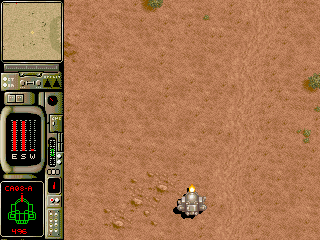
That destructible environment creates an unintended crisis during heavy firefights. Lead designer Kim Seongwan later pointed out this critical design oversight: because every obstacle and piece of cover on the map gets destroyed by incoming bullets, cover effectively ceases to exist after the first few seconds of an engagement. The moment an enemy squadron unloads a volley, the protective wall you were hiding behind crumbles into dust.
Instead of ducking behind bunker walls, you are forced to treat the game as a pure arena dodge-fest. When concrete barriers disintegrate into thin air, your only remaining defense is continuous movement and preemptive strikes. It creates a brutal skill curve where players expecting tactical cover shooting get shredded, while those who keep sliding across open floor tiles stand a fighting chance.
The story behind the production explains much of its aggressive design choices. Korean developer Mirinae Software and publisher KOGA pushed this sequel out in November 1996, capping off a busy period for the studio. Because Kim Seongwan was juggling management responsibilities across several studio projects at once, he did not write the source code for this entry personally.
Instead, another programmer built the game on top of Seongwan's existing core engine. That handover allowed the studio to deliver upgraded SVGA artwork and refreshed interface design rapidly, but it left little time to fine-tune damage values or terrain persistence. The result is a direct, unfiltered look at a customized DOS shooter engine pushed to its absolute limits without aggressive balance passes to soften the edges.
For fans exploring the broader catalog of nineties action games from East Asia, this release captures a distinct transition point. PC games were shifting away from standard 320x200 VGA displays into sharper 640x480 visuals, requiring engines to render far more detail without dropping frame rates during heavy explosions.
A typical run plunges you immediately into tight industrial complexes packed with automated defense systems. In the early stages, individual turrets can be picked off behind corners if you corner-peek carefully. By the second phase of a level, multi-directional crossfire forces you to circle-strafe through narrow hallways while your own weapon discharge tears away decorative floor elements and structural columns alike.
Managing weapon heat and ammo distribution demands constant attention. Basic rapid-fire cannons let you clear weaker foot-soldier bots, but taking down armadillo-class heavy tanks requires high-impact shells that blow out large sections of the surrounding landscape. If you aim carelessly near your own retreat path, you will vaporize the very barricades you needed for your escape.
This creates a bizarre, satisfying tension where the environment actively dissolves as a fight drags on. Winning a match usually leaves behind a completely flattened, open floor cleared of all architecture. It is demanding, occasionally unfair when enemy lasers cut through disintegrating walls, but intensely rewarding once you internalize the absolute necessity of non-stop footwork.
While the fragile environmental architecture catches many newcomers off guard, the sharp SVGA graphics and raw movement turn this into a tough challenge for top-down shooter fans. It is an uncompromising slice of mid-nineties DOS action programming that demands quick reflexes over careful turtle tactics.
You can play Full Metal Jacket 2 online free in your browser without setting up complex configuration files or managing old memory drivers. The crisp visual layout and rapid destruction of level scenery reveal themselves instantly the moment you fire your first salvo into an oncoming enemy patrol.
Full Metal Jacket 2 takes the top-down mecha combat of its predecessor and bumps the display up to SVGA resolution, but it also inherits a heavy barrage of enemy fire that leaves you nowhere to hide.
Launching this Korean top-down mecha shooter puts you right into a battlefield full of heavy ordnance and industrial metallic corridors. The original game made its mark earlier the same year, but this sequel upgraded the menus and crisp terrain art into higher-resolution SVGA modes. The higher pixel count gives you a clean overhead view of every aggressive automated turret, patrolling battle tank, and incoming energy shell across the map.
Having that extra screen space changes how you scout ahead. You can spot defensive turrets long before they roll into attack distance, giving you time to line up heavy artillery shots from maximum range. The trade-off is that enemy projectiles move just as fast across the wider field, turning large rooms into chaotic bullet-dodging zones where standing still for a couple seconds means total destruction.
The core momentum relies entirely on rapid movement and constant weapon cycling. Your heavy walking war machine moves with genuine mechanical weight, turning on a central axis as you sweep cannon fire through oncoming waves of hostile machines. It hits the classic notes of mid-nineties PC blasting, where survival relies on reading enemy spawn patterns and maintaining clear escape routes behind you.
The most defining mechanical quirk in this sequel comes from how its environment reacts to combat. In theory, a top-down tactical shooter rewards players who poke around concrete pillars, draw fire, and drop back behind sturdy walls to manage shield levels. Here, every wall segment, barrier, and piece of battlefield cover breaks down under direct gunfire.

That destructible environment creates an unintended crisis during heavy firefights. Lead designer Kim Seongwan later pointed out this critical design oversight: because every obstacle and piece of cover on the map gets destroyed by incoming bullets, cover effectively ceases to exist after the first few seconds of an engagement. The moment an enemy squadron unloads a volley, the protective wall you were hiding behind crumbles into dust.
Instead of ducking behind bunker walls, you are forced to treat the game as a pure arena dodge-fest. When concrete barriers disintegrate into thin air, your only remaining defense is continuous movement and preemptive strikes. It creates a brutal skill curve where players expecting tactical cover shooting get shredded, while those who keep sliding across open floor tiles stand a fighting chance.
The story behind the production explains much of its aggressive design choices. Korean developer Mirinae Software and publisher KOGA pushed this sequel out in November 1996, capping off a busy period for the studio. Because Kim Seongwan was juggling management responsibilities across several studio projects at once, he did not write the source code for this entry personally.
Instead, another programmer built the game on top of Seongwan's existing core engine. That handover allowed the studio to deliver upgraded SVGA artwork and refreshed interface design rapidly, but it left little time to fine-tune damage values or terrain persistence. The result is a direct, unfiltered look at a customized DOS shooter engine pushed to its absolute limits without aggressive balance passes to soften the edges.
For fans exploring the broader catalog of nineties action games from East Asia, this release captures a distinct transition point. PC games were shifting away from standard 320x200 VGA displays into sharper 640x480 visuals, requiring engines to render far more detail without dropping frame rates during heavy explosions.
A typical run plunges you immediately into tight industrial complexes packed with automated defense systems. In the early stages, individual turrets can be picked off behind corners if you corner-peek carefully. By the second phase of a level, multi-directional crossfire forces you to circle-strafe through narrow hallways while your own weapon discharge tears away decorative floor elements and structural columns alike.

Managing weapon heat and ammo distribution demands constant attention. Basic rapid-fire cannons let you clear weaker foot-soldier bots, but taking down armadillo-class heavy tanks requires high-impact shells that blow out large sections of the surrounding landscape. If you aim carelessly near your own retreat path, you will vaporize the very barricades you needed for your escape.
This creates a bizarre, satisfying tension where the environment actively dissolves as a fight drags on. Winning a match usually leaves behind a completely flattened, open floor cleared of all architecture. It is demanding, occasionally unfair when enemy lasers cut through disintegrating walls, but intensely rewarding once you internalize the absolute necessity of non-stop footwork.
While the fragile environmental architecture catches many newcomers off guard, the sharp SVGA graphics and raw movement turn this into a tough challenge for top-down shooter fans. It is an uncompromising slice of mid-nineties DOS action programming that demands quick reflexes over careful turtle tactics.
You can play Full Metal Jacket 2 online free in your browser without setting up complex configuration files or managing old memory drivers. The crisp visual layout and rapid destruction of level scenery reveal themselves instantly the moment you fire your first salvo into an oncoming enemy patrol.
The on-screen keyboard and gamepad mapping the browser player uses on a phone, a tablet or a controller, as opposed to the real keys above. $PRO members make their own in the player and share them here; anyone can pick one to play with.
Cheat codes, console commands and memory pokes for Full Metal Jacket 2 — each one verified and attributed.
Sign in to submitThe on-screen keyboard and gamepad mapping the browser player uses on a phone, a tablet or a controller, as opposed to the real keys above. $PRO members make their own in the player and share them here; anyone can pick one to play with.
Cheat codes, console commands and memory pokes for Full Metal Jacket 2 — each one verified and attributed.
Sign in to submit