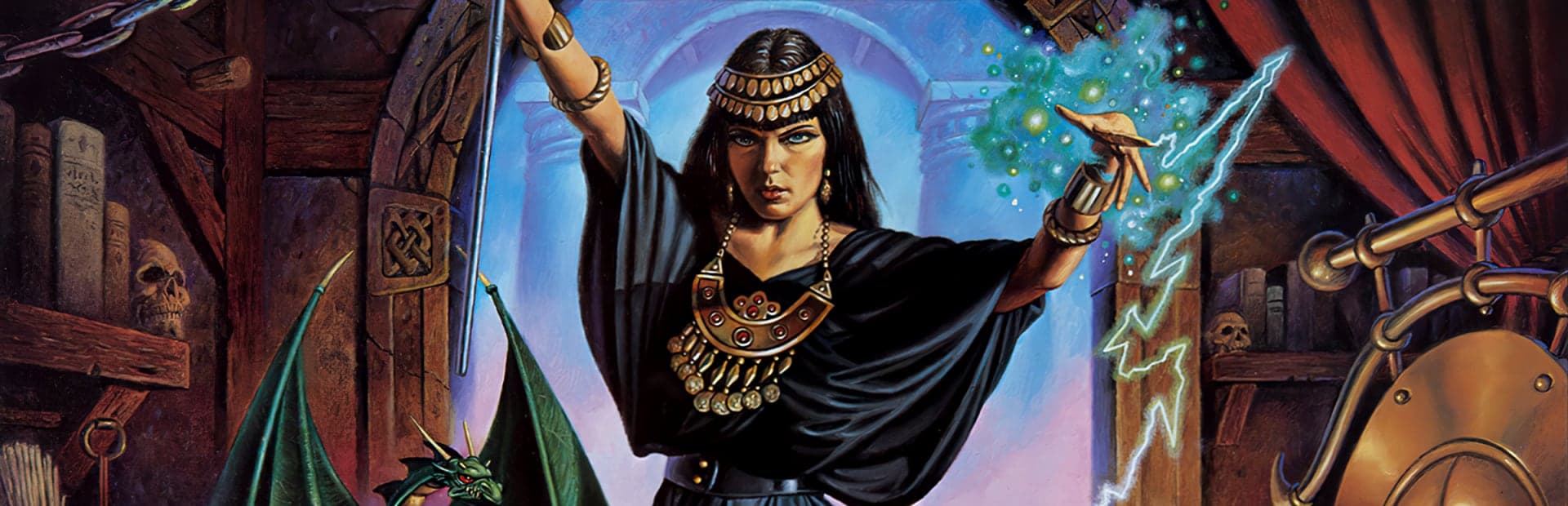
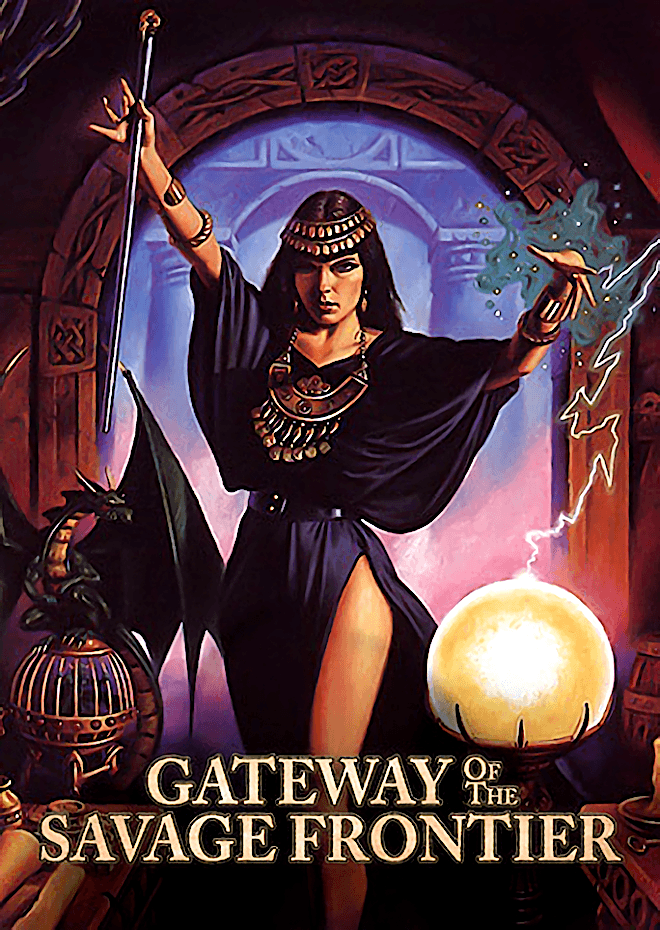
Gateway to the Savage Frontier
aka Beyond Pool
Rate this game
- Played a lot
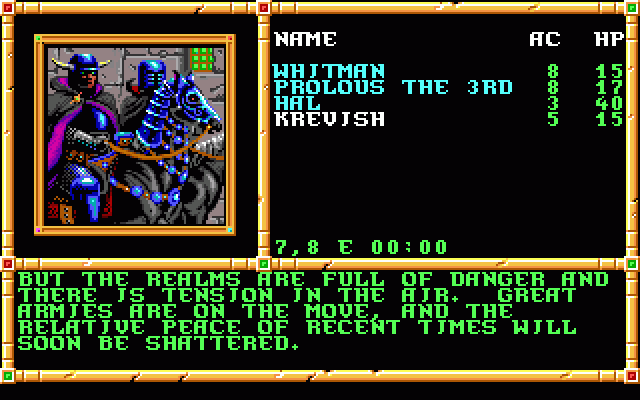
When you launch Gateway to the Savage Frontier, the familiar Gold Box interface greets you with a party build screen that immediately demands a full six-character AD&D roster before sending you into the northern reaches of Faerûn.
Why Beyond Software overhauled overland travel for this campaign
By 1991, Strategic Simulations, Inc. had spun off the development of their staple engine to Beyond Software, Inc. so internal teams could concentrate on building the Dark Sun technology. Beyond Software did not simply repaint existing assets from earlier releases; they adjusted the exploration loop by introducing a dedicated wilderness travel view across a broad world map. Instead of stepping tile-by-tile through endless, uniform forest squares in first-person, your party icons move across an overhead region map governed by standard AD&D wandering encounter rules.
That addition fundamentally altered how you planned trips between major settlements. Journeying from Yartar to Nesme, Everlund, or Citadel Adbar felt like an expedition through contested land rather than a chore inside a maze. You still got pulled into tactical top-down grid battles when wild beasts or Zhentarim raiding parties jumped your squad, but seeing the geography lay open before you made the Savage Frontier feel vast without losing the classic dungeon-crawl core.
Rolling a squad for the Anauroch threat
The central plot hinges on a clear menace: the evil Zhentarim organization is hunting for four magical statues capable of marching conqueror armies across the treacherous Anauroch desert. Stopping them requires standard role-playing preparation: rolling stats for fighters, clerics, thieves, and mages, fine-tuning alignments, and picking races that complement your frontline tactical needs. Specific character side-quests pop up throughout the campaign, giving individual party members distinct reasons to pursue certain leads.
The early game gets moving quickly once you pick up local leads, such as recovering a stolen magic longsword previously used to slay a griffon. Soon after, your investigations take you deep under cities into places like a hidden Kraken base beneath Yartar, complete with giant squid encounters that force you to reconsider tight-quarters positioning. Compared to earlier entries in the line, the difficulty curve leans toward an easy-to-moderate challenge, making squad management far less punishing for new players while offering slightly fewer white-knuckle tactical hurdles for veterans.
Progression relies on standard Gold Box bookkeeping, though the streamlined pacing helps avoid the worst administrative slogs. Here is how a typical mission loop unfolds:
- Gather clues and recruit key NPCs in towns through first-person exploration.
- Stock up on standard AD&D gear, restock spell slots, and buy healing supplies.
- Navigate the wilderness overland view, surviving random monster encounters along the route.
- Switch to tactical top-down grid combat to sweep enemy strongholds and claim plot artifacts.
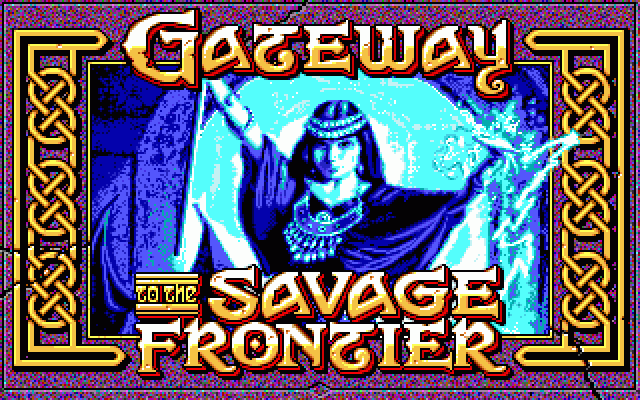
What worked and what felt worn out in Gateway to the Savage Frontier
When this 1991 release hit store shelves, contemporary reviewers split on whether the engine still had momentum. Publications like Génération 4 gave it a 78% rating and German magazine Power Play settled at 73%, acknowledging solid rule implementation. Conversely, Computer Gaming World columnist Scorpia dubbed it "standard Gold Box fare," reminding readers that anyone who had followed the series had essentially played this exact structure several times already. Ports on other systems fared far worse, with Amiga Format scoring its conversion down at 45% due to sluggish performance and rough presentation.
The fatigue was understandable, even if the underlying game was commercial fire. Gateway to the Savage Frontier reached the number one spot on North American computer sales charts in August 1991, a commercial surge that convinced Strategic Simulations, Inc. to request a direct sequel, Treasures of the Savage Frontier, despite early plans to retire the engine sooner. Furthermore, the design foundation created by Beyond Software, Inc. - who later rebranded as Stormfront Studios - served as the direct stepping stone for their work co-creating the original Neverwinter Nights online game with AOL.
Where the game hurts modern play is in its sheer volume of random encounters during long overland treks. Trudging across the map triggers batch after batch of low-level bandits and wild creatures, turning routine travel into a sequence of repetitive grid skirmishes. Yet when you enter a main quest zone or square off against an evil priest's contingent, the tactical engine demonstrates why it dominated PC gaming for years.
How to play this Gateway to the Savage Frontier MS-DOS game today
If you want a Gold Box title that respects your time better than Pool of Radiance while still delivering tight tactical combat, this chapter hits the sweet spot. It sacrifices some late-game brutality in favor of smoother exploration, creating an entry point that lets you test AD&D party synergies without needing a paper map and three notebooks just to track your position.
You can play Gateway to the Savage Frontier online right now, running this complete Gateway to the Savage Frontier free in your browser with no extra software required. Load up your party, roll high on your initiative checks, and clear out the Zhentarim threat before they secure the desert pass.
How Gateway to the Savage Frontier is played — the keys the game listens to, grouped by what they do.
- Movement
Highlighted keys are mapped — hover or tap one to see what it does.
Specific platform keybindings from the IBM Data Card were omitted from the source notes.
Players' controls
Touch and gamepad controls
The on-screen keyboard and gamepad mapping the browser player uses on a phone, a tablet or a controller, as opposed to the real keys above. $PRO members make their own in the player and share them here; anyone can pick one to play with.
Make your own touch controlsPRO
- 1Open the editorSign in below, then pick what to make. The game starts with the editor open over it.
- 2Place your keysAdd keys and drag them where your thumbs rest, or map a controller's buttons. Test plays the game with them; Save keeps them, and you play with them from then on.
- 3Share themShare them right after saving in the game, or name and share them here. Players vote, and the best become this game's controls for everyone.
Go PROSee how it worksSign in+20 XP for sharing · +50 XP if yours become the game's own
- The game's own controlsKeyboardGamepadWhat every player starts with.In use
2 screenshots
From the archive
No gameplay video yet
No gameplay video for Gateway to the Savage Frontier yet. Sign in to add one.
No reviews yet
Tell the community what you think of Gateway to the Savage Frontier. Reviews are public and tied to your username.
No archived manuals for Gateway to the Savage Frontier yet
No manuals archived for this title yet. Sign in to upload the first scan.
Cheat codes, console commands and memory pokes for Gateway to the Savage Frontier — each one verified and attributed.
Sign in to submitNo cheats yet for this title
Know a working cheat, poke or trainer? Add it with the button above. Moderators check every entry before it goes live.
No archived soundtrack for Gateway to the Savage Frontier yet
No soundtrack archived for this title yet. Sign in to upload the first rip.
No save states for Gateway to the Savage Frontier yet
No save states for this title yet. Sign in to share one.
Discussions
Sign in to post- Threads0
- Total posts0
- Online now6
Community · Gateway to the Savage Frontier
Who's contributing, and what's new
- Reviews0
- Threads0
- Uploadsapproved0
- Contributors0
Recent activity
Nothing here yet
Reviews, discussion threads and approved uploads appear here as members add them.