
Ghosts 'N Goblins
aka Makaimura
Rate this game
- Played a lot
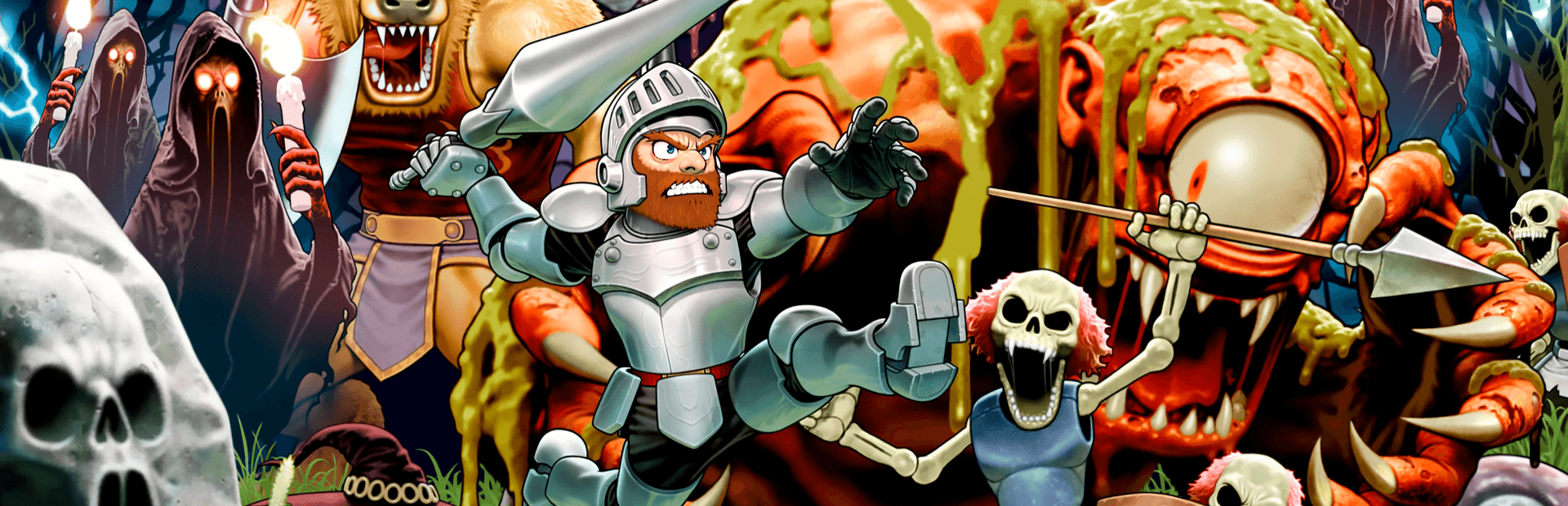
Playing Ghosts 'N Goblins means watching a brave knight named Arthur get stripped down to his polka-dot underwear the very second a rogue zombie grazes his shins.
The immediate terror of Ghosts 'N Goblins on PC
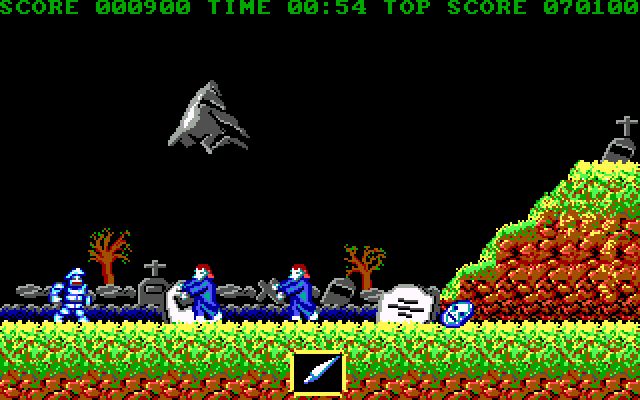
You start your journey in a haunted graveyard, tossing lances at emerging zombies while ravens swoop down from gnarled trees. Within seconds, you learn the core rule of survival: jump trajectories are locked the moment your boots leave the dirt. If you leap blindly over a pit, there is no mid-air steer to save you from colliding with a flying bat.
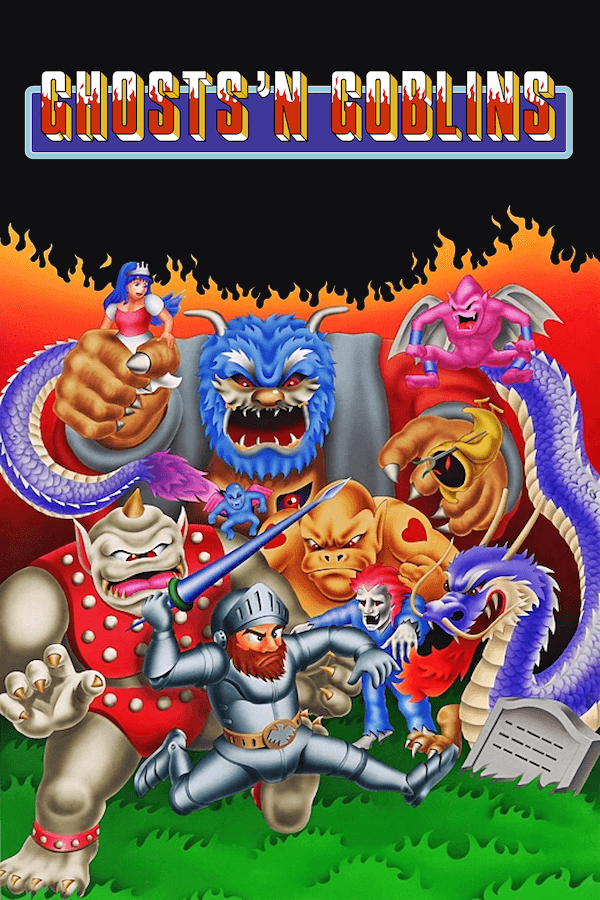
Arthur can only take two hits before he collapses into a pile of white bones. The first blow shatters his full suit of armor, leaving him to battle giant demons and ogres in his undersharts. It is a harsh mechanic, but it turns every chest pick-up into a high-stakes gamble between scoring a better weapon like the swift dagger or getting stuck with the treacherous torch.
Why the MS-DOS port breaks under pressure
Adapted by Pacific Dataworks International for Capcom U.S.A., Inc. in 1987, the MS-DOS version brings a unique set of technical hurdles. Instead of the smooth hardware scrolling found in arcades, this release relies on flick-screen transitions. Walking off the edge of the monitor instantly redrawns the stage, often spawning a red demon directly on top of your head before you can react.
The original MS-DOS game code also ties its timing straight to processor speed. If you launch it on modern hardware without throttling CPU cycles down to slow 386 speeds, Arthur moves like a blur and dies in milliseconds. Combine that hyper-speed sensitivity with basic PC-speaker bleeps and crude EGA color palettes, and you end up with one of the most brutal conversions on the platform.
Six stages of misery and the double-run trick
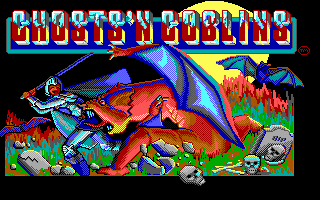
The game demands total mastery over six distinct stages, ranging from frozen ice mountains to burning castle ruins. Every level imposes a tight three-minute timer, forcing you to move forward even when the screen is crawling with ogres and flying goblins. If you prefer deliberate, tactical planning, that ticking clock will drive you wild.
Tokuro Fujiwara designed the game with a famously cruel twist that awaits anyone skilled enough to defeat the final boss. You cannot see the true ending on your first pass. The Demon King Astaroth simply casts a spell, sending Arthur all the way back to stage one to clear the entire game a second time on a higher difficulty.
- Infinite-ammo throwables: lances, daggers, axes, torches, and shields.
- Environmental hazards: moving platforms, fire pits, and breakable ladders.
- Stage variety: graveyards, forests, ice caverns, and demon castles.
How this conversion compares to arcade standards
As an action platformer, the core design created by Capcom Co., Ltd. remains brilliant beneath the port's rough edges. The weapon variety changes how you approach bosses, and the tight enemy patterns reward muscle memory. Yet contemporary reviews rightly blasted this PC release for its missing scroll mechanics and recycled boss encounters.
Compared to other 1987 arcade ports on PC, the lack of smooth movement makes an already punishing experience feel unfair at times. Missing a jump because the screen flipped right as you pressed the key is a special kind of frustration that original arcade players never had to suffer.
Play Ghosts 'N Goblins free in your browser today
Despite the severe difficulty spikes and flick-screen quirks, the game kicked off a series that spawned sequels like Ghouls 'n Ghosts and Super Ghouls 'n Ghosts. It is still a harsh test for anyone who wants to try their reflexes against the uncompromising design standards of the late eighties.
You can play Ghosts 'N Goblins online right now, right here in your browser with zero installation needed. Jump straight into the graveyard, try to keep Arthur's armor intact past the first wave of zombies, and see just how far those tight jump trajectories will carry you today.
Players' controls
Touch and gamepad controls
The on-screen keyboard and gamepad mapping the browser player uses on a phone, a tablet or a controller, as opposed to the real keys above. $PRO members make their own in the player and share them here; anyone can pick one to play with.
Make your own touch controlsPRO
- 1Open the editorSign in below, then pick what to make. The game starts with the editor open over it.
- 2Place your keysAdd keys and drag them where your thumbs rest, or map a controller's buttons. Test plays the game with them; Save keeps them, and you play with them from then on.
- 3Share themShare them right after saving in the game, or name and share them here. Players vote, and the best become this game's controls for everyone.
Go PROSee how it worksSign in+20 XP for sharing · +50 XP if yours become the game's own
- The game's own controlsNone yet: played with a real keyboard only.In use
2 screenshots
From the archive
No gameplay video yet
No gameplay video for Ghosts 'N Goblins yet. Sign in to add one.
No reviews yet
Tell the community what you think of Ghosts 'N Goblins. Reviews are public and tied to your username.
No archived manuals for Ghosts 'N Goblins yet
No manuals archived for this title yet. Sign in to upload the first scan.
Cheat codes, console commands and memory pokes for Ghosts 'N Goblins — each one verified and attributed.
Sign in to submitNo cheats yet for this title
Know a working cheat, poke or trainer? Add it with the button above. Moderators check every entry before it goes live.
No archived soundtrack for Ghosts 'N Goblins yet
No soundtrack archived for this title yet. Sign in to upload the first rip.
No save states for Ghosts 'N Goblins yet
No save states for this title yet. Sign in to share one.
Discussions
Sign in to post- Threads0
- Total posts0
- Online now6
Community · Ghosts 'N Goblins
Who's contributing, and what's new
- Reviews0
- Threads0
- Uploadsapproved0
- Contributors0
Recent activity