
● Preserved2026ActionBMG Interactive EntertainmentDOS
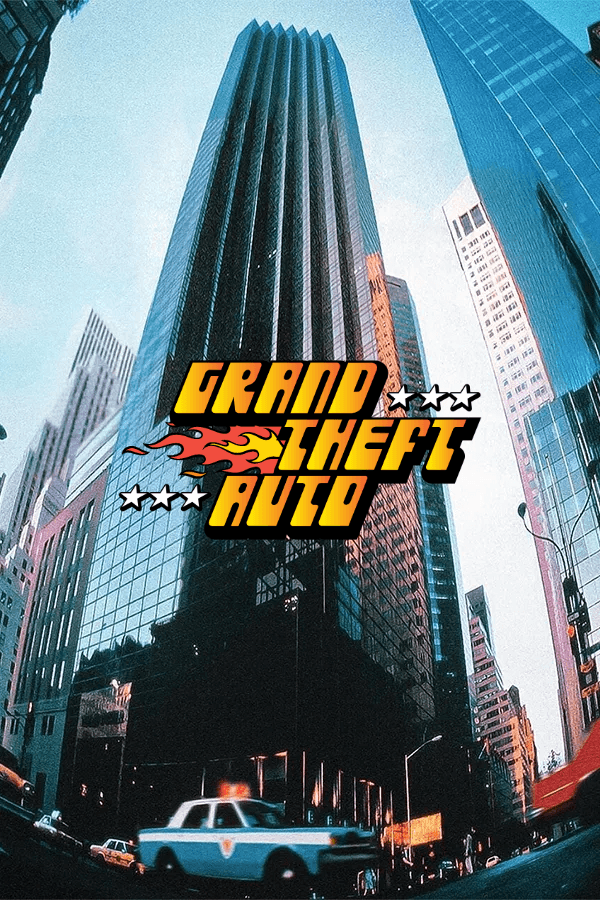
Grand Theft Auto
- No reviews yet·Be the first
- IDdg-0001
Play in browser
Streaming build
Ready to play
Preload in background
- Manuals
- —
- Soundtracks
- —
- Screenshots
- —
- Saves
- —
Before it became a three-dimensional pop-culture juggernaut, Grand Theft Auto was an improbable top-down sandbox that transformed PC gaming by turning open-world chaos into a high-stakes score attack.
How Grand Theft Auto turned design failure into systemic freedom
Long before player choice became a marketing buzzword, DMA Design Limited stumbled into an engine breakthrough by accident. The game began life as a dull police simulation prototype titled Race 'n' Chase, where players enforced traffic laws and pursued suspects across structured grid maps. Development stalled until a software glitch caused police vehicles to aggressively ram the player's car instead of pulling it over, creating frantic, unplanned pursuits that were far more entertaining than the original design brief.
Recognizing the spark in that chaos, the team reversed the core premise. Published by BMG Interactive Entertainment, the revised title stripped away traditional linear objectives and placed players in the role of a low-level criminal serving competing syndicates. Instead of funneling players toward a single exit door, the city itself became an active mechanical sandbox. You earned cash not merely by finishing missions, but by hijacking vehicles, navigating tight alleyways, and outrunning an increasingly hostile police force.
Scoring points and dynamic cameras in the Grand Theft Auto DOS game
Navigating the sprawling metropolitan areas of Liberty City, Vice City, and San Andreas demanded spatial awareness and constant risk management. The game presented its urban landscape from a bird's-eye perspective, utilizing a custom building renderer that scaled walls outward to simulate height. To manage sightlines at high speeds, the engine employed a dynamic zoom feature that pulled the camera upward as your car accelerated, giving you precious fractions of a second to react to oncoming traffic.
Progress was tied directly to a monetary goal required to unlock the next city map. Because dying or getting arrested wiped out your active score multiplier, staying alive was far more critical than blindly causing destruction. The structure relied on several key gameplay systems:
- Payphone assignments delivered by regional mob bosses for major payouts
- Dynamic camera scaling linked directly to current vehicle velocity
- Score multiplier bonuses that rewarded continuous survival during chaotic police chases
- Distinct redbook CD radio channels playing original rock, hip-hop, and pop tracks
Managing these systems made the original Grand Theft Auto DOS game feel surprisingly precise. Every corner turned at top speed carried genuine tension, as a single head-on collision with a police cruiser could ruin twenty minutes of careful multiplier building.
Why every contemporary Grand Theft Auto review missed the engine's ambition
When media outlets published a typical Grand Theft Auto review near launch, headlines focused almost exclusively on moral outrage and shock value. A notorious public relations campaign intentionally drew political criticism in parliament, turning media panic into millions of sales. Lost beneath the sensationalism was a genuine technical achievement: streaming dense urban geography, real-time pathfinding, and multi-channel audio off a single disc within modest MS-DOS hardware constraints.
While contemporary critics dismissed the 2D sprites as primitive compared to early 3D console offerings, the top-down perspective was vital to how the sandbox functioned. It allowed dozens of independent civilian cars and pedestrians to navigate intersecting roads simultaneously without crippling system memory. That technical compromise made Grand Theft Auto stand out among late-nineties action games, proving that world complexity mattered far more than visual polish.
How to play Grand Theft Auto free in your browser today
Stripped of thirty years of cultural baggage, the original entry remains a fast, relentless arcade driving title that rewards quick reflexes and smart navigation. You can play Grand Theft Auto online directly through your web browser, running the full MS-DOS release without needing complicated local setup files or manual emulator configuration. Experience the immediate, unvarnished origin of modern open-world design by launching the game right here on this page.
No gameplay video yet
No gameplay video for Grand Theft Auto yet. Sign in to add one.
No reviews yet
Tell the community what you think of Grand Theft Auto. Reviews are public and tied to your username.
No archived manuals for Grand Theft Auto yet
No manuals archived for this title yet. Sign in to upload the first scan.
Cheat codes, console commands and memory pokes for Grand Theft Auto — each one verified and attributed.
Sign in to submitNo cheats yet for this title
Know a working cheat, poke or trainer? Add it with the button above. Moderators check every entry before it goes live.
No archived soundtrack for Grand Theft Auto yet
No soundtrack archived for this title yet. Sign in to upload the first rip.
No save states for Grand Theft Auto yet
No save states for this title yet. Sign in to share one.
Discussions
Sign in to post- Threads0
- Total posts0
- Online now6
Community · Grand Theft Auto
Who's contributing, and what's new
- Reviews0
- Threads0
- Uploadsapproved0
- Contributors0
Recent activity
Nothing here yet
Reviews, discussion threads and approved uploads appear here as members add them.