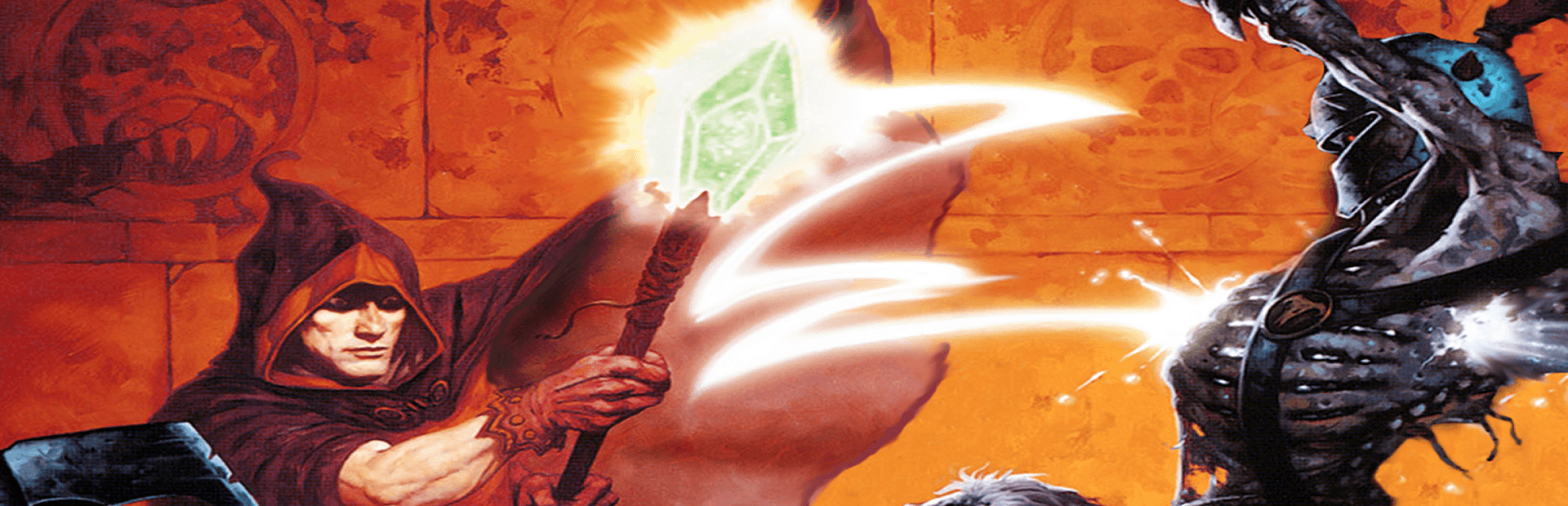
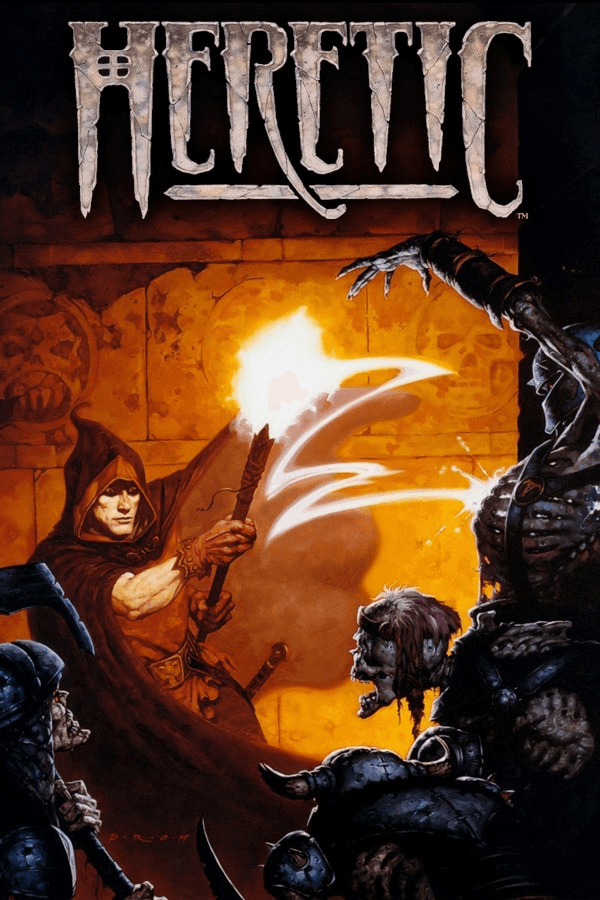
When Raven Software took the underlying technology of Doom and traded double-barreled shotguns for ethereal crossbows, they created Heretic, a dark fantasy shooter that let you store magical items, fly through cathedral rafters, and transform terrifying beasts into squawking chickens.
Most shooters in 1994 kept gameplay simple: you ran through corridors, picked up health packs the moment you stepped on them, and held down the trigger until everything stopped moving. Raven Software took that familiar foundation and added a layer of tactical choice by giving the protagonist, an elf named Corvus, a portable inventory. Instead of automatically consuming every potion or power-up on contact, you could carry Quartz Flasks for a mid-fight heal, hoard Mystic Urns for emergencies, or pocket a ring of invincibility until you stepped into a boss chamber.
That inventory system completely changed how you approached a room full of monsters. Stumbling into an ambush of Undead Knights or Ophidian serpent beasts no longer meant an immediate retreat down a narrow hallway. Pop a Tome of Power from your bag, and every weapon in your arsenal temporarily transforms into a devastating upgraded form. The basic Elven Wand begins shooting three streams of energy at once, the Hellstaff turns into a rain of acid overhead, and the Phoenix Rod converts from an explosive launcher into a high-powered flamethrower. That single item turned defensive panicking into a burst of aggressive, calculated power.
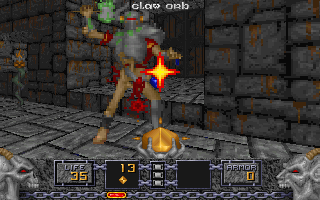
Because the game ran on a heavily modified version of id Tech 1, players naturally tried typing the cheat codes they had memorized from fighting demons on Phobos. The developers anticipated this immediately and built in brilliant traps for muscle memory. Typing the famous invulnerability string IDDQD instantly slays your character and prints a taunting message on screen, while inputting the full ammo code IDKFA strips away every weapon you carry and drops your ammo count to zero. To actually survive cheating, you had to learn the real commands, like typing quicken for god mode or rambo for full equipment.
The tech upgrades extended far beyond funny cheat responses. Raven modified the engine to allow players to look up and down, introducing vertical aiming long before true 3D engines became standard in action games. Environmental effects like flowing water currents actively pulled you toward hazard pits or pushed you off narrow stone ledges. Level designers also made clever use of ambient sound effects, using software tricks on Sound Blaster, Gravis UltraSound, and General MIDI hardware to drop echoing water drips and distant, mocking laughter into the background while you wandered dark halls.
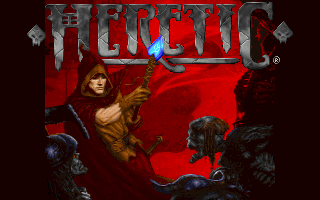
At release, some contemporary critics dismissed the experience as little more than a fantasy re-skin of id Software's flagship title, published by id Software, Inc. to keep players busy between major releases. That criticism ignores how differently encounters actually play out across the game's three original episodes: City of the Damned, Hell's Maw, and The Dome of D'Sparil. The combination of flying gargoyles, ghost variants of enemies that shrug off certain projectiles, and vertical level geometry demanded much more movement precision than flat corridor shooters required.
The Morph Ovum is hard to beat for crowd control. Throwing one into a dense group of iron-clad foes turns them into helpless chickens that hop around uselessly, allowing you to crush them with a single blow from your staff or simple boots. Combined with the Wings of Wrath item, which grants total freedom of flight across a level, combat arenas became vertical spaces where you could hover above magma pits to rain explosive fire down on D'Sparil's minions.
The design has a few annoying spots that drag down a long session. Navigating the late-episode levels frequently devolves into frustrating key hunts through sprawling stone mazes, where hidden switches disappear into dark walls. The vertical looking mechanism uses pitch-shearing rather than real perspective rendering, which distorts the view vertically and takes some getting used to. Running the original executable without tweaking source port configurations or emulation settings can also lead to erratic frame rates during heavy explosions.
Despite those occasional geometry headaches, the underlying speed, weapon variety, and clever inventory mechanics keep this dark fantasy adventure wildly entertaining today. Collecting a stack of power-ups and unleashing boosted spellfire into a crowded courtyard delivers a specific kind of arcade satisfaction that few modern shooters manage to replicate. If you appreciate retro level layout and crisp, responsive movement, taking on the Serpent Rider's army is well worth an evening of your time.
You can experience the complete Heretic MS-DOS game right here on this page. There is no software to set up and nothing to install, meaning you can play Heretic online free in your browser within seconds. Jump straight into the City of the Damned, grab the Ethereal Crossbow, and remember to use the cockadoodledoo code if you want to turn a screen full of gargoyles into barnyard poultry.
When Raven Software took the underlying technology of Doom and traded double-barreled shotguns for ethereal crossbows, they created Heretic, a dark fantasy shooter that let you store magical items, fly through cathedral rafters, and transform terrifying beasts into squawking chickens.
Most shooters in 1994 kept gameplay simple: you ran through corridors, picked up health packs the moment you stepped on them, and held down the trigger until everything stopped moving. Raven Software took that familiar foundation and added a layer of tactical choice by giving the protagonist, an elf named Corvus, a portable inventory. Instead of automatically consuming every potion or power-up on contact, you could carry Quartz Flasks for a mid-fight heal, hoard Mystic Urns for emergencies, or pocket a ring of invincibility until you stepped into a boss chamber.
That inventory system completely changed how you approached a room full of monsters. Stumbling into an ambush of Undead Knights or Ophidian serpent beasts no longer meant an immediate retreat down a narrow hallway. Pop a Tome of Power from your bag, and every weapon in your arsenal temporarily transforms into a devastating upgraded form. The basic Elven Wand begins shooting three streams of energy at once, the Hellstaff turns into a rain of acid overhead, and the Phoenix Rod converts from an explosive launcher into a high-powered flamethrower. That single item turned defensive panicking into a burst of aggressive, calculated power.
Because the game ran on a heavily modified version of id Tech 1, players naturally tried typing the cheat codes they had memorized from fighting demons on Phobos. The developers anticipated this immediately and built in brilliant traps for muscle memory. Typing the famous invulnerability string IDDQD instantly slays your character and prints a taunting message on screen, while inputting the full ammo code IDKFA strips away every weapon you carry and drops your ammo count to zero. To actually survive cheating, you had to learn the real commands, like typing quicken for god mode or rambo for full equipment.
The tech upgrades extended far beyond funny cheat responses. Raven modified the engine to allow players to look up and down, introducing vertical aiming long before true 3D engines became standard in action games. Environmental effects like flowing water currents actively pulled you toward hazard pits or pushed you off narrow stone ledges. Level designers also made clever use of ambient sound effects, using software tricks on Sound Blaster, Gravis UltraSound, and General MIDI hardware to drop echoing water drips and distant, mocking laughter into the background while you wandered dark halls.
At release, some contemporary critics dismissed the experience as little more than a fantasy re-skin of id Software's flagship title, published by id Software, Inc. to keep players busy between major releases. That criticism ignores how differently encounters actually play out across the game's three original episodes: City of the Damned, Hell's Maw, and The Dome of D'Sparil. The combination of flying gargoyles, ghost variants of enemies that shrug off certain projectiles, and vertical level geometry demanded much more movement precision than flat corridor shooters required.
The Morph Ovum is hard to beat for crowd control. Throwing one into a dense group of iron-clad foes turns them into helpless chickens that hop around uselessly, allowing you to crush them with a single blow from your staff or simple boots. Combined with the Wings of Wrath item, which grants total freedom of flight across a level, combat arenas became vertical spaces where you could hover above magma pits to rain explosive fire down on D'Sparil's minions.
The design has a few annoying spots that drag down a long session. Navigating the late-episode levels frequently devolves into frustrating key hunts through sprawling stone mazes, where hidden switches disappear into dark walls. The vertical looking mechanism uses pitch-shearing rather than real perspective rendering, which distorts the view vertically and takes some getting used to. Running the original executable without tweaking source port configurations or emulation settings can also lead to erratic frame rates during heavy explosions.
Despite those occasional geometry headaches, the underlying speed, weapon variety, and clever inventory mechanics keep this dark fantasy adventure wildly entertaining today. Collecting a stack of power-ups and unleashing boosted spellfire into a crowded courtyard delivers a specific kind of arcade satisfaction that few modern shooters manage to replicate. If you appreciate retro level layout and crisp, responsive movement, taking on the Serpent Rider's army is well worth an evening of your time.
You can experience the complete Heretic MS-DOS game right here on this page. There is no software to set up and nothing to install, meaning you can play Heretic online free in your browser within seconds. Jump straight into the City of the Damned, grab the Ethereal Crossbow, and remember to use the cockadoodledoo code if you want to turn a screen full of gargoyles into barnyard poultry.
How Heretic is played — the keys the game listens to, grouped by what they do.
Highlighted keys are mapped — hover or tap one to see what it does.
Set up for modern play: W A S D move, the mouse turns (this engine has no mouse look, so moving the mouse forward walks), left click fires. The arrow keys still turn. Ctrl and Alt are left free because the browser uses them (Ctrl + W closes the tab).
The on-screen keyboard and gamepad mapping the browser player uses on a phone, a tablet or a controller, as opposed to the real keys above. $PRO members make their own in the player and share them here; anyone can pick one to play with.
Cheat codes, console commands and memory pokes for Heretic — each one verified and attributed.
Sign in to submitHow Heretic is played — the keys the game listens to, grouped by what they do.
Highlighted keys are mapped — hover or tap one to see what it does.
Set up for modern play: W A S D move, the mouse turns (this engine has no mouse look, so moving the mouse forward walks), left click fires. The arrow keys still turn. Ctrl and Alt are left free because the browser uses them (Ctrl + W closes the tab).
The on-screen keyboard and gamepad mapping the browser player uses on a phone, a tablet or a controller, as opposed to the real keys above. $PRO members make their own in the player and share them here; anyone can pick one to play with.
Cheat codes, console commands and memory pokes for Heretic — each one verified and attributed.
Sign in to submit