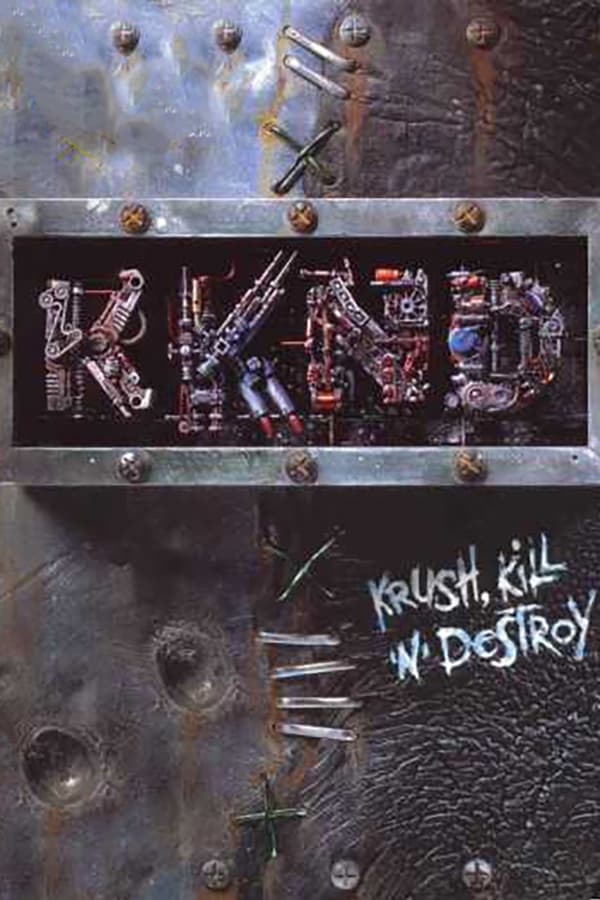
When Command & Conquer exploded in 1995, Melbourne studio Beam Software took one look at Westwood's RTS formula and decided to push the absurdity into overdrive with KKND: Krush Kill 'N Destroy.
Building a post-apocalyptic strategy game in 1997
In the wake of Westwood's successes, real-time strategy games were popping up everywhere, but Australian developer Beam Software wanted something louder. Lead designer Mark Morrison and producer Stuart Menzies leaned hard into B-movie tropes: nuclear war hits in 2079, hiding humanity underground while the surface mutates into a wasteland of savage beasts. By the time the underground Survivors emerge in 2140, the mutated Evolved view Earth's surface as their birthright.
Published by Melbourne House in early 1997, the game pitted high-tech military hardware against biological monstrosities. Cutscenes brought in live-action video actors hamming it up against pre-rendered backdrops, while composers Marshall Parker and David Briggs packed the audio with driving synth tracks. Behind the cheekiness, however, sat a strict grid-based strategy engine built around a single, desperate commodity: crude oil.
Pumping oil and managing unit queues in KKND: Krush Kill 'N Destroy
The economy in KKND: Krush Kill 'N Destroy strips away multi-resource complexities down to a single goal: build oil derricks on bubbling black spots, defend your tankers, and feed cash directly into your base engine. Every mission turns into a scramble to lock down these deposits before the enemy starves you out.
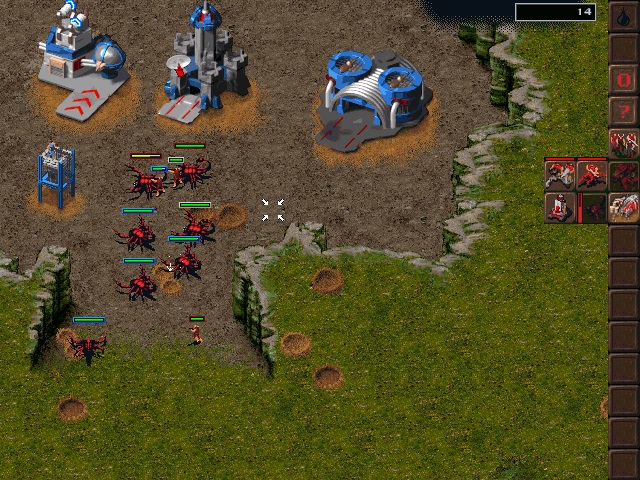
Where the game took a genuine step forward was its user interface. Instead of forcing you to click back on individual factories across the map to order troops, handy fly-out sidebar menus on the right edge of your screen let you queue infantry and armor from anywhere. You can manage base production while actively micromanaging a skirmish on the far side of the desert.
Base progression requires investing heavily into multi-stage building upgrades rather than merely spamming dozens of structures. Improving your headquarters unlocks wider visibility on the mini-map, while upgrading your armories unlocks heavier tech. However, the game enforces strict building limits that restrict full base expansions, forcing tight choices about where you place each depot and repair bay.
Mutants versus machines on the battlefield
Both 15-mission single-player campaigns offer distinct military flavors, even if their strategic goals often mirror each other:
- The Survivors: Rely on conventional military power, fielding mobile artillery, heavy tanks, machine-gun buggies, and armored transport vehicles.
- The Evolved: Deploy mutated wildlife transformed into living weapons, ranging from giant combat scorpions and dire wolves to towering war elephants armed with cannons.
- Veterancy System: Troops that survive combat earn experience, changing their health bar indicators from grey to blue and finally to red while boosting their speed and firepower.
Watching a veteran squad of Evolved giant scorpions shred incoming Survivor buggies highlights how satisfying unit progression can be. Veterans hit noticeably harder and take far more punishment, making it crucial to keep your seasoned units alive through long firefights.
Where the pathfinding stumbles and the AI relies on brute force
For all its personality, this strategy game carries flaws that frustrated players in 1997 and still irritate today. The computer AI is functionally simple, routinely ignoring tactical flanking in favor of swarming your perimeter in direct straight lines. Terrain elevation looks detailed, but high ground offers zero tactical advantages or damage multipliers in combat.
Unit pathfinding often struggles around tight chokepoints, causing heavy armor to line up single-file into enemy fire. The repair mechanics are equally punishing: fixing a heavily damaged tank takes forever and drains so much oil that you are almost always better off letting damaged units burn and replacing them outright. Add in the total absence of modern interface conveniences like control groups or customizable rally points, and micro-managing large armies becomes a constant battle against your own troops.
A gritty mid-nineties RTS you can launch right now
If you judge this against the absolute peaks of the nineties RTS boom, it sits firmly in the shadow of Westwood's biggest hits. Period reviewers were quick to point this out, with Computer Gaming World landing at 50% and GameSpot scoring it 6.2/10 for sticking closely to established genre formulas. Yet as an arcade-leaning tactical game with B-movie flair and aggressive skirmish design, it still packs plenty of fight.
You can play KKND: Krush Kill 'N Destroy online free in your browser right now, running the original KKND: Krush Kill 'N Destroy MS-DOS game with no setup required. Load up the Evolved campaign to test out the slick fly-out sidebar menu, build a pack of giant combat scorpions, and see how long your oil reserves hold against constant Survivor counter-attacks.