
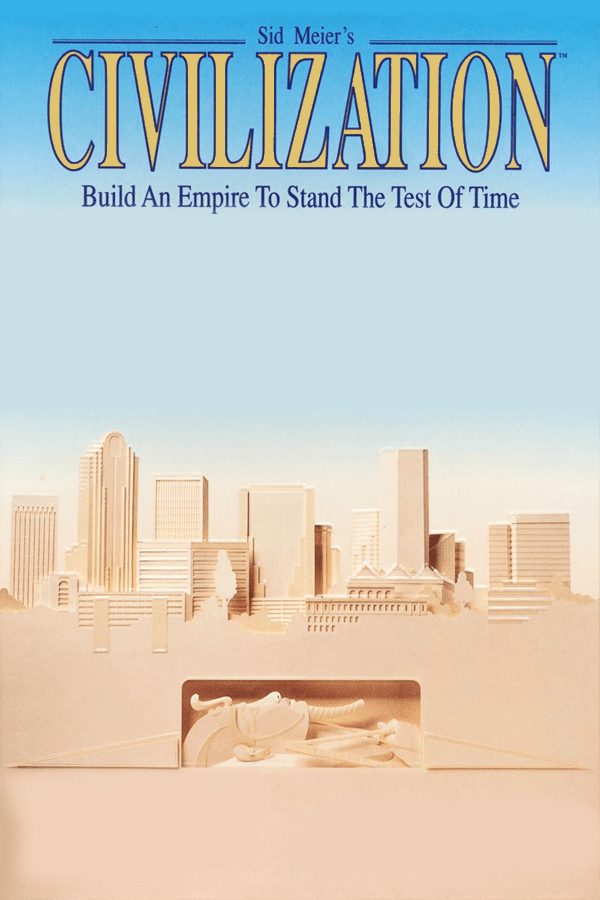
● Preserved1991Strategy / tacticsMicroProse Software, Inc.DOS
Sid Meier's Civilization
- No reviews yet·Be the first
- IDDG-0006
When Sid Meier's Civilization arrived on MS-DOS, it collapsed six thousand years of human progress, diplomacy, and warfare into a single addictive game board. By giving players command of an entire nation from prehistory to the space age, MicroProse established the template for grand strategy games.
How Sid Meier's Civilization turned macro history into a grand mechanical puzzle
Most strategy titles of the era confined players to specific battlefields or single city plots. Design lead Sid Meier and collaborator Bruce Shelley reconfigured that perspective, asking what would happen if a player governed every decision behind a nation's rise or fall over millennia. Published by MicroProse Software, Inc. and developed by MPS Labs in 1991, the title transformed abstract historical development into direct, turn-based play.
You begin in 4000 BC during the Stone Age with a single unit standing on unexplored terrain. From those humble origins, your ultimate objective is to guide your people into the XXIth century and establish dominance over the globe. Victory comes either through total military conquest, eliminating every competing empire, or by winning the technological race to launch a colony starship to Alpha Centauri before anyone else.
That colossal scale meant managing threats on multiple fronts simultaneously. While expanding across unknown continents, your nation faces hostile barbarian tribes along with rival historical civilizations competing for the same finite land. A early Sid Meier's Civilization review often highlighted how seamlessly the game balanced immediate survival against long-term historical ambitions.
Why city micromanagement forms the operational core of Sid Meier's Civilization
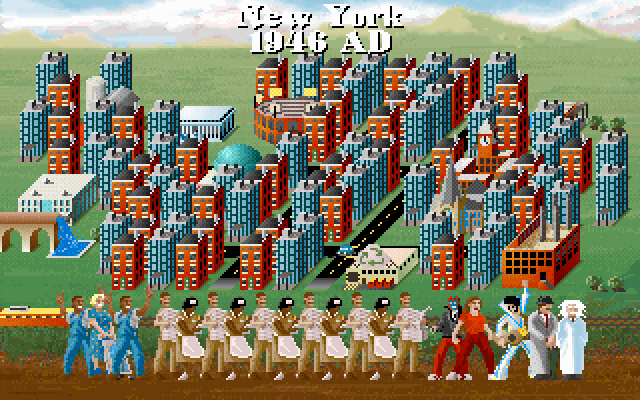
Every empire relies on its individual cities to survive and thrive. When you found a settlement, its citizens work the surrounding land tiles to gather three fundamental resources: food, production, and trade. Food sustains the population and allows the city to grow, while production powers the assembly of military units and municipal buildings.
Trade acts as the flexible economic currency of your empire. As leader, you adjust tax sliders to allocate trade revenue into gold for your treasury, scientific research for future inventions, or luxuries to keep the public content. Managing public mood is crucial, because if citizens grow too dissatisfied, the city plunges into civil disorder and ceases all production until order is restored.
While armies claim territory, specialized non-combat units handle the logistical work required to keep an empire running. Managing these specialized units effectively determines whether your economy thrives or stagnates during long campaigns.
- Settlers: Found new cities, construct roads to speed up troop movement across rough terrain, and improve surrounding tile yields through irrigation and mining.
- Diplomats: Travel to foreign cities to establish embassies, negotiate treaties, bribe enemy military forces into defecting, or carry out espionage and sabotage.
- Caravans: Establish long-distance trade routes between cities to boost municipal trade income, or deliver production capacity directly to speed up massive construction projects.
How technological progress in Sid Meier's Civilization creates unforeseen consequences
Scientific advancement drives every shift in gameplay phase. At the start, your scholars investigate basic concepts like Alphabet or Bronze Working, unlocking fundamental tools and early defensive units. By the end of the campaign, your research labs push into advanced fields like Computers and Robotics, fundamentally altering how your civilization functions.
New discoveries do not just grant stronger units or advanced city structures, they also introduce realistic operational hazards. Inventing the Automobile dramatically increases economic movement, but it also causes your citizens to generate industrial pollution. If severe pollution goes unchecked across the world map, it eventually triggers global warming, turning fertile farmland into barren desert.
A society's political structure dictates how efficiently it converts resources into power. You begin under Despotism, a harsh authority system that severely limits maximum tile productivity. To grow, you must trigger revolutions to transition into advanced forms of government, such as Monarchy, Republic, Democracy, or Communism, each offering distinct trade-offs between military authority, economic output, and citizen happiness.
Why single-build Wonders of the World defined high-stakes strategy
Beyond standard city structures like granaries or temples, ambitious leaders can direct their economic output toward Wonders of the World. These massive architectural achievements, including the Pyramids and the Hoover Dam, deliver game-changing global benefits to whichever empire completes them first. Because only one copy of each Wonder can exist anywhere in the world, starting a project becomes a nerve-wracking race against competing computer leaders.
Constructing a Wonder demands immense resource investments over dozens of turns, diverting production away from defensive armies and basic infrastructure. Making that sacrifice carries inherent risk, especially since certain technological breakthroughs render older Wonders obsolete over time. Successfully completing one right before a rival finishes theirs remains one of the most satisfying tactical steals in classic PC gaming.
Play Sid Meier's Civilization online in your web browser
Experience the landmark strategy game that started an entire genre directly in your browser window. You can play Sid Meier's Civilization online for free without installing local software or wrestling with manual configuration files. Modern browser emulation runs the complete Sid Meier's Civilization DOS game code smoothly inside a WebAssembly container, giving you instant access to the original 1991 MS-DOS experience.
Loading up this classic is worth it just to feel the high-stakes gamble of shifting your empire out of Despotism for the first time. Navigating that delicate political transition while managing border tension with aggressive foreign neighbors demonstrates exactly why this design captured minds for decades. You can launch Sid Meier's Civilization free in your browser right now and test whether your strategic instincts can guide a Stone Age tribe all the way to the stars.