L.A. Law: The Computer Game
Putting your legal skills to the test in L.A. Law: The Computer Game sounds like a sharp TV tie-in, but the real challenge is surviving its strict timers and stubborn investigation puzzles. Pick Jonathan Rollins, Abby Perkins, or Victor Sifuentes, gather your evidence, and fight for a partnership before the courtroom clock runs out.
Investigation in L.A. Law: The Computer Game turns legal work into a race against the clock
Most licensed titles from the early nineties tried to sell you action sprites, but this adventure game took a very different path. Released in 1992 by developer Synergistic Software, Inc. and publisher Capstone Software, it asks you to step into the shoes of high-profile defense attorneys. Your overall goal across eight distinct legal cases is simple on paper: collect facts, defend your clients, win guilty or not guilty verdicts, and earn a senior partnership at the firm.
The work begins at your desk during a timed pre-trial investigation phase. Every action you take consumes precious hours from the in-game calendar. You place phone calls, question reluctant witnesses, talk to private detectives, consult with your client, and read detailed police reports. Information you gather goes straight into your active case file. If you spend too much time chasing bad leads, you walk into court underprepared, and your client pays the price.
The first assignment, "The Wrathful Race," throws you directly into a vehicular homicide investigation involving a fatal car crash. You have to prove your client was not at fault before trial day arrives. Subsequent cases like "The Blown Whistler" and "The Battered Boy" increase the pressure by introducing complex chains of testimony where one missed call ruins your defense strategy.
Courtroom battles deliver the best drama on the DOS screen
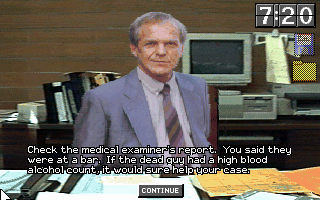
Once time runs out or you decide you are ready, the action shifts entirely to the trial phase. This is where the gameplay genuinely opens up. In court, you pick which witnesses to put on the stand, direct your questioning, and choose when to present physical items from your file.
Opposing counsel will push hard, forcing you to think fast on your feet. You can raise objections to unfair questions, request a temporary recess, call for a continuance, or even move for a mistrial when procedural errors occur. Contemporary write-ups in Compute! magazine pointed out how the digitized actor photos brought the TV cast into these court scenes, giving each cross-examination an authentic courtroom feel.
The choice structure in court feels active compared to the rigid office work. You can weigh the credibility of witness statements against physical evidence you uncovered earlier. If you prepared thoroughly, catching a lying witness on the stand gives you a genuine feeling of cleverness that few other PC titles of that year matched.
Trial-and-error logic makes case files feel like a chore
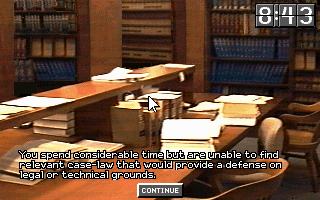
Despite the solid tension inside the courtroom, getting there often feels like a slog through administrative quicksand. The pre-trial phase suffers from extreme linearity and awkward interface design. If you do not click on the exact document or make calls in a specific secret sequence, you miss critical pieces of evidence needed for trial.
Retro gaming reviewers at Home of the Underdogs correctly noted that logic inconsistencies hamper the preparation stage. You might know a fact, but the game will not let you act on it until you click through every prerequisite dialogue node. This turns clever detective work into exhaustive trial-and-error menu navigation.
To make matters worse, long blocks of text scroll slowly across small UI boxes. You spend a lot of time reading dense legal jargon on low-resolution displays where important background items turn into grey pixels. When you fail a case because you missed an arbitrary clue buried in text block seven, repeating the whole case feels tedious.
digitized visuals and audio bugs affect the experience
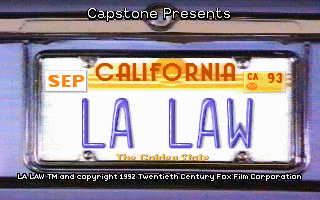
Visually, the game uses digitized static graphics based on cast photos from the television series. While seeing digitized faces of characters like Victor Sifuentes or Abby Perkins added show appeal back in 1992, the low resolution makes reading subtle background details difficult. Background graphics look mud-colored, and character portraits remain static during long conversations.
Sound support brings its own set of weird quirks. Players who ran the title on period Sound Blaster setups frequently ran into a fatal technical glitch: the game freezes completely whenever the office phone rings unless sound effects are turned off. Disabling audio fixes the crash, but it strips away ambient office noise, leaving you in complete silence while flipping through case files.
The mechanics break down into these core activities:
- Choosing your defense attorney from three show regulars at the start of the campaign.
- Managing a strict pre-trial clock while making phone calls and interviewing witnesses.
- Filing evidence and witness statements into your digital desk portfolio.
- Executing courtroom strategies through direct examination, objections, and motions.
Play L.A. Law: The Computer Game online right now
If you want to play L.A. Law: The Computer Game online, it runs straight in your browser today. You can test every case in this L.A. Law: The Computer Game MS-DOS game without digging through old system config files or troubleshooting digital sound bugs. It makes for an odd piece of software that both legal nerds and adventure game completionists will want to try once.
Getting to experience L.A. Law: The Computer Game free in your browser lets you jump straight into court without setup headaches. Fire up the first case, keep an eye on your prep clock, and see if you have what it takes to earn senior partner status at the firm.