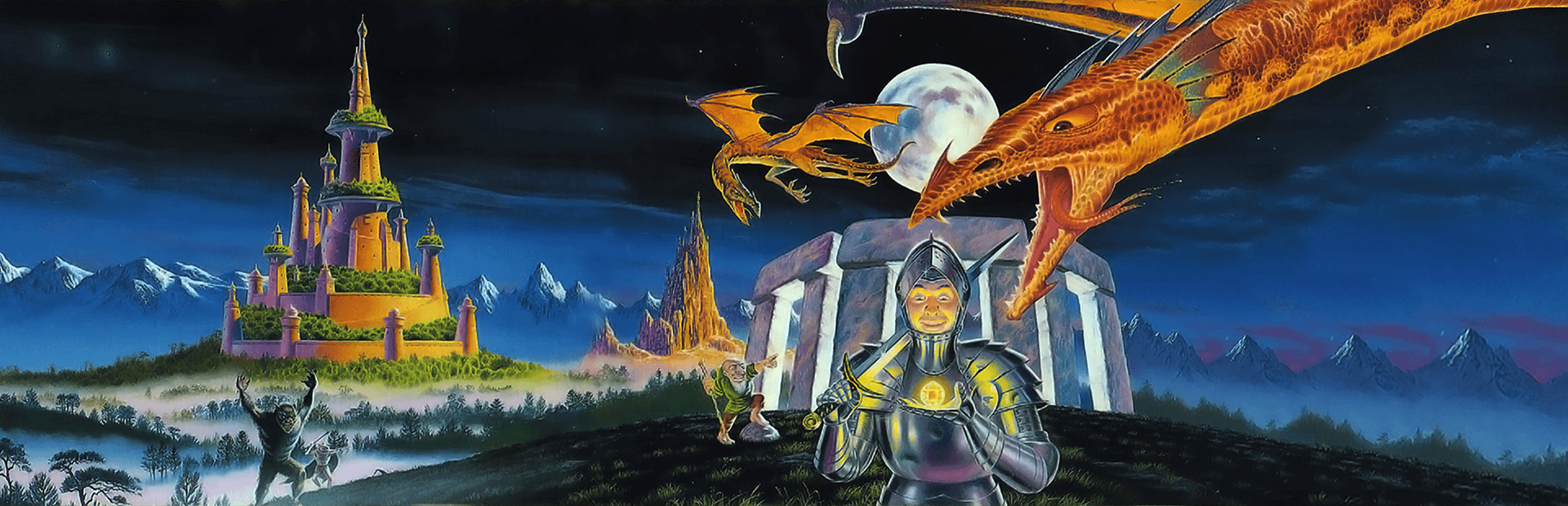
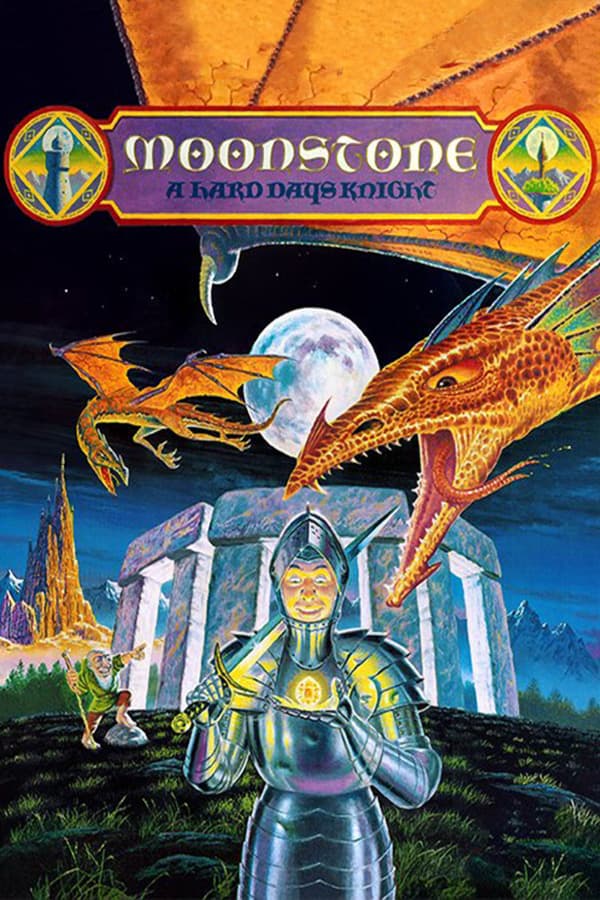

With its gruesome combat arenas and four-player map race, Moonstone: A Hard Days Knight was far too bloody for early nineties store shelves.
What happens when four knights compete for the same stone
You choose a knight and step onto an overland map divided into four distinct regions. Your goal is to gather four keys from lair battles, enter the Valley of the Gods, slay the Great Dragon, and return the sacred relic to Stonehenge. You do not travel alone, because up to three other knights are competing for the exact same reward. If you play solo, the computer controls your rivals on the board.
Every turn lets you march toward towns, mystic glades, or monster-infested cabins. Towns offer places to gamble your gold or buy magical equipment, including heavier armor and enchanted swords. Glades grant spells and useful scrolls to tilt the odds in your favor. Most of your time, however, is spent clearing combat arenas filled with lethal beasts.
When two knights land on the same map tile, the game shifts to a dual combat arena. The winner claims victory along with the defeated knight's gold and hard-earned gear. It creates constant tension as you weigh the danger of hunting beasts against the threat of getting ambushed by a rival player.
Monster clearouts, decapitations, and severe combat penalties
Entering a cabin drops you into a real-time side-view arena against multiple monsters. You have basic combat moves like thrusts, overhead chops, and sidesteps to stay alive. Trogs swing heavy hammers, Ratmen dart in with quick strikes, and Mudmen rise from beneath your feet. A single mistake against a mud beast leads to an instant death sequence, eating one of your lives immediately.
Clearing a lair leaves it empty, but dying after killing two beasts means the third remains on your next visit. That shared persistent state applies to every rival knight on the board. Enemies carry randomized loot, so high-risk monster dens reward successful runs with valuable gold and key items.
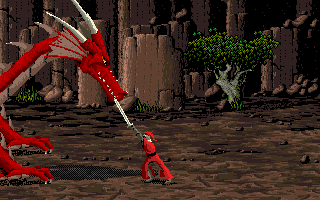
The violence was famous for a reason. Heads fly off shoulders, torsos split open, and blood splatters across the dirt backdrops. Mindscape International Ltd. pitched the game to console manufacturers, but Nintendo and Sega both turned it down over the gore. Major retail chains like Toys "R" Us refused to stock it, which hurt its commercial reach despite strong European magazine scores.
Where the single-player campaign stumbles
While human multiplayer matches are fast and ruthless, the single-player experience suffers from uneven design. The AI-controlled Black Knights have poor pathfinding on the world map. They frequently make baffling tactical choices, making human players far more dangerous than computer opponents. You end up breezing past rival knights only to get crushed instantly by a random beast encounter.
The DOS port by Images Software Ltd. brings its own set of rough edges. The original release lacks a built-in save feature entirely. A long session lost to a sudden Great Dragon breath attack forces you to start the whole journey over from scratch. That brutal lack of forgiveness walloped players back in 1992.
Audio card support, at least, covered every hardware setup for an action game. The game ran on basic PC Speakers, AdLib synth, standard Sound Blaster, or Roland hardware. Running digitized sound samples on a Sound Blaster required 400KB of EMS memory, which sent many players directly into their config files. The developers even included an option toggle in the menu to turn off decapitations and blood, though few players ever touched it.
How to beat the Guardian and claim the prize
Surviving long enough to collect all four keys is only the first half of the struggle. Once you possess the keys, you must make your way into the Valley of the Gods. A powerful Guardian guards the threshold, testing your combat timing and health pool before you even catch sight of the dragon.
- Build your knight's attributes early by grinding lower-level Trog dens for easy gold.
- Visit towns to upgrade your sword and purchase heavy armor before exploring deep swamp regions.
- Save scroll spells for rival knight encounters or the final beast encounters in the Valley.
- Defeat the Great Dragon in its lair to secure the stone, then sprint back to Stonehenge before rivals intercept you.
Despite repetitive single-screen arena loops, lead creator Rob Anderson built a distinct hybrid of board game strategy and brutal hack-and-slash action. The background art changes cleanly from misty plains to dark thickets, keeping the mood grim throughout. That European design approach feels entirely different from standard PC arcade conversions of the time.
Play Moonstone: A Hard Days Knight free in your browser
You can play Moonstone: A Hard Days Knight online right now without searching for old floppy disks or setting up EMS memory configs. The full DOS game runs free in your browser with no installation needed. Pick your color knight, try to survive your very first Trog encounter, and see how long your head stays attached to your shoulders.