Screenshot×81d ago
Polda
aka Polda aneb S poctivostí nejdřív pojdeš · Polda 1
Streaming build
Checking storage…392 MB
Preload in background
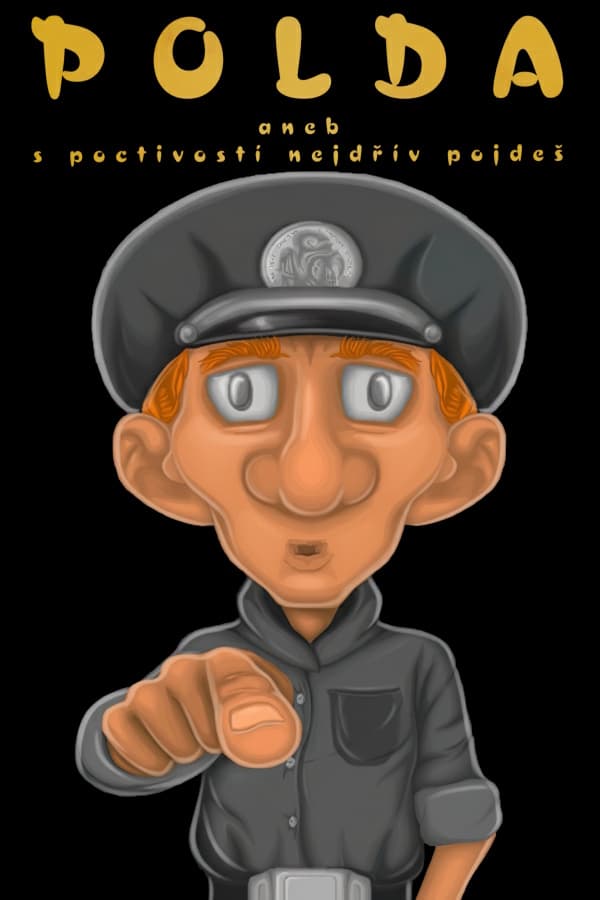
Playing Polda puts you in the worn boots of Pankrác, an extraordinarily clueless cop investigating a double kidnapping in the fictional village of Lupany. What starts as a routine missing-persons case quickly devolves into three days of cartoon absurdity, dark humor, and bizarre adventure logic.
SleepTeam turned local comedy into a full SVGA adventure
In the late nineties, the Czech PC gaming scene was flooded with localized translations of foreign titles, but native point-and-click games with full spoken dialogue were almost nonexistent. Developer SleepTeam and publisher ZIMA software set out to solve that problem by building a game anchored in distinctly local humor. They hired prominent comedy actors to voice the cast, giving the protagonist an unmistakable personality through comedian Luděk Sobota's bumbling performance.
The technical presentation relied on standard 640×480 SVGA graphics, pushing colorful 2D hand-drawn art onto DOS screens. Pankrác stumbles through 35 distinct locations populated by 45 interactive characters over the course of three in-game days. The voice track was the main selling point, marking the first time a local Czech development team delivered a fully voiced project with professional studio production values.
Bizarre adventure logic meets 35 cartoon locations
The core gameplay relies on traditional point-and-click mechanics where you move Pankrác around static background screens, pick up every loose object in sight, and talk to every local resident. Investigating the disappearance of innkeeper Jan Kostřáb and his sister Marie requires clicking through long dialog trees to uncover clues. Pankrác is far from a master detective, so most conversations revolve around his complete lack of common sense and the odd demands of the villagers.
Progress often grinds to a halt because of the puzzle design. Like many games in the adventure genre from that era, the inventory combination logic frequently defies real-world sense. You might find yourself trying every item on every interactive hotspot across multiple screens just to trigger a single script event. When a puzzle works, it lands a funny punchline, but when it fails, you are left clicking aimlessly on pixels until something happens.
Here is how a typical stretch of gameplay unfolds during Pankrác's investigation:
- Exhaust every dialogue option with a character to unlock a new location on the map.
- Sweep the new screen for small items hidden in the cartoon background art.
- Combine items in your inventory that have no logical connection outside of a comedy sketch.
- Use the absurd combined item on an unsuspecting village resident to trigger the next story beat.
Where the game shines and where the puzzles fall apart
The voice cast carries the entire experience, turning what would otherwise be a middle-of-the-road point-and-click game into something memorable. Hearing top-tier comedic talent deliver ridiculous lines with complete commitment gives the town of Lupany a lively, chaotic personality. The game also ends on a dark comedy twist that catches most first-time players completely off guard after hours of lighthearted slapstick.
What plainly fails to hold up is the structural fairness of the puzzles. Contemporary magazine reviews treated the title as an average effort precisely because the logic is so arbitrary. If you do not think like the scenario writer, you will hit solid walls where the only solution is exhaustive brute-force testing. Compared to other releases from 1998, the game prioritizes comedic setups over sound detective mechanics.
A legal split and commercial success
Despite critical reservations about its puzzle fairness, the game was a massive commercial success at home. It went on to become the best-selling video game in the Czech Republic in 1999, spawning a franchise that would span numerous sequels over the following decades. According to details documented on Wikipedia, the original team split from the publisher shortly after release.
A dispute over sales percentages broke out between SleepTeam and ZIMA software. SleepTeam lost the rights to the property, leaving ZIMA software to develop every subsequent entry in the series starting with the 1999 sequel. That business drama makes the original MS-DOS release a unique snapshot of a specific creative team working together for the only time on this cast of characters.
Why preserving the original MS-DOS release matters
While later ports brought the title to Windows XP and mobile operating systems, running the original 1998 MS-DOS binary reveals how much the developers squeezed out of standard hardware. Playing it with clean Sound Blaster audio output highlights the effort put into the voice recording and soundtrack, which were miles ahead of standard PC speaker setups from just a few years prior. Without accurate emulation, the precise timing of those voice lines and original SVGA color palettes get lost in translation.
Preserving catalog details like original box copy, manual notes, and native screenshots is vital for keeping digital history complete. This game marks the starting point of the longest-running adventure series in its region, making the original DOS code a valuable piece of software history. Retro enthusiasts looking for a late-nineties comedy adventure should track down the DOS release to see where Pankrác's bizarre police career began.
Players' controls
Touch and gamepad controls
The on-screen keyboard and gamepad mapping the browser player uses on a phone, a tablet or a controller, as opposed to the real keys above. $PRO members make their own in the player and share them here; anyone can pick one to play with.
Make your own touch controlsPRO
- 1Open the editorSign in below, then pick what to make. The game starts with the editor open over it.
- 2Place your keysAdd keys and drag them where your thumbs rest, or map a controller's buttons. Test plays the game with them; Save keeps them, and you play with them from then on.
- 3Share themShare them right after saving in the game, or name and share them here. Players vote, and the best become this game's controls for everyone.
Go PROSee how it worksSign in+20 XP for sharing · +50 XP if yours become the game's own
- The game's own controlsNone yet: played with a real keyboard only.In use
8 screenshots
Andy
No reviews yet
Tell the community what you think of Polda. Reviews are public and tied to your username.
No archived manuals for Polda yet
No manuals archived for this title yet. Sign in to upload the first scan.
Cheat codes, console commands and memory pokes for Polda — each one verified and attributed.
Sign in to submitNo cheats yet for this title
Know a working cheat, poke or trainer? Add it with the button above. Moderators check every entry before it goes live.
No archived soundtrack for Polda yet
No soundtrack archived for this title yet. Sign in to upload the first rip.
No save states for Polda yet
No save states for this title yet. Sign in to share one.
Discussions
Sign in to post- Threads0
- Total posts0
- Online now6
Community · Polda
Who's contributing, and what's new
- Reviews0
- Threads0
- Uploadsapproved8
- Contributors1
Recent activity