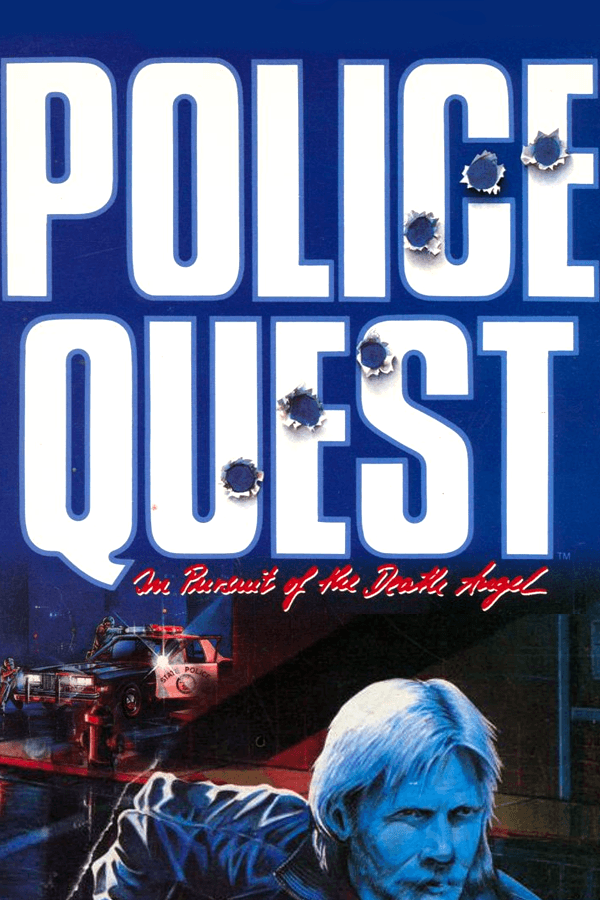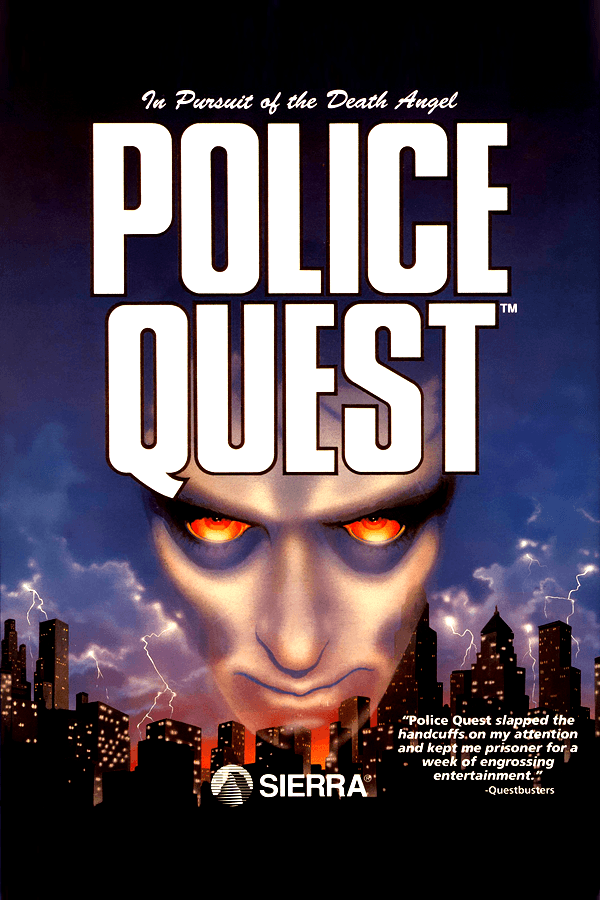
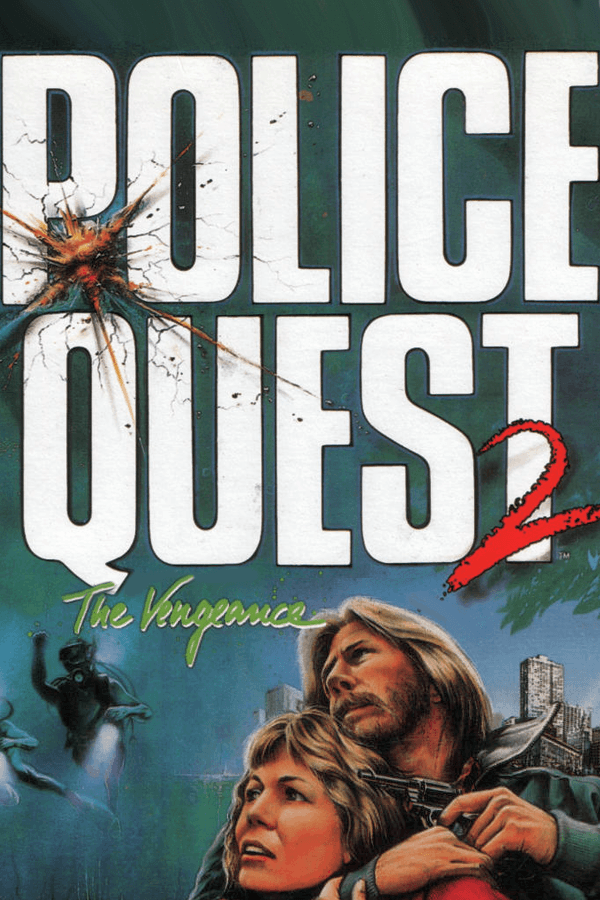
Playing Police Quest 2: The Vengeance means learning the hard way that skipping target practice in the first ten minutes will put a bullet in your chest three hours later. Designed by former cop Jim Walls, this 1988 procedural adventure punishes casual habits with strict police protocol and unrelenting dead ends.
Forget traditional adventure logic, Police Quest 2: The Vengeance demands strict police protocol
Most adventure games from the late eighties invited you to wander around, pick up every loose object, and try absurd item combinations until something clicked. Designed by veteran officer Jim Walls and published by Sierra On-Line, Inc., this game operates on a completely different set of rules. As Detective Sonny Bonds, recently promoted to the Lytton Police Department Homicide Division, your primary tool isn't lateral thinking, it is the department rulebook.
Before you even step out to investigate the escape of convict Jessie Bains, known as "The Death Angel," you have to go through proper pre-shift prep. That means opening your locker, grabbing your evidence kit, retrieving your service revolver, and walking down to the shooting range. If you skip sighting your gun on the target paper, adjusting the windage and elevation screws until your shot group is centered, the game will let you keep playing for hours. It won't warn you until the endgame shootout, where your shot strays, Bains kills you, and you realize your save game from three towns ago is useless.
Sierra built this installment on their original SCI engine, trading the manual driving mechanics of the first game for text-command navigation. Instead of steering your cruiser pixel by pixel through city streets, you sit in the car, tell your chain-smoking partner Keith where to head, and let the software handle the drive. That leaves you to focus on line-of-duty notes, computer database queries, and field investigations.
Forensics, scuba gear, and the deadly dead ends of Lytton
Tracking Bains takes you from the local crime scene at Cotton Cove to an airplane flight, the city of Steelton, and eventually into dark underground channels. At Cotton Cove, where Bains steals a car and kidnaps Sonny's fiancée, Marie Wilkans, standard police work takes over. You draw your camera, dust for fingerprints, and pour plaster casts into tire tracks. Skip a single step at the scene, and your case falls apart later when you need warrant details from the department computer.
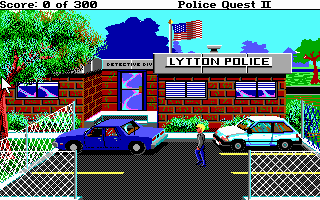
The game demands procedural thoroughness in every environment, including underwater sequences where you strap on scuba gear to search for evidence. Forget to check your air tanks before diving, and Sonny drowns midway through the search. The design treats negligence as fatal, forcing you to think like an officer on duty rather than a tourist collecting inventory items.
There are subtle rewards for poking into non-essential administrative work, too. Accessing Captain Kelly's computer office terminal allows you to pull up confidential personnel files. If you look up officer Lloyd Pratt, you can gather information that helps get him into a rehabilitation program, earning extra points for your final score.
Sound cards made the atmosphere, but the sewers bring silent death
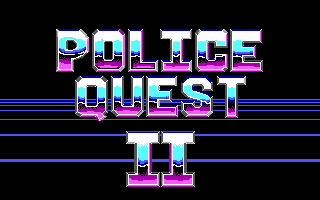
For PC owners in 1988, hearing Mark Seibert's synth score rendered on a Roland MT-32 or AdLib sound card was a revelation. While the PC speaker clicked out flat bleeps, card owners got cinematic background tracks that matched the tension of an autumn cop drama. The visual upgrade from earlier AGI titles was equally stark, featuring higher resolution art and 16-color palettes that made crime scenes look grounded.
Despite the audio and visual upgrades, the sequence everyone remembers with dread takes place in the dark sewers beneath Steelton. As you stalk Bains through concrete pipes, you face pockets of invisible methane gas. If you draw your gun, light a match, or move into a gas pocket without your mask and air supply active, the sewer explodes instantly. It is pure trial-and-error tension that ruined many initial playthroughs.
The claustrophobic sewer hunt is Sierra at their most ruthless, turning simple navigation into a nerve-wracking exercise in resource management.
Bugs, cheats, and easter eggs hidden behind Sierra parser prompts
Like many text-parser adventure games, programmers left behind oddities and secret commands. Entering the built-in debug mode allows you to type "gimme gimme" to spawn items or "tp" to teleport directly across room IDs. If you prefer legitimate exploits, a scoring glitch lets you dust Marie's ashtray repeatedly to accumulate points past the official 300-point ceiling.
Sierra's development team packed in plenty of internal humor to cut the grim tone of the murder investigation:
- Taking the airport escalator to the top level reveals Leisure Suit Larry hanging out in the background.
- Using the office telephone to call Sierra Customer Support gives a 30 percent chance of designer Al Lowe answering the line to pitch Leisure Suit Larry II.
- Dying in specific scenes displays a newspaper game-over screen featuring a photograph of King Graham from King's Quest IV.
- Examining a specific office desk triggers a text note stating it once belonged to Sierra founder Ken Williams before he relocated his workspace.
Visual glitches added their own chaotic flavor. Transitioning between location screens occasionally triggers a moonwalking animation bug where Sonny glides across the dirt sideways. Another famous glitch, known among fans as "Die Another Day," occurs if you change screens precisely as Bains shoots at you; Sonny walks into the next room unharmed, carrying a permanent bullet hole graphic rendered on his shirt until he draws his revolver.
Why you should play Police Quest 2: The Vengeance online today
As a classic Police Quest 2: The Vengeance MS-DOS game, the title captures a narrow window in computer gaming where realism and unforgiving adventure design merged. The requirement to save early and save often is absolute, but the detailed investigation steps and sharp police procedural flavor give it a grit that few contemporary titles matched. If you want to experience how Sierra pushed PC hardware toward true interactive drama, this case is still worth opening.
You can play Police Quest 2: The Vengeance online right now, running free in your browser with zero installation needed. Jump into Lytton's homicide division, make sure you calibrate your revolver sights on the firing range before touching your car keys, and see if you can bring down Jessie Bains without blowing yourself up in the sewers.