
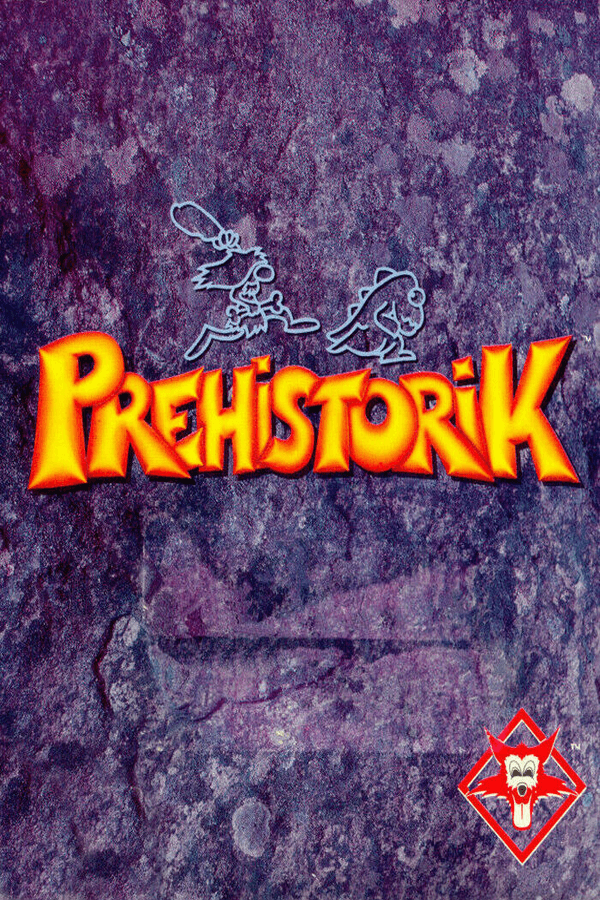

Prehistorik promised a cartoon caveman swinging a heavy club through vivid VGA landscapes, but sitting down with it reveals an arcade action platformer that is far more punishing than its playful artwork suggests.
Smashing primitive beasts in Prehistorik felt bolder than it played
When you launch Prehistorik, the immediate visual charm catches you off guard. Bright 256-color landscapes pop on screen, showing a club-wielding neanderthal marching across prehistoric wilderness. Nostalgia paints this as a carefree, bouncy adventure, but the reality of taking your first steps is a lesson in strict timing and brutal hitboxes.
The core objective seems straightforward enough: you must search hostile environments to gather enough food before the timer runs out. Some food sits quietly inside scattered caves, taking the form of fruit, meat, or odd anachronisms like ice cream cones. Most of your meals, however, are still walking around on two or four legs.

Hostile creatures roam every stage, including fire-breathing Pyro-Tax dragons, heavy Turtosauruses, and erratic Bad Bats. Knocking them down requires clubbing them repeatedly. Some beasts take up to five solid hits before they collapse, after which you must walk over their stunned bodies to add them to your food bar.
How Titus Software built a colorful DOS platformer in 1991
French studio Titus Software released this side-view platformer alongside publisher Titus Software Corporation in 1991. It shares a superficial similarity to Chuck Rock, though both titles were developed simultaneously in different countries. During this era, PC hardware lacked dedicated sprite-scrolling chips, making smooth side-scrolling action games difficult to engineer on standard PC setups.
The development team at Titus relied on clever tile manipulation and VGA display tricks to keep performance steady. The trade-off was a slower, deliberate movement speed for the main character. Rather than racing through levels like contemporary console platformers, your caveman moves with a heavy, measured pace that leaves little room for panicked dodges.
Audio hardware support was similarly split between basic PC speaker bleeps and rich Sound Blaster tunes. Hearing the energetic background tracks transforms the mood, making the tough action feel like a lively arcade challenge. You can read more background details on the game's official Wikipedia page.
The brutal hitboxes and frantic clubbing of a Prehistorik review
In any honest Prehistorik review, the weapon range is the first thing that demands discussion. Your default wooden club extends barely an inch past your character sprite. Because enemies walk toward you continuously, hitting a beast five times without taking contact damage requires rhythm and precision.
If you leave a knocked-out animal lying on the ground too long, it gets right back up and resumes its attack pattern. You have to strike quickly, land every blow, and immediately walk over the unconscious foe. To survive late stages, you must locate hidden caves containing weapon upgrades, like a heavy iron hammer that extends your reach.

Certain enemies cannot be defeated at all. The coconut-throwing monkeys perched high in trees are particularly fiendish, showering you with projectiles while remaining completely invincible. Navigating under these hazard spots while managing your level time limit creates genuine tension, forcing you to use collected bombs or jump-boost bonuses wisely.
Which bits survive and which bits send you hunting for cheats
The fundamental flow of exploring levels, uncovering hidden caves, and managing your food counter remains satisfying. Discovering extra lives, time bonuses, or an improved jump height gives you a fighting chance against tricky stage layouts. The even-numbered stages offer brief boss battles against giant creatures that break up the long platforming runs.
What fails to hold up is the extreme lack of forgiveness in combat collision. Taking damage resets your attack cadence, often trapping you in a loop where a single creature drains multiple health points. When a bad jump drops you onto an invincible monkey, reaching for a level password or infinite health cheat feels completely justified.
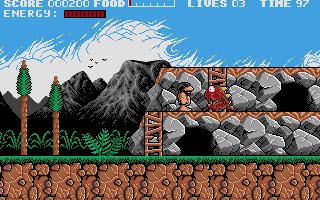
This 1991 Prehistorik MS-DOS game is best enjoyed by players who appreciate early PC platformer history and rigid arcade design. It offers great visual character, but it demands patience with its short attack range. Anyone expecting loose, forgiving controls will hit a wall quickly.
Why you should play Prehistorik online today
You can play Prehistorik online right now inside your Web browser. The emulation system runs the complete MS-DOS original through WebAssembly, delivering identical speed and crisp graphics directly on modern screens. You can experience Prehistorik free in your browser without installing extra files or tweaking configuration menus.
Jump into the first stage just to experience the satisfaction of finding a hidden cave, grabbing a hammer upgrade, and bashing a Turtosaurus for a full food bar. That short loop captures everything memorable about early Titus action games in a single quick session.