
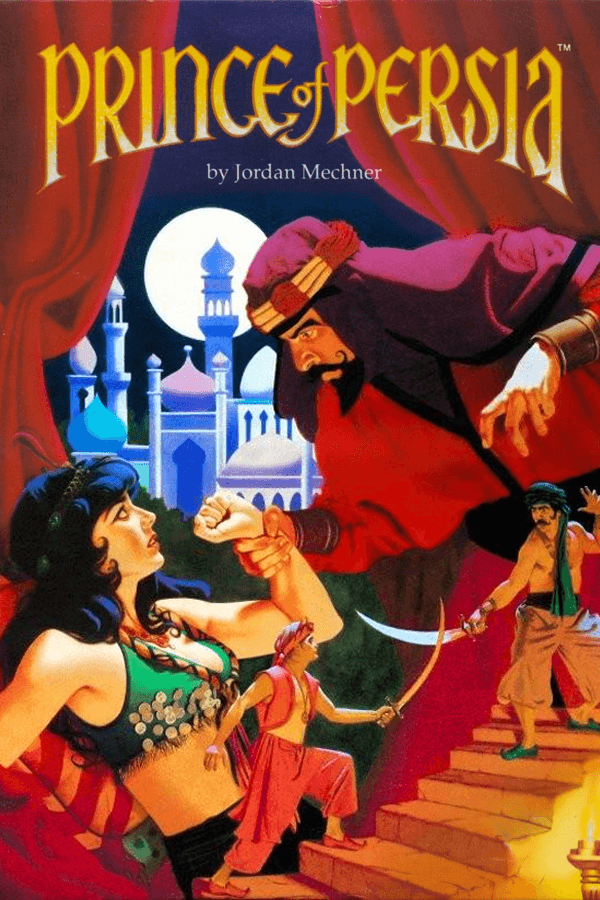

Playing Prince of Persia for the first time usually ends with a sharp drop onto steel spikes, because every jump carries real momentum instead of twitchy arcade float.
Prince of Persia replaces arcade float with physical weight
Most action games from 1990 let you change direction in mid-air, but Jordan Mechner built this dungeon around the laws of physics. To make the protagonist move like a human being, Mechner filmed his brother running and leaping in white clothes, then traced the video frames using rotoscoping. The result was revolutionary on DOS monitors, but it introduced a distinct delay between pressing a key and seeing the character respond.
When you tell the hero to sprint and jump, he takes a full stride to gather momentum before leaving the floor. If you press the key at the very edge of a pit, you will step clean off the ledge and fall to your death. Survival requires calculating your running distance two steps before you reach the drop, a requirement that caught endless PC players off guard.
The MS-DOS port managed to preserve these fluid animations down to the subtle animation of the hero hanging from a ledge by his fingertips. While other PC platformers offered instant directional shifts, this engine forced you to respect the weight of every stride and the lethal reality of gravity.
The continuous clock turns every death into real panic
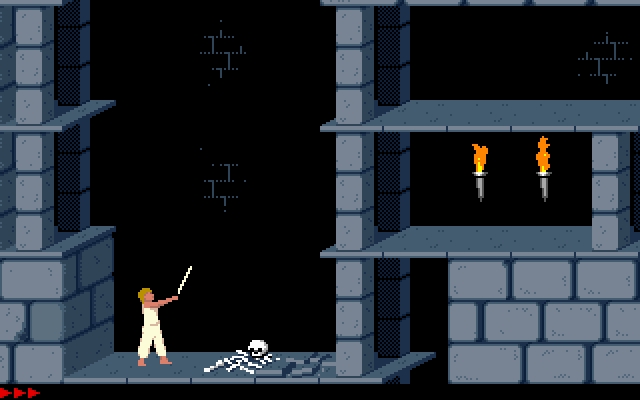
The core setup places you in a subterranean prison beneath the palace. Grand Vizier Jaffar has seized power while the Sultan is away, locking the Princess in a tower with a simple ultimatum: marry him within 60 minutes or die. You start in the depths with zero weapons, three health points, and a real-time countdown clock ticking down in the corner of the screen.
That 60-minute limit never pauses for anything. When you misjudge a leap, get skewered by hidden spikes, or lose a sword fight, the game resets you to the beginning of the current level, but the clock keeps ticking down through every single retry. There are no mid-level save points, so dying on the final screen of Level 6 means repeating the whole stage on an even tighter schedule.
Health management is just as strict. You begin with three potion bottles worth of life, replenished by small red jars scattered in hidden alcoves. Finding a large potion bottle permanently increases your maximum health capacity by one unit, which becomes essential once the guards start landing heavier hits in the upper levels.
Clever dungeon hazards break up the swordplay
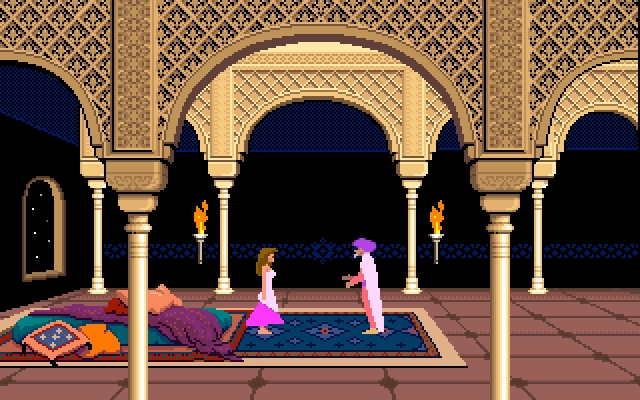
You spend Level 1 entirely unarmed, dodging loose floorboards and crawling under sliding grates until you secure a sword. Once armed, combat shifts into a tense dance of positioning and timing. Swinging wildly only leaves you open to a swift counter, so you have to step forward, draw your opponent into a strike, press parry, and strike back during their recovery recovery frame.
The architecture of the dungeon is as dangerous as Jaffar's royal guards. Portcullises drop shut when you step off triggering floor plates, forcing you to sprint through narrowing gaps before the iron bars strike the stone floor. Environmental hazards hit in predictable but deadly patterns:
- Collapsible floor tiles that drop you into lower pits or spike beds
- Spring-loaded steel floor spikes that impale anyone stepping on their triggers
- Aggressive palace guards who block high attacks and push you into corners
- A magical mirror that spawns an ethereal shadow duplicate of yourself
Audio design pulled its weight on period hardware. If you had an AdLib card, a Sound Blaster, or a Roland MT-32 module, the dark chords played during character deaths added genuine horror to a failed run, while a standard PC speaker rendered those same moments with sharp, alarming beeps.
What holds up and what infuriates modern players
When Brøderbund Software, Inc. brought the game to MS-DOS in 1990, early North American sales were modest, hovering around 7,000 copies on PC platforms. Overseas releases in Europe and Japan changed everything, turning the game into an international hit that ultimately topped two million copies worldwide and spawned decades of sequels.
What stings is the sudden spike in difficulty during the second half of the run. Guard AI becomes far more aggressive, parrying almost every swing and backing you into spike pits, while loose floors demand pixel-perfect leaps. If you grew tired of repeating the upper levels, launching the command line with PRINCE MEGAHIT (or PRINCE IMPROVED on later versions) unlocked the built-in debug mode, allowing players to jump levels using Shift + L.
Despite the rigid input buffer and unforgiving timer, the core mechanical loop remains masterfully constructed. The weight of the movement gives every jump high stakes, and clearing a level with only two seconds left on the clock yields a high that few platformers have ever matched.
Mastering the dungeon in your browser today
If you want to test your reflexes against Jaffar's traps, you do not need a vintage computer setup or original floppy disks. The tight sword combat, deliberate movement, and strict level design translated well across platforms, but the IBM PC release gives you the sharpest version of Mechner's vision.
You can play Prince of Persia online, free, right here in your browser, with nothing to install and no setup. Take a moment to get used to the movement delay on the first level before you attempt any high-speed running jumps over open spikes.