
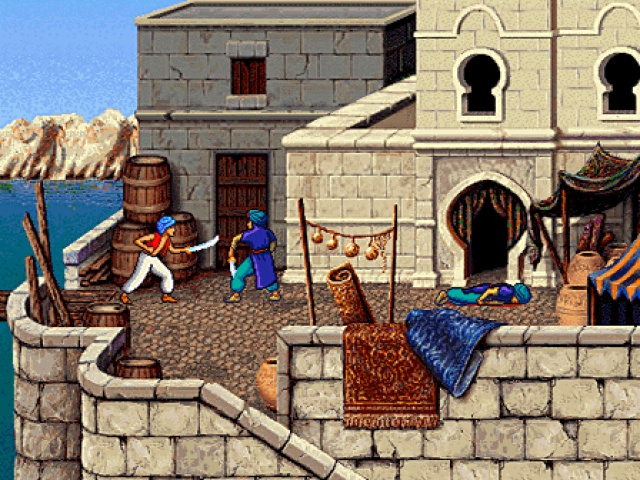
In Prince of Persia 2: The Shadow & The Flame, your leap across a crumbling rooftop feels like a cinematic victory until three guards corner you at once and your sword parry lags half a beat behind your keystroke.
Multi-enemy brawling changed the rhythm of Prince of Persia 2: The Shadow & The Flame
The original game was a tight, lonely exercise in spatial geometry where every screen felt like an isolation chamber with a single sword opponent. Designer Jordan Mechner and product manager Brian Eheler took a completely different path for this 1993 sequel, widening the stage from cramped palace dungeons to open beaches, cavernous ruins, and snake-infested caves. Instead of dueling one enemy at a time, you are routinely surrounded by desert raiders, skeleton warriors that pull themselves back together from piles of bones, and avian temple birdmen who aggressively close the distance.
That shift toward larger crowds forces you to adjust how you manage space. You cannot simply block and counterpunch when a second guard is positioning himself behind your back. The combat mechanics demand that you turn mid-fight to strike incoming attackers on both sides, managing your health points while watching the floor beneath you for loose tiles that drop without warning. It converts what used to be a delicate fencing match into a chaotic scramble where positional awareness matters far more than blind button tapping.
When everything clicks, clearing a room full of guards feels incredible. However, the rotoscoped animation engine that made the movement look so realistic on an Intel 80286 processor creates a distinct input delay during heavy fights. If you hit the attack key a split second late during a turn, your sword swing whiffing air leaves you completely open. It is a design where keypresses must be buffered ahead of time, which can frustrate anyone expecting modern, instant control registration.
Brøderbund pushed standard PC hardware to its limits with this release
From a presentation standpoint, Brøderbund Software, Inc. completely raised the bar for what a 256-color 320x200 VGA display could do. Art director Leila Joslyn designed detailed backdrops that made the Persian palace feel vast and alive compared to the monochrome brickwork of the past. Computer Gaming World even awarded it their 1994 Action Game of the Year, praising character animations so natural that they seemed almost impossible for a standard PC screen at the time.
The sound direction was equally ambitious. Composers Jonelle Adkisson and Tom Rettig crafted a dynamic soundtrack that responded directly to context, changing themes when hazards appeared or when health ran low. On high-end audio setups like a Roland MT-32 or a Sound Blaster Pro, the orchestral fanfares gave every escape a theatrical feel. Even if you were stuck playing on a basic IBM PC Speaker or Disney Sound Source, the audio drivers extracted surprisingly crisp metallic clashes and grunt effects from minimal hardware.
That visual upgrade paid off: the game sold around 750,000 copies worldwide. Anyone playing action games in 1993 remembers the opening horse escape and those dark temple ruins. It delivered atmosphere through pure sprite animation long before 3D cards came along.
Unforgiving difficulty spikes and flying floating heads test your patience
Despite the graphical leap, the level construction in this Brøderbund release features some of the most punishing traps in early nineties PC history. Certain level designs operate like spiteful puzzles where one wrong step locks you inside an inescapable chamber or drops a ceiling tile directly onto a timed pressure plate. It is shockingly easy to reach a dead end halfway through a level, forcing you to restart the entire stage because you triggered a gate mechanism out of order.
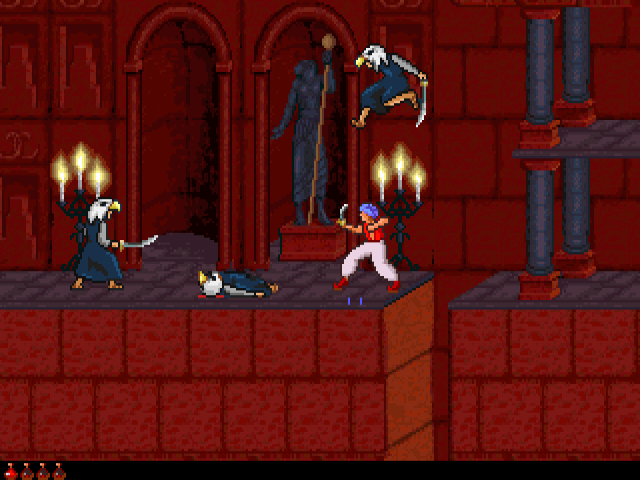
The enemy roster adds to the frustration as you push deeper into the journey. While skeleton warriors require specific positioning to knock into pits, the floating screaming heads are universally loathed by anyone who has attempted a complete run. They hover outside normal sword reach, swooping in with erratic hitboxes that drain your health potion reserves in seconds. Combined with tight time limits on gates, these encounters turn late-game stages into pure trials of trial-and-error memory.
To help navigate these cruel hazard layouts, the design team included distinct potion types that you must recognize on sight:
- Red Potions: Instantly heal a portions of lost life energy during long exploration runs.
- Large Red Potions: Expand your maximum overall life gauge, giving you extra hits against tough bosses.
- Blue Potions: Deadly poison bottles that immediately drain your health if consumed by mistake.
Shadow entity secrets, debug command lines, and the famous pre-release leak
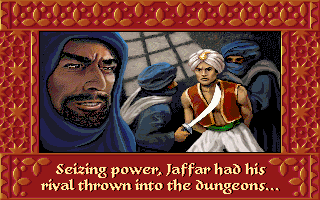
The central narrative twist involves the evil sorcerer Jaffar stealing the Prince's physical appearance, leaving the hero disguised as a homeless beggar who must reclaim his rightful throne. To overcome magical barriers in the dark temple, you must learn to leave your physical body behind and transform into a shadow or flame entity. Solving these late-stage spatial puzzles requires walking your ethereal form through magic force fields to hit hidden wall triggers before returning to your mortal body.
If the difficulty gets ridiculous, the DOS version still has Jordan Mechner's original developer cheats built in. Launch the executable from the command prompt with PRINCE YIPPEEYAHOO or PRINCE MAKINIT2 to turn them on. Once active, Shift + T adds energy bottles, K clears every guard off the current screen, Alt + N warps you to the following stage, and Shift + S turns you into your shadow form.
Longtime community members also remember the notorious Initial Release leak that circulated on bulletin boards and FTP servers before the retail boxes hit store shelves. This early version was missing key footstep sound effects and suffered from a hilariously broken guard artificial intelligence where enemy sprites would routinely walk off ledges to their death without even striking at the player. Fortunately, the retail version cleaned up those logic bugs, delivering the tough, polished experience that landed in shops in 1993.
Defeat Jaffar and reclaim your kingdom in your web browser
Modern emulators like DOSBox can occasionally throw sound timing glitches or freeze up if the sound card settings do not line up. You can skip the config screens entirely, though. The calculated swordplay and demanding jumps still hit hard if you like platformers where every step requires real timing.
You can play Prince of Persia 2: The Shadow & The Flame online right now directly on this page. Our setup runs the original Prince of Persia 2: The Shadow & The Flame MS-DOS game in VGA with full Sound Blaster audio. You can play Prince of Persia 2: The Shadow & The Flame free in your browser without installing anything or messing with config files, so jump in and see if you can survive Jaffar's traps.