

You start 1993's Return to Zork as an unnamed sweepstakes winner dropped into the Valley of the Sparrows with a telecommunication device and a camera, only to realize the local citizens keep mysteriously vanishing.
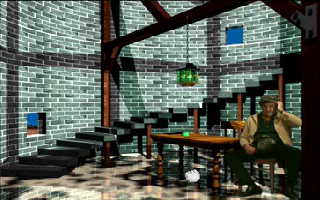
The central design decision behind this game was taking the uncompromising design of 1980s text parser adventures and wrapping it in full-motion video and pre-rendered 3D scenery. Produced under the Infocom label after Activision acquired the brand, it attempted to bridge two eras of PC gaming by giving traditional adventure game mechanics a cinematic camera perspective. You explore from a first-person viewpoint, panning your screen across pre-rendered locations while live actors talk directly into the lens.
Most graphic adventures of the early nineties were softening their edges to stop players from stumbling into unwinnable states, but this one doubled down on ruthless logic. If you act thoughtlessly in the opening fifteen minutes, you will pay for it six hours down the line. That clash between approachable multimedia presentation and unforgiving puzzle mechanics defines every moment you spend in the Great Underground Empire.
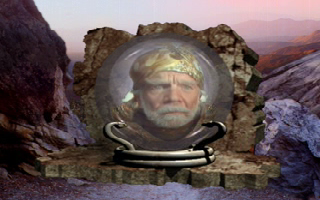
Instead of clicking standard verb buttons on an interface strip, you interact with the environment through a contextual action menu. Clicking an object brings up a ring of potential interactions, allowing you to slice things with your knife, illuminate dark corners with illuminyte, or experiment with gear in your inventory. You carry a tape recorder to log dialogue snippets and a camera to snapshot critical locations across West Shanbar, East Shanbar, and Snoot's Farm.
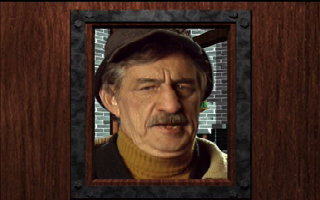
Conversations rely on an ambitious mood selector rather than simple dialogue trees. When speaking with characters played by actors like Sam J. Jones, Robyn Lively, or Jason Hervey, you pick whether to speak threateningly, politely, defensively, or awkwardly. Choosing the wrong tone turns an informant hostile, withholding vital clues or refusing to trade items you need to navigate the treacherous Whispering Woods.
Where most players ran straight into a brick wall was the game's silent tolerance for failure. If you burn an item you needed later, throw away a critical trinket, or kill an key character early on, the game lets you keep playing indefinitely without hint or warning. You will eventually hit a late-game roadblock against the final evil entity Morphius and realize you rendered the whole adventure unwinnable five hours prior.
Puzzle logic swings between oddball fantasy humor and total absurdity. To milk a cow, you must warm your hands over an open fire first; to bypass guards or solve the general store break-in puzzle, you have to execute precise sequences of actions that no standard logic predicts. There is even a famous easter egg where attempting to steal Pugney's box of bras triggers an immediate, absurd game-over screen.
Built using Activision's internal MADE engine, the game was a major technical undertaking for DOS PCs. The game shipped with physical collectibles that established the atmosphere before you loaded the software, including an abridged Encyclopedia Frobozzica and a fake sweepstakes winner notification letter. There was even a special edition co-produced with Sigma Designs that utilized their ReelMagic card for full-screen MPEG video playback.
Despite the real-mode DOS memory configurations that drove players crazy with custom boot disks, the game was a massive financial triumph. Selling over one million units by the end of 1995, it stabilized Activision's corporate finances following their reorganization. While purists raised on text parsers missed the mental pictures formed by descriptive prose, the broad market embraced its wild live-action presentation.
If you go into this adventure expecting modern safety nets, you will end up furious. Yet as a piece of early CD-ROM history, the absurd acting, weird humor, and ambient digitized music composed by Nathan Wang and Teri Mason give the Valley of the Sparrows an unmistakable atmosphere. It stands shoulder to shoulder with mid-nineties peers like Myst in its willingness to drop you into a surreal world and demand that you figure things out yourself.
The trick to enjoying this classic today is simple: keep multiple save files and treat every single item as sacred until you reach the credits. If you want to experience this Return to Zork MS-DOS game without fighting base conventional memory limits or sound card interrupt conflict screens, you can play Return to Zork online right now. You can jump into Return to Zork free in your browser with no setup required, pour a glass of rye, and see if you can outsmart Morphius on your own terms.
You start 1993's Return to Zork as an unnamed sweepstakes winner dropped into the Valley of the Sparrows with a telecommunication device and a camera, only to realize the local citizens keep mysteriously vanishing.
The central design decision behind this game was taking the uncompromising design of 1980s text parser adventures and wrapping it in full-motion video and pre-rendered 3D scenery. Produced under the Infocom label after Activision acquired the brand, it attempted to bridge two eras of PC gaming by giving traditional adventure game mechanics a cinematic camera perspective. You explore from a first-person viewpoint, panning your screen across pre-rendered locations while live actors talk directly into the lens.
Most graphic adventures of the early nineties were softening their edges to stop players from stumbling into unwinnable states, but this one doubled down on ruthless logic. If you act thoughtlessly in the opening fifteen minutes, you will pay for it six hours down the line. That clash between approachable multimedia presentation and unforgiving puzzle mechanics defines every moment you spend in the Great Underground Empire.
Instead of clicking standard verb buttons on an interface strip, you interact with the environment through a contextual action menu. Clicking an object brings up a ring of potential interactions, allowing you to slice things with your knife, illuminate dark corners with illuminyte, or experiment with gear in your inventory. You carry a tape recorder to log dialogue snippets and a camera to snapshot critical locations across West Shanbar, East Shanbar, and Snoot's Farm.
Conversations rely on an ambitious mood selector rather than simple dialogue trees. When speaking with characters played by actors like Sam J. Jones, Robyn Lively, or Jason Hervey, you pick whether to speak threateningly, politely, defensively, or awkwardly. Choosing the wrong tone turns an informant hostile, withholding vital clues or refusing to trade items you need to navigate the treacherous Whispering Woods.
Where most players ran straight into a brick wall was the game's silent tolerance for failure. If you burn an item you needed later, throw away a critical trinket, or kill an key character early on, the game lets you keep playing indefinitely without hint or warning. You will eventually hit a late-game roadblock against the final evil entity Morphius and realize you rendered the whole adventure unwinnable five hours prior.
Puzzle logic swings between oddball fantasy humor and total absurdity. To milk a cow, you must warm your hands over an open fire first; to bypass guards or solve the general store break-in puzzle, you have to execute precise sequences of actions that no standard logic predicts. There is even a famous easter egg where attempting to steal Pugney's box of bras triggers an immediate, absurd game-over screen.
Built using Activision's internal MADE engine, the game was a major technical undertaking for DOS PCs. The game shipped with physical collectibles that established the atmosphere before you loaded the software, including an abridged Encyclopedia Frobozzica and a fake sweepstakes winner notification letter. There was even a special edition co-produced with Sigma Designs that utilized their ReelMagic card for full-screen MPEG video playback.
Despite the real-mode DOS memory configurations that drove players crazy with custom boot disks, the game was a massive financial triumph. Selling over one million units by the end of 1995, it stabilized Activision's corporate finances following their reorganization. While purists raised on text parsers missed the mental pictures formed by descriptive prose, the broad market embraced its wild live-action presentation.
If you go into this adventure expecting modern safety nets, you will end up furious. Yet as a piece of early CD-ROM history, the absurd acting, weird humor, and ambient digitized music composed by Nathan Wang and Teri Mason give the Valley of the Sparrows an unmistakable atmosphere. It stands shoulder to shoulder with mid-nineties peers like Myst in its willingness to drop you into a surreal world and demand that you figure things out yourself.
The trick to enjoying this classic today is simple: keep multiple save files and treat every single item as sacred until you reach the credits. If you want to experience this Return to Zork MS-DOS game without fighting base conventional memory limits or sound card interrupt conflict screens, you can play Return to Zork online right now. You can jump into Return to Zork free in your browser with no setup required, pour a glass of rye, and see if you can outsmart Morphius on your own terms.
aka Return to Zork: An Epic Adventure in the Great Underground Empire · Return to Zork: Ein episches Abenteuer im großen Reich der Unterwelt · Return to Zork: Une aventure héroïque dans le Grand Empire Souterrain · RtZ
How Return to Zork is played — the keys the game listens to, grouped by what they do.
Highlighted keys are mapped — hover or tap one to see what it does.
Main interaction and navigation are performed via point-and-select mouse control. Keyboard function keys handle system menu, quick save/load, and repeating text.
The on-screen keyboard and gamepad mapping the browser player uses on a phone, a tablet or a controller, as opposed to the real keys above. $PRO members make their own in the player and share them here; anyone can pick one to play with.
Cheat codes, console commands and memory pokes for Return to Zork — each one verified and attributed.
Sign in to submitHow Return to Zork is played — the keys the game listens to, grouped by what they do.
Highlighted keys are mapped — hover or tap one to see what it does.
Main interaction and navigation are performed via point-and-select mouse control. Keyboard function keys handle system menu, quick save/load, and repeating text.
The on-screen keyboard and gamepad mapping the browser player uses on a phone, a tablet or a controller, as opposed to the real keys above. $PRO members make their own in the player and share them here; anyone can pick one to play with.
Cheat codes, console commands and memory pokes for Return to Zork — each one verified and attributed.
Sign in to submit