
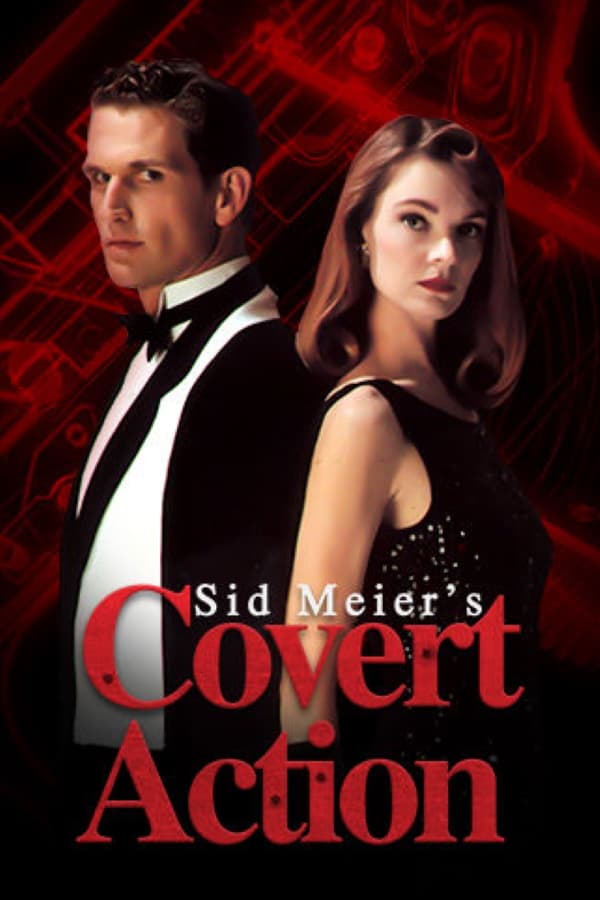

In Sid Meier's Covert Action, you step into the shoes of CIA agent Max Remington to untangle international terrorist plots across four distinct mini-games that run simultaneously against a ticking clock.
Tracing conspiracies from wiretaps to shootouts in Sid Meier's Covert Action
Before designing world-conquering strategy engines, Sid Meier and Bruce Shelley attempted to capture the entire life of an intelligence operative. Released for 1990 on PC by MPS Labs and MicroProse Software, Inc., the game gives you a grid of suspects, a list of active cases across the Americas, Europe, and the Middle East, and a clock that never stops ticking.
You choose between play style alter-egos Maximilian or Maxine "Max" Remington. Your job is to catch 26 different masterminds over a campaign, but you rarely start a case knowing who is at the top. Instead, you pick up a tiny thread, like an intercepted radio burst in Vienna or a suspicious car idling in Cairo, and start pulling.
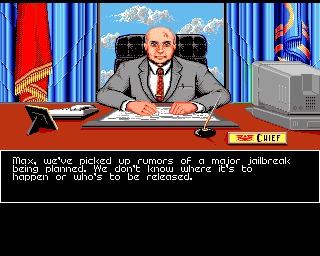
A typical case starts at a regional map. You drop into a city, check into a safehouse, and decide how to spend your next four hours. If you rush a building without preparation, you might kill a low-level courier who possessed the only copy of an encrypted codebook. If you spend three days listening to wiretaps, the target might package the contraband and fly to another continent before you ever dispatch a tailing team.
Four games fighting for your attention at once
The core structure consists of four distinct sub-games, each testing a completely different skillset. You spend half your time solving spatial puzzles and the other half managing top-down gunfights in tight corridors.
- Wiretapping: Routing electrical current through a circuit board to tap audio lines while bypassing alarm nodes that trigger security alerts.
- Codebreaking: Deciphering secret messages captured from enemy transmissions using letter-substitution ciphers.
- Tailing suspects: Following target vehicles through city streets on a top-down street grid without getting spotted or losing them in traffic.
- Safehouse break-ins: Infiltrating enemy headquarters in real-time to snap photos of documents, plant bugging devices, or execute arrests.
The top-down infiltration sequences play like a tense action game. Equipped with a silenced pistol, an Uzi, and three types of grenades, you move quietly through hallway networks while searching desk drawers. Making noise brings armed guards down on you fast. If you get pinned in a room, throwing a gas grenade toward the doorway gives you just enough room to slip past, grab the blueprints off the desk, and hit the escape vehicle before backup arrives.
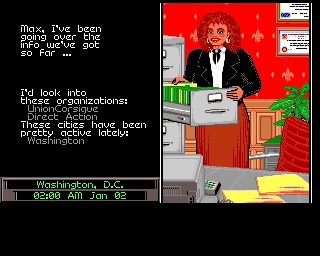
On standard PC speaker audio, the alarm pings sounded harsh, but if you ran the game on a Sound Blaster, AdLib, or Roland LAPC-1 card, Jeff Briggs' score added genuine tension to those quiet desk searches. Every creak of a floorboard during an infiltration felt dangerous.
Why Sid Meier abandoned this design pattern forever
When computer gaming magazines reviewed the title upon release, the reception was largely warm. Computer Gaming World praised the balance of action with what they called "mind-twisting brainwork," even while noting that the original manual offered poor documentation for several key mechanics. First-time players frequently found themselves staring at the wiretapping board without any idea which colored chips routed power and which ones tripped the silent alarm.
Despite the positive reviews, Meier himself realized something was wrong with the structure. The design forced players to switch gears constantly, abandoning high-level tactical planning to solve a five-minute cryptogram or play a real-time car-tailing segment. This led to what game designers now cite as the "Covert Action Rule": a designer should never combine two completely different, deep games into one package, because they pull the player's brain in opposite directions and ruin the broader momentum.
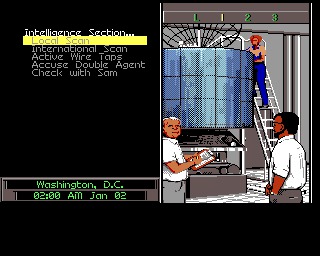
When you are five steps ahead on a global conspiracy map, stopping cold to solve a manual letter swap puzzle breaks your concentration. You end up finishing the puzzle only to forget which safehouse you were supposed to watch next.
What makes this 1990 MS-DOS game worth a run today
The individual pieces of this espionage simulator might feel raw, but the tension of the ticking campaign clock holds the entire project together. The top-down gunfights still feel snappy, and snatching a photograph off an office desk while guards kick through the north door gets your heart pounding. The design works because it tried to simulate every single job in the spy genre rather than picking just one.
If you want to experience this classic Sid Meier's Covert Action MS-DOS game, you do not need an old rig or ancient sound drivers. You can play Sid Meier's Covert Action online directly in your web browser without installing anything. Once the main menu loads, skip the standard training case, jump straight into an international terrorism file, and see how many masterminds you can lock up before your network falls apart.